In vitro diagnostic medical devices explained for clinical and procurement teams
What counts as an in vitro diagnostic medical device
In vitro diagnostic medical devices are tests, reagents, instruments, software, specimen containers, calibrators, controls, and related systems used to examine specimens taken from the human body. They support diagnosis, screening, monitoring, prognosis, treatment selection, and assessment of health status. The defining feature is where the diagnostic activity takes place: outside the body, typically in a laboratory, near-patient setting, pharmacy, clinic, or home test workflow. That is what separates IVDs from imaging systems, blood pressure monitors, endoscopes, and other diagnostic tools that work directly on or inside the patient.
For hospitals, laboratories, distributors, and content teams covering Diagnostic Devices, the term matters because the regulatory route, performance evidence, labeling, quality controls, and procurement risks differ from those for general medical equipment. A chemistry analyzer, PCR assay, pregnancy self-test, blood glucose meter, infectious disease rapid test, tumor marker assay, and anticoagulation monitoring test may all sit within the IVD category, but they do not carry the same clinical risk or follow the same approval pathway.
The main IVD device families
IVDs are often discussed as one product group, but procurement and compliance teams usually need a more practical map. A device family may include both the physical platform and the assay-specific consumables. The same analyzer can support many tests, while a single rapid test may combine sample handling, reagents, interpretation, and reporting in one package.
| IVD family | Common examples | What teams should verify |
|---|---|---|
| Clinical chemistry and immunoassay | Electrolytes, liver enzymes, cardiac markers, thyroid tests, tumor markers | Assay menu, calibration traceability, controls, throughput, sample type, maintenance needs |
| Hematology and coagulation | Complete blood count, prothrombin time, D-dimer, platelet parameters | Intended use, anticoagulant compatibility, abnormal flag handling, reference ranges |
| Molecular diagnostics | PCR, nucleic acid amplification tests, sequencing-based assays | Target region, limit of detection, contamination controls, software, variant reporting limits |
| Microbiology and antimicrobial testing | Culture media, organism identification, susceptibility testing, fungal testing | Clinical breakpoints, workflow time, organism coverage, quality control strains |
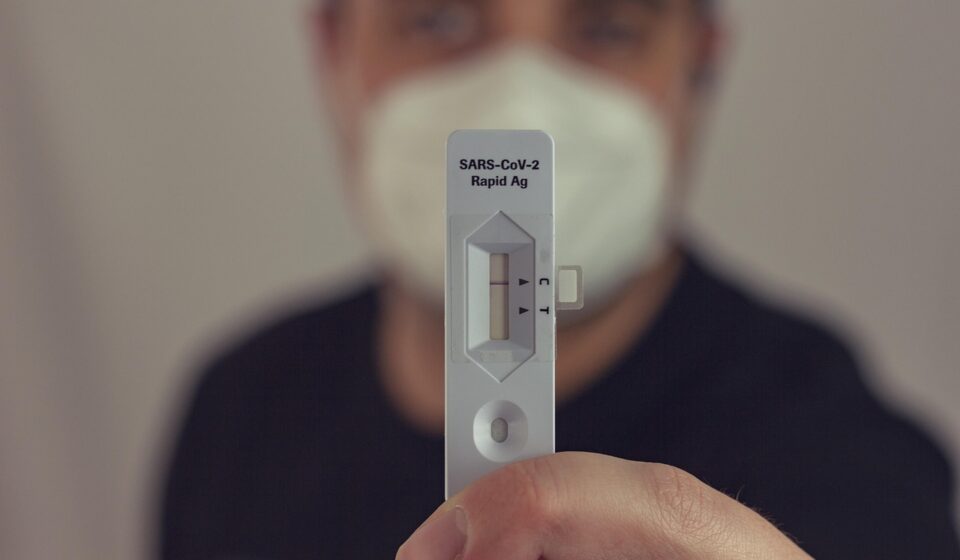
| Rapid and point-of-care tests | Pregnancy tests, glucose meters, influenza or SARS-CoV-2 antigen tests, malaria tests | User setting, training, storage temperature, interpretation window, external quality assessment |
| Companion and precision medicine diagnostics | Tests used to identify patients likely to benefit from a drug or targeted therapy | Link to drug labeling, clinical validation, specimen requirements, reporting language |
This table is a workflow view, not a regulatory classification. A molecular assay can be low, moderate, or high risk depending on its intended use, target condition, patient population, and the likely clinical consequence of a false result.
Regulatory classification is risk based, not technology based
Regulators generally assess IVDs by intended use and risk. The same technical method can be treated differently when it is used for a high-impact infectious disease decision, a population screening program, a general wellness indication, or a confirmatory laboratory workflow.
United States
The U.S. FDA describes IVD products as reagents, instruments, and systems intended for use with specimens taken from the human body for diagnostic or health-status purposes. FDA device classification uses Class I, Class II, and Class III categories based on the level of control needed to provide reasonable assurance of safety and effectiveness. Many IVDs also intersect with Clinical Laboratory Improvement Amendments requirements, but CLIA categorization and FDA device class are not the same thing.
In a U.S. procurement review, it is not enough to confirm that a product appears in a catalog. Teams should check whether the product is FDA-cleared, FDA-approved, De Novo authorized, exempt, for research use only, for investigational use, or intended for a laboratory-developed workflow. These distinctions affect claims, distribution, reporting language, quality records, and how a laboratory may use the test.
European Union
In the European Union, Regulation (EU) 2017/746, commonly called the IVDR, classifies IVDs into Classes A, B, C, and D. Class D generally covers the highest public health and patient risk, while Class A covers the lowest-risk devices. The IVDR changed the market because many IVDs that previously required less external review under the old directive now require notified body involvement.
For buyers, the practical question is whether a product is fully IVDR-compliant, covered by a valid transitional arrangement, or outside the permitted transition because of a new intended purpose, significant design change, expired documentation, or missing notified body agreement. A CE mark alone is not enough without the supporting declaration, certificate status, device class, and transition basis.
The 2024-2026 regulatory picture buyers should not miss
Since 2024, the IVD sector has seen several important regulatory adjustments. The details differ by jurisdiction, but the shared direction is clear: regulators are asking for stronger evidence, clearer lifecycle responsibilities, and better transparency about supply continuity.
The U.S. LDT rule changed course
On May 6, 2024, the FDA issued a final rule that would have changed the wording of the in vitro diagnostic products regulation to include products when manufactured by a laboratory. On March 31, 2025, the U.S. District Court for the Eastern District of Texas vacated that final rule. On September 19, 2025, FDA issued a final rule reverting the regulation text to the wording that existed before the May 2024 rule took effect.
The practical takeaway is narrow but important: laboratories, manufacturers, and purchasers should not rely on outdated summaries that still describe the 2024 LDT phaseout plan as current. At the same time, the vacatur does not remove all oversight from clinical testing. Commercially distributed IVD kits, laboratory operations, state requirements, CLIA obligations, payer requirements, professional standards, and test-specific labeling restrictions may still apply depending on the product and setting.
EU IVDR transition deadlines remain central to supply planning
Regulation (EU) 2024/1860, adopted on June 13, 2024 and published in the Official Journal on July 9, 2024, further extended IVDR transition periods for certain legacy IVDs, subject to conditions. The headline deadlines are December 31, 2027 for Class D devices and certain IVDD-certified devices, December 31, 2028 for Class C devices, and December 31, 2029 for Class B and sterile Class A devices.
Those dates are not a blanket extension for every product. The device generally must continue to comply with the old directive, avoid significant changes in design or intended purpose, avoid unacceptable health or safety risk, and meet quality management and notified body application milestones. As of September 7, 2026, the application milestones for Class D and Class C legacy transitions have already passed, while the Class B and sterile Class A application milestone of May 26, 2027 is still ahead.
WHO lists help define public health priorities but do not replace local approval
The World Health Organization’s fifth Model List of Essential In Vitro Diagnostics, available through the WHO electronic EDL interface, lists 237 recommendations covering 192 IVDs. The list is designed to guide countries, health programs, procurement bodies, and laboratories when they decide which categories of tests are essential at different levels of a health system.
WHO prequalification is another important reference for global procurement, especially for UN agencies and donor-supported programs. However, WHO itself notes that inclusion on its prequalified list is not the same as national regulatory approval, is not exhaustive, and should not be treated as a commercial endorsement. This distinction is important when evaluating tests for infectious disease programs, decentralized care, and low-resource settings. See also: clinical equipment.
How clinical teams should evaluate IVDs before procurement
Good IVD procurement is not simply a question of analyzer price or per-test cost. The device must fit the clinical question, patient population, specimen workflow, data environment, and regulatory setting. A low-cost assay can become expensive if it produces invalid runs, requires manual workarounds, has limited service support, or cannot integrate with the laboratory information system.
- Confirm the intended use, target analyte, target condition, specimen type, and user setting exactly as written in the labeling.
- Check analytical performance, including precision, accuracy, limit of detection, measuring range, interference, cross-reactivity, and stability.
- Review clinical performance evidence, including sensitivity, specificity, positive and negative agreement, or clinical validity where relevant.
- Verify regulatory status in the jurisdiction where the test will be used, not only where it was manufactured.
- Review external quality assessment options, quality control materials, calibration schedule, lot-to-lot management, and staff training needs.
- Assess workflow constraints such as sample preparation, hands-on time, throughput, instrument downtime, storage conditions, and waste handling.
- Confirm service, cybersecurity, software version control, data export, barcode compatibility, and connectivity with laboratory systems.
- Ask how the supplier handles field safety notices, recalls, complaint investigation, product discontinuation, and replacement parts.
For point-of-care and home-use IVDs, usability evidence deserves close attention. A technically accurate test can still fail in practice if untrained users misread results, collect poor samples, store kits incorrectly, or act on the result without confirmatory guidance.
Common risks in IVD selection and use
The most serious IVD risks are rarely limited to one defective device. They often come from a mismatch between the device claim and the clinical setting. A test validated for symptomatic patients may not perform the same way in asymptomatic screening. A test validated on venous plasma may not support fingerstick whole blood. A result intended to support triage may not be enough for definitive diagnosis.
False negatives can delay treatment or isolation. False positives can trigger unnecessary procedures, anxiety, treatment, or public health action. Invalid or indeterminate results can increase repeat testing and patient follow-up burden. In precision medicine, an incorrect biomarker result can direct a patient away from a therapy that may help or toward one that is unlikely to benefit them.
There are operational risks as well. Reagent shortages can stop a testing service even when the analyzer is functional. Software updates can change flags, reference intervals, or connectivity. New lots can shift performance. Temperature excursions during shipping can affect reagents. For these reasons, lifecycle management is part of IVD quality, not a back-office detail.
What a practical IVD file should contain
A concise IVD evaluation file helps procurement, laboratory, and compliance teams make consistent decisions. It does not need to duplicate the manufacturer’s technical file, but it should gather the evidence needed to justify local use.
| File section | Why it matters |
|---|---|
| Product identity | Confirms device name, manufacturer, catalog number, version, assay format, and intended use |
| Regulatory evidence | Documents FDA, CE, UKCA, national registration, exemption, or research-use status as applicable |
| Performance evidence | Shows analytical and clinical performance claims relevant to the local patient population |
| Quality controls | Defines calibration, internal controls, external controls, proficiency testing, and acceptance rules |
| Workflow assessment | Explains staffing, specimen flow, turnaround time, waste, storage, and maintenance needs |
| Risk and limitations | Records known limitations, interfering substances, confirmatory testing needs, and result interpretation cautions |
| Lifecycle plan | Tracks software, lot changes, service support, recalls, discontinuation notices, and revalidation triggers |
The procurement conclusion is straightforward: in vitro diagnostic medical devices should be evaluated as clinical decision tools, not just equipment. The strongest decisions connect regulatory status, evidence quality, workflow fit, and postmarket support.
Frequently asked questions
Are all laboratory tests considered in vitro diagnostic medical devices?
No. Many commercial test kits and diagnostic systems are IVD medical devices, but laboratory-developed testing services may be treated differently depending on jurisdiction and the facts of the workflow. In the United States, the 2024 FDA LDT final rule was vacated in 2025, so current reviews should be based on updated FDA and legal status rather than older summaries of the phaseout plan.
Is an IVD the same as a diagnostic device?
An IVD is a type of diagnostic device, but not every diagnostic device is an IVD. IVDs examine specimens outside the body. Imaging systems, blood pressure monitors, ECG devices, and endoscopes can support diagnosis, but they are not usually IVDs because they do not test human specimens in vitro.
Does WHO prequalification mean a test is approved in every country?
No. WHO prequalification can support procurement confidence for certain public health programs, but national authorities decide local authorization. Buyers still need to confirm registration, labeling, import requirements, and permitted use in the country where the test will be supplied.
Why do IVDR transition dates matter to buyers outside the EU?
Many global manufacturers use EU conformity assessment as part of their international market strategy. If an IVD loses access to the EU market or faces delayed certification, supply, documentation, or product continuity may also affect distributors and health systems in other regions.
What is the most important first question when reviewing an IVD?
Start with intended use. The intended use defines what the test claims to detect or measure, who should use it, what specimen it supports, which patient population it applies to, and how the result should inform care. Most regulatory, performance, and procurement questions follow from that statement.