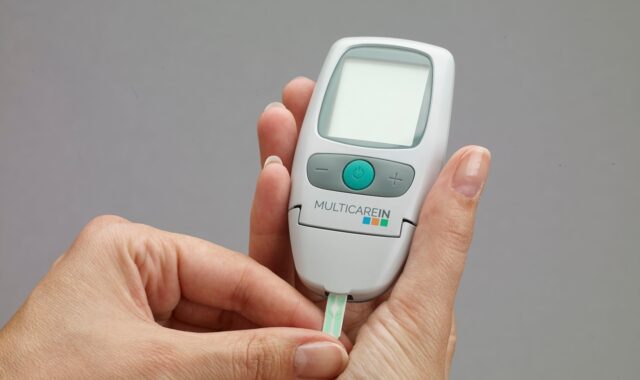
POC diagnostic devices in 2026 and how clinical teams should evaluate them

Key takeaways for POC diagnostic devices
POC diagnostic devices bring testing closer to the patient, but the adoption case in 2026 is not built on speed alone. A useful point-of-care test must support a clinical decision at the time and place where the patient is being assessed. That means the device has to fit the intended use, sample type, operator skill level, regulatory status, quality-control plan, data workflow and follow-up pathway.
U.S. and European regulatory changes, wider use of at-home respiratory testing, and stronger expectations for connected medical device cybersecurity have made evaluation more complex. For hospitals, urgent care centers, pharmacies, community clinics and decentralized programs, the practical question is straightforward: does the device shorten the path from suspicion to safe action without weakening result quality?

This article is part of the Diagnostic Devices section and focuses on industry-level evaluation rather than product ranking or clinical advice.
What counts as a POC diagnostic device
A point-of-care diagnostic device is generally an in vitro diagnostic system used at or near the site of patient care instead of in a central laboratory. The category includes simple lateral-flow tests, cartridge-based molecular platforms, handheld meters, small benchtop analyzers and connected systems that transmit results to a laboratory information system or electronic health record.
The term can be misleading because it describes where testing occurs, not automatically how simple or low-risk the test is. In the United States, the CDC distinguishes point-of-care testing from CLIA-waived testing. Some point-of-care tests are waived, but others are moderate or high complexity and require stronger laboratory oversight. Tests cleared for home use and certain tests approved for waiver can be considered waived, but a product should never be assumed to be waived only because it is used near the patient.
| Common POC category | Typical use setting | Main evaluation issue |
|---|---|---|
| Respiratory antigen tests | Home, pharmacy, urgent care, clinics | False negatives, symptom timing and follow-up instructions |
| Molecular respiratory or infectious disease platforms | Emergency departments, urgent care, decentralized labs | Turnaround time, contamination control, cartridge cost and connectivity |
| Glucose, HbA1c and coagulation meters | Primary care, diabetes clinics, anticoagulation programs | Operator training, QC, calibration and result traceability |
| Blood gas, electrolyte and cardiac marker analyzers | Emergency, ICU, ambulance and surgical settings | Clinical urgency, sample handling and integration with care pathways |
| Urinalysis, pregnancy and rapid strep tests | Primary care, retail clinics, community settings | Ease of use, specimen quality and documentation |
Why adoption is shifting from speed to clinical usefulness
The pandemic accelerated public and professional familiarity with rapid testing, but the next phase is more disciplined. The value of POC diagnostic devices depends on whether a near-patient result leads to earlier isolation, faster treatment, safer triage, reduced unnecessary prescribing, fewer repeat visits or better chronic disease monitoring. A result in 15 minutes has limited value if staff cannot act on it, if the result is not recorded, or if a negative result is misunderstood.
From fast result to actionable result
For infectious disease testing, timing matters. A rapid respiratory test may support isolation decisions, antiviral eligibility discussions or clinic workflow. However, rapid antigen tests can have lower sensitivity than molecular methods, and regulators such as the FDA have emphasized that symptomatic patients with negative rapid results may still need follow-up care or additional testing. The operational lesson is that every POC program needs a written pathway for positive, negative, invalid and discordant results.
Decentralization is broader than COVID-19
On October 7, 2024, the FDA authorized marketing of the first over-the-counter home flu and COVID-19 combination test outside emergency use authorities. That decision mattered because it showed respiratory self-testing moving from emergency access toward a more conventional device review pathway. The broader trend includes pharmacy-based testing, community screening, chronic disease monitoring and field-ready diagnostics for outbreak or disaster response. WHO materials on essential in vitro diagnostics also treat point-of-care availability as important for access, especially where centralized laboratory infrastructure is limited.
Regulatory and quality signals shaping 2026 decisions
As of September 2026, teams evaluating POC diagnostic devices should treat regulatory status as a workflow and risk question, not just a purchasing detail. The correct pathway depends on jurisdiction, intended use, specimen type, operator, setting and whether the device is used exactly as labeled.
| Signal | Current relevance | Practical implication |
|---|---|---|
| CLIA test complexity in the United States | Point-of-care does not automatically mean waived. CDC materials note that waived tests are simple and low risk but not error-proof. | Confirm the specific test system, analyte and intended use in FDA or CLIA databases before adding it to a testing menu. |
| FDA OTC and home-use authorization | Home-use and OTC diagnostics continue to expand, especially in respiratory testing. | Review age indications, sample collection instructions, performance data and follow-up language rather than treating all home tests as equivalent. |
| FDA Quality Management System Regulation | The QMSR became effective on February 2, 2026 and incorporates ISO 13485:2016 by reference for medical device quality management requirements. | Suppliers should be able to explain design controls, complaint handling, corrective actions and manufacturing quality systems in a way that supports audits and procurement review. |
| EU In Vitro Diagnostic Regulation | European Commission transition provisions remain staggered by device class, with ongoing requirements for legacy devices and manufacturer quality systems. | Buyers serving EU markets should verify IVDR status, notified body timelines and whether any product is relying on legacy transition provisions. |
| Laboratory developed test policy in the United States | The FDA issued an LDT final rule in 2024, a federal district court vacated it in March 2025, and FDA reverted the regulatory text in September 2025. | Do not confuse a manufactured POC device with a laboratory-developed workflow. Oversight, validation and responsibility may differ. |
| Connected-device cybersecurity | FDA guidance and security communications emphasize that internet-connected and networked medical devices create cybersecurity risks alongside clinical benefits. | Evaluate software updates, access controls, audit logs, data encryption, vulnerability handling and downtime procedures. |
Clinical and technical criteria for device evaluation
A strong evaluation of POC diagnostic devices should combine clinical, laboratory, IT and operational perspectives. The device may be compact, but the program around it is not. The criteria below are more useful than comparing headline turnaround time alone.
- Intended use: Confirm disease target, specimen type, user type, patient population, care setting and whether the device is for screening, diagnosis, monitoring or triage.
- Performance in the intended setting: Review sensitivity, specificity, positive and negative predictive values, invalid rate, interfering substances and performance across relevant subgroups.
- Operator requirements: Check whether nurses, medical assistants, pharmacists, community workers or patients can perform the test under the labeling and local rules.
- Sample handling: Assess swab, capillary blood, venous blood, saliva, urine or cartridge requirements, including stability windows and contamination risk.
- Turnaround time: Measure total time from patient selection to documented result, not only instrument run time.
- Quality control: Define internal controls, external controls, proficiency testing where applicable, lot verification, temperature monitoring and corrective action steps.
- Connectivity: Determine whether results can flow into LIS, EHR, public health reporting or device management software without manual transcription.
- Supply reliability: Review shelf life, cartridge storage, consumable availability, reader compatibility and backup plans.
- Economics: Include analyzer cost, reagent cost, service contracts, QC material, staff time, IT integration, training and waste from expired consumables.
Performance must be interpreted in context
Published performance figures do not always translate directly to a local clinic. Prevalence affects predictive value, specimen quality affects accuracy, and operator experience affects invalid rates. A test that performs well in a controlled study can underperform if used outside its intended population or if staff skip collection steps. This is why local verification, training and monitoring remain important even when the device is cleared, authorized or waived. See also: clinical equipment.
Connectivity is becoming a patient safety feature
For many organizations, result capture is no longer optional. Manual transcription creates delay and error risk, especially when testing is distributed across emergency departments, clinics, pharmacies or mobile units. Connectivity standards used in laboratory and point-of-care environments, including approaches based on HL7 and CLSI point-of-care connectivity guidance, support result transfer, operator identification, QC lockout and device fleet management. In practice, the best device may be the one that integrates cleanly with the care pathway, not the one with the smallest footprint.
Device categories to watch in 2026
The following categories are worth watching because they show where clinical demand, decentralized care and regulatory attention are converging. This is not a ranking and does not imply that every product in a category is suitable for every setting.
- Respiratory multiplex testing: Combination tests for SARS-CoV-2, influenza and sometimes RSV can help separate clinically similar illnesses during seasonal surges. The main limitation is that a negative rapid result may not rule out infection when symptoms and exposure risk remain high.
- Near-patient molecular platforms: Cartridge-based molecular systems can bring higher analytical sensitivity closer to urgent care, emergency and decentralized settings. Their constraints are cost, maintenance, throughput, sample preparation and contamination control.
- Chronic disease monitoring: HbA1c, glucose, lipid and anticoagulation monitoring devices remain important because they can support immediate counseling and therapy decisions. Their success depends on calibration, QC discipline and clear responsibility for result review.
- Emergency and disaster POCT: Portable blood gas, electrolyte, lactate, hemoglobin and infectious disease tools can support triage when central laboratory access is delayed. Programs need battery, storage, connectivity and operator competency plans.
- At-home and self-testing diagnostics: Home tests can improve access and privacy, but instructions, readability, app design, follow-up and equitable access matter as much as the test strip or cartridge.
How to implement POC diagnostic devices without weakening quality
Implementation should begin with the clinical decision, not the device catalog. A practical adoption process should be structured enough to protect result quality but flexible enough for decentralized settings.
- Define the decision point: Identify the exact decision the result will support, such as prescribing, isolation, referral, monitoring adjustment or emergency triage.
- Map the current workflow: Compare the existing central-lab or send-out process with the proposed POC process, including staffing, documentation and result communication.
- Verify regulatory status: Confirm authorization, clearance, CLIA category, intended use and any local laboratory or pharmacy requirements.
- Pilot before scale-up: Track invalid results, operator questions, turnaround time, QC failures, connectivity gaps and clinical follow-up.
- Assign ownership: Decide who manages training, competency, QC, lot changes, maintenance, adverse event reporting and supplier communication.
- Monitor after launch: Review utilization, positivity rates, discordant results, user errors, downtime and whether results are actually changing care.
Common pitfalls and how to reduce them
| Pitfall | Why it matters | Risk reduction step |
|---|---|---|
| Assuming waived means risk-free | CDC materials emphasize that waived tests can still produce errors when instructions are not followed. | Use written procedures, competency checks and periodic observation. |
| Buying for speed without a care pathway | A fast result may not improve care if no one acts on it. | Define actions for positive, negative, invalid and unexpected results. |
| Ignoring data capture | Results outside the record can affect continuity of care and quality reporting. | Prioritize devices with validated interfaces or controlled result upload. |
| Overlooking cybersecurity | Connected analyzers can create network and data risks. | Include IT security review before procurement and define update procedures. |
| Underestimating total cost | Consumables, QC, service, training and wasted inventory can exceed the visible analyzer cost. | Model cost per valid, documented result rather than cost per cartridge alone. |
Frequently asked questions
Are POC diagnostic devices the same as CLIA-waived tests?
No. Point-of-care describes the testing location, while CLIA complexity describes regulatory requirements in the United States. Some POC tests are waived, but others are moderate or high complexity. The specific test system and intended use must be checked.
What is the most important factor when choosing a POC diagnostic device?
The most important factor is whether the result changes a clinical decision safely and quickly. Analytical performance, regulatory status, workflow fit, quality controls and result documentation all support that central question.
Do rapid antigen tests replace molecular testing?
Not in every situation. Rapid antigen tests can be useful for timely decisions, but molecular tests generally offer higher analytical sensitivity. Follow-up testing may still be appropriate when symptoms, exposure history or clinical risk conflict with a negative rapid result.
Why do cybersecurity and connectivity matter for diagnostics?
Many modern devices connect to networks, data managers, apps or health records. Connectivity improves documentation and oversight, but it also introduces security, access-control and downtime risks that should be addressed before deployment.
How should smaller clinics start with POC testing?
Smaller clinics should begin with a limited test menu tied to clear clinical decisions. They should confirm regulatory status, train operators, document QC, monitor errors and add connectivity or additional tests only when the workflow is stable.