Point of care testing devices and the shift to connected diagnostics
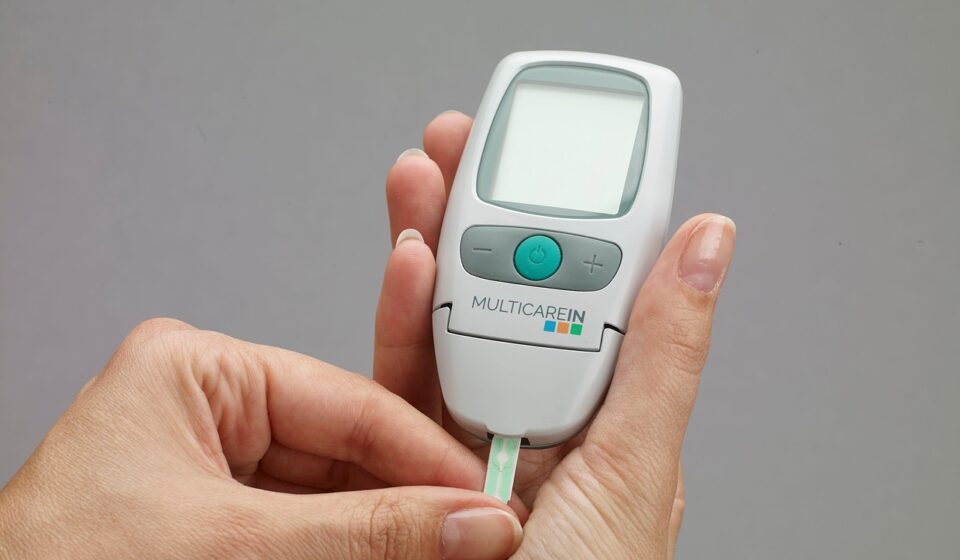
Point of care testing is no longer only about speed
Point of care testing devices are used to generate diagnostic information near the patient, often within minutes instead of after a central laboratory cycle. Speed still matters, especially in acute care, but it is no longer the full value proposition. Hospitals, clinics, emergency departments, pharmacies and remote care programs now look closely at whether a device can support reliable results, trained operators, quality control, data capture and appropriate regulatory use. The practical question has shifted from “How fast is the test?” to “Can this result safely support a clinical decision at the point of care?”
This shift matters for the diagnostic devices sector because point of care testing sits between decentralized clinical workflow and laboratory-grade quality expectations. FDA describes in vitro diagnostics as tests performed on human samples such as blood or tissue, while U.S. CLIA rules apply to facilities that test human specimens for health assessment, diagnosis, prevention or treatment. (fda.gov)

What counts as a point of care testing device?
A point of care testing device is typically an in vitro diagnostic system used outside the traditional central laboratory, close to the patient and usually by a clinician, nurse, medical assistant, pharmacist, emergency responder or other trained operator. Common examples include blood glucose meters, blood gas analyzers, lateral flow infectious disease tests, urine chemistry systems, pregnancy tests, coagulation devices, cardiac marker tests and compact molecular platforms.
The term should not be treated as interchangeable with home testing. Some devices are intended for professional use in patient care settings, while others are cleared, approved or authorized for self-testing. FDA has noted in the COVID-19 testing context that tests authorized for point-of-care use are not automatically authorized for home specimen collection or at-home testing unless that use is specified. (fda.gov)
In the European Union, the IVDR defines a “device for near-patient testing” as a device not intended for self-testing, used outside a laboratory environment and generally near or beside the patient by a health professional. That definition is useful because it separates professional near-patient diagnostics from consumer self-tests. (eur-lex.europa.eu)
Why demand is growing at the clinical edge
Demand for point of care testing devices is strongest where delayed results slow diagnosis, treatment, isolation, discharge or referral. WHO states that diagnostic results influence about 70% of healthcare decisions, while diagnostic services receive only a small share of healthcare budgets. WHO also notes that point-of-care testing can help optimize treatment decisions, avoid referrals, improve care efficiency and reduce costs, especially where laboratory infrastructure is limited. (who.int)
In practice, point of care testing expands diagnostic access in four common settings:
- Emergency and acute care: Rapid blood gas, electrolyte, lactate, coagulation or cardiac marker results can support triage and immediate intervention.
- Primary care and urgent care: Respiratory, pregnancy, urine, strep, glucose and HbA1c testing can reduce follow-up delays when results are needed during the visit.
- Rural and resource-constrained settings: Portable testing can reduce dependence on specimen transport and centralized infrastructure.
- Public health and outbreak response: Rapid infectious disease testing can support isolation, treatment and surveillance workflows when used within an appropriate testing strategy.
The business implication is straightforward: device value increasingly depends on workflow fit, not only analytic capability. A technically strong assay may still fail in routine use if operators cannot be trained efficiently, cartridges are difficult to store, results do not enter the medical record, or quality failures are not visible to the supervising laboratory team.
Major categories of point of care testing devices
Point of care testing is not a single technology category. It includes simple visual tests, handheld meters, cartridge-based analyzers and increasingly compact molecular systems. The table below summarizes major device groups and the limits purchasers should consider.
| Device category | Typical use case | Key value | Common limitation |
|---|---|---|---|
| Glucose and metabolic meters | Diabetes monitoring, inpatient glucose checks | Fast bedside decisions | Operator technique, strip storage and patient condition can affect results |
| Blood gas and chemistry analyzers | Emergency, ICU, respiratory and surgical care | Rapid acid-base, electrolyte and oxygenation data | Requires strict specimen handling and maintenance discipline |
| Coagulation testing | Anticoagulation monitoring and perioperative assessment | Supports medication and procedural decisions | May require correlation with laboratory methods and clear clinical protocols |
| Cardiac marker testing | Chest pain and acute coronary syndrome pathways | Can shorten decision cycles when aligned with protocols | Clinical interpretation still depends on timing, assay sensitivity and serial testing rules |
| Infectious disease rapid tests | Respiratory, strep, HIV, malaria or other pathogen screening | Supports immediate isolation or treatment decisions | Sensitivity, prevalence and confirmatory testing needs vary by pathogen and assay |
| Molecular point of care systems | Respiratory panels and other nucleic acid tests | Higher analytic sensitivity than many antigen formats | Higher cost, cartridge supply dependence and more demanding quality oversight |
For industry readers, the distinction between categories is important because each group matures differently. Lateral flow tests compete on simplicity, cost and deployment scale. Cartridge analyzers compete on menu breadth, connectivity and total cost per reportable result. Molecular point of care platforms compete on sensitivity, speed and whether their complexity can be simplified for users without masking quality risks.
Regulatory status matters as much as device performance
In the United States, a point of care test may be waived, moderate complexity or high complexity under CLIA. CDC notes that some point-of-care tests are approved for a CLIA waiver, but advances in rapid technology also allow more complex nonwaived testing to be performed at or near the site of patient care. (cdc.gov)
For waived testing, the practical appeal is that the test is considered simple enough for use in a Certificate of Waiver setting when requirements are met. FDA explains that a manufacturer of a test initially categorized as moderate complexity may request waived categorization through a CLIA Waiver by Application, and waived tests must be simple with an insignificant risk of erroneous results under the relevant statutory criteria. (fda.gov)
Waived status does not mean there is no oversight. CMS states that facilities performing laboratory testing on human specimens to assess health or diagnose, prevent or treat disease need the appropriate CLIA certificate, and a Certificate of Waiver laboratory must have a laboratory director. (cms.gov)
Outside the U.S., regulatory pathways differ, but the general direction is toward stronger evidence, traceability and post-market expectations. Under the EU IVDR, near-patient testing is specifically recognized, and extended IVDR transition arrangements have been adopted to reduce the risk of IVD supply disruption while maintaining safety and performance expectations. (eur-lex.europa.eu)
One related but separate issue is laboratory-developed tests. FDA issued a final rule on May 6, 2024 to amend the definition of IVD products for LDT oversight, a federal district court vacated that rule on March 31, 2025, and FDA issued a final rule on September 19, 2025 reverting the regulatory text to its prior wording. This timeline matters for diagnostic strategy, but commercially distributed point of care testing devices should not be treated as the same regulatory category as in-house laboratory-developed testing services. (fda.gov)
The real market shift is toward connected diagnostic networks
The most significant development in point of care testing devices is the move from isolated instruments to connected diagnostic networks. A single rapid result has limited value if it is handwritten, entered late, attributed to the wrong operator, or missing from the electronic health record. For multi-site health systems, the device fleet must be visible, controlled and auditable.
AACC guidance on point-of-care testing management highlights that POCT operators are often non-laboratory personnel, including nursing, pharmacy, medical assistants and emergency medicine staff. That reality makes operator training, lockouts, competency tracking and clear escalation procedures central to quality management. (academic.oup.com)
Connectivity also supports operational control. Modern systems may integrate barcode scanning, patient identification, quality-control lockouts, reagent lot tracking, operator certification status, middleware, LIS interfaces and EHR result transmission. These features do not replace laboratory oversight, but they reduce the risk that decentralized testing becomes undocumented testing. See also: clinical equipment.
ISO 22870:2016 gives specific requirements for point-of-care testing quality and competence and is intended to be used with ISO 15189. That pairing reflects a broader industry principle: testing can move closer to the patient, but the quality system cannot disappear. (iso.org)
How buyers should evaluate point of care testing devices
For hospitals, clinics and procurement teams, evaluation should start with the clinical question rather than a product feature list. A useful device is one that improves a defined decision pathway, such as triage, medication adjustment, isolation, discharge, referral or follow-up.
A practical pre-purchase review should include:
- Intended use: Is the device cleared, approved or otherwise authorized for the exact setting, sample type and user group?
- Test complexity: Is the method CLIA-waived or nonwaived in the U.S., and what certificate, personnel and oversight requirements apply?
- Clinical pathway: What decision will change when the result is available immediately?
- Performance evidence: Does the evidence match the patient population, specimen type and operating environment?
- Quality control: How are controls, calibration, maintenance, corrective actions and lot changes handled?
- Connectivity: Can results move automatically and accurately into the LIS, EHR or middleware?
- Operator management: Can the system restrict use to trained operators and document competency status?
- Total cost: What are the costs of instruments, cartridges, controls, service, middleware, training, waste and downtime?
- Supply continuity: Are cartridges, reagents and controls available through reliable channels?
For more device-sector coverage, readers can follow the Diagnostic Devices category for related updates on diagnostics, testing platforms and clinical technology trends.
Limitations that should not be overlooked
Point of care testing can shorten time to decision, but it does not automatically improve outcomes. The result must be accurate enough for the intended use, interpreted in clinical context and tied to an action. A rapid test with poor sensitivity in the wrong population can create false reassurance. A highly sensitive test without clear workflow rules can create unnecessary follow-up. A device deployed without training can increase variability across sites.
Pre-analytical variables remain especially important. Fingerstick collection technique, capillary versus venous samples, anticoagulant use, hemolysis, temperature, timing after symptom onset, medication interference and storage conditions can all influence whether a result is reliable. Manufacturers can reduce risk through design, but healthcare organizations still need procedures and oversight.
The central laboratory also remains essential. Point of care testing is best viewed as a distributed extension of diagnostic capability, not a replacement for comprehensive laboratory medicine. Central labs provide confirmatory testing, complex panels, method comparison, quality leadership and expert interpretation. The strongest programs combine rapid local testing with laboratory governance.
What this means for diagnostic device manufacturers
For manufacturers, competitive differentiation is moving beyond analytic speed. Product teams need to design for real-world operation by non-laboratory users while still satisfying laboratory and regulatory expectations. That means simplified sample handling, stable reagents, clear instructions, automated checks, useful connectivity and transparent performance data.
Manufacturers also need to recognize that customers are buying a workflow, not just an instrument. A device that reduces result time but adds documentation burden may not survive a value analysis review. A platform with higher cartridge cost may still win if it reduces repeat testing, improves data capture or supports multiple clinically relevant assays on one connected system.
The next phase of point of care testing will likely reward devices that make decentralized testing measurable, auditable and clinically actionable. Speed brought these technologies to the bedside. Quality systems, connectivity and evidence will determine which platforms become durable parts of diagnostic care.
Frequently asked questions
Are point of care testing devices as accurate as central laboratory tests?
Some are highly accurate for their intended use, but accuracy depends on the assay, specimen type, operator technique, patient population and clinical context. They should be evaluated against the specific decision they are meant to support, not assumed to be equivalent to a central laboratory method in every situation.
Does CLIA-waived mean a test can be used without procedures?
No. CLIA-waived status generally indicates a lower-complexity test category, but facilities still need the appropriate certificate, must follow manufacturer instructions and should maintain quality control, training and documentation appropriate to their setting.
Can point of care testing replace the central laboratory?
Usually not. Point of care testing is most useful for time-sensitive decisions. Central laboratories remain essential for complex testing, confirmatory diagnostics, quality governance, method comparison and expert interpretation.
What is the biggest procurement mistake with point of care testing devices?
The most common mistake is focusing on time to result while underestimating operator training, data integration, quality control and supply costs. A device should be selected only after mapping the full clinical and operational workflow.