In vitro diagnostic devices explained for clinical and regulatory decision-making

Why in vitro diagnostic devices matter
In vitro diagnostic devices are medical tests, instruments, reagents, systems or software used to examine specimens taken from the human body, including blood, urine, tissue and swabs. They help detect disease, assess health status, guide treatment, monitor therapy and support public health decisions. The category covers simple pregnancy tests and glucose meters as well as molecular oncology panels, blood screening assays and automated laboratory analyzers.
For hospitals, laboratories, manufacturers and procurement teams, the issue is not simply whether a test can generate a result. The result must be reliable, clinically meaningful, usable in the intended setting and supported by appropriate regulatory and quality evidence. This article reviews the main types of in vitro diagnostic devices, the evidence used to evaluate them and the regulatory considerations shaping adoption in 2026. For related industry updates, visit the Diagnostic Devices section.

What counts as an in vitro diagnostic device
The U.S. Food and Drug Administration describes IVD products as reagents, instruments and systems intended for use in diagnosing disease or other conditions, including determining health status, through the collection, preparation and examination of human specimens. The World Health Organization also distinguishes in vitro diagnostics from in vivo diagnostics: IVDs test specimens outside the body, while imaging and physiological measurement technologies assess the patient directly.
In practical use, an IVD is often more than the test kit seen by the end user. A complete diagnostic system may include sample collection devices, extraction reagents, calibrators, control materials, analyzers, interpretation software, labeling, instructions for use and quality control procedures. Changes to any of these elements can affect performance, regulatory classification or clinical risk.
Common device families
- Clinical chemistry systems measure analytes such as enzymes, electrolytes, metabolites and therapeutic drug levels.
- Immunoassays detect antigens or antibodies and are widely used for infectious disease, hormone, cardiac marker and autoimmune testing.
- Molecular diagnostics identify nucleic acid sequences and are used in infectious disease, oncology, pharmacogenomics and inherited disease testing.
- Hematology and coagulation systems support blood cell counting, clotting assessment and anticoagulation monitoring.
- Microbiology diagnostics detect, identify or characterize pathogens, including antimicrobial resistance markers.
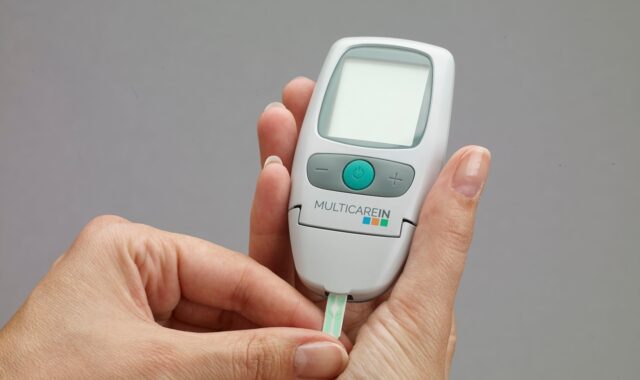
- Point-of-care and self-testing devices move testing closer to patients, but require stronger attention to usability, operator training and result interpretation.
The same technology can fall into different risk categories depending on its intended use. A molecular assay used for routine pathogen detection may carry a different risk profile from a companion diagnostic that determines eligibility for a targeted therapy.
The evidence that makes an IVD credible
A useful IVD needs more than a promising technology. It must show that the test performs consistently and that its results support the clinical decision described in the intended use. Regulators, laboratories and buyers typically look at three connected areas: analytical performance, clinical performance and operational fit.
Analytical performance
Analytical performance asks whether the device measures what it claims to measure under defined conditions. Typical questions cover sensitivity, specificity, precision, reproducibility, linearity, limit of detection, interference, cross-reactivity and specimen stability. For quantitative assays, calibration traceability and quality control design are especially important. For molecular tests, contamination control, extraction efficiency and variant coverage can be critical.
Clinical performance
Clinical performance asks whether the analytical result has meaning for the intended patient population and clinical question. A test may detect a marker accurately but still be unsuitable if the marker does not reliably distinguish disease from non-disease, predict therapy response or guide patient management in the intended setting. Study design, comparator methods, patient selection and prevalence therefore matter.
Usability and workflow
Usability is often underestimated during product evaluation. A test intended for a central laboratory can assume trained staff, controlled temperature, instrument maintenance and established information systems. A point-of-care device may be used by nurses, pharmacists, emergency teams or patients, which makes instructions, error messages, sample handling and result display part of the safety case. Poor workflow design can turn a technically strong assay into a weak real-world tool.
How regulatory frameworks shape the market
Regulation does not make every diagnostic decision simple, but it sets minimum expectations for evidence, manufacturing control and postmarket oversight. As of September 2026, the U.S. and European frameworks remain important reference points for global IVD strategy.
| Area | What it means for IVDs | Why it matters |
|---|---|---|
| United States | FDA classifies IVDs as Class I, II or III based on risk and the level of controls needed to provide reasonable assurance of safety and effectiveness. | Classification influences whether a device may need 510(k), De Novo or PMA review, as well as postmarket obligations. |
| CLIA in the United States | CMS regulates laboratory testing performed on human specimens, and FDA categorizes tests by waived, moderate or high complexity. | Laboratory certification, personnel, quality assurance and inspection obligations depend on test complexity. |
| European Union | Regulation (EU) 2017/746, known as the IVDR, uses risk classes A, B, C and D and requires more notified body involvement than the former directive. | Manufacturers need stronger performance evidence, quality management systems and transition planning. |
| Global access | WHO promotes the Essential Diagnostics List to guide national selection of priority tests. | Procurement decisions should consider public health need, infrastructure, workforce and sustainable supply. |
The U.S. laboratory-developed test landscape deserves particular attention because it changed materially after 2024. FDA issued a final rule on May 6, 2024 that amended the definition of in vitro diagnostic products to include products when the manufacturer is a laboratory. On March 31, 2025, a federal district court vacated that rule. On September 19, 2025, FDA reverted the regulatory text to the wording that existed before the 2024 rule. For laboratories and manufacturers, this means historical LDT policy remains a live policy and legislative issue rather than a settled device-rule phase-in.
In the European Union, the IVDR transition is also time-sensitive. Regulation (EU) 2024/1860 extended transition periods for certain legacy IVDs under conditions such as no significant design or intended purpose changes, no unacceptable health or safety risk, and a compliant quality management system by May 26, 2025. The extended end dates are December 31, 2027 for class D devices and IVDD-certified devices, December 31, 2028 for class C devices, and December 31, 2029 for class B and class A sterile devices, subject to eligibility and application deadlines.
Quality systems are becoming a shared language
Quality management is increasingly the common ground between regulators, manufacturers and healthcare providers. ISO 13485:2016 remains the internationally recognized quality management standard specific to medical devices, including organizations involved in design, production, installation and servicing. It emphasizes documented processes, risk management, supplier control, complaint handling and corrective actions.
In the United States, FDA’s Quality Management System Regulation became effective on February 2, 2026 and incorporates ISO 13485:2016 by reference while retaining additional FDA-specific requirements. FDA has described the change as a step toward closer alignment with quality system expectations used by other regulatory authorities. For IVD companies operating across markets, this alignment can reduce conceptual duplication, but it does not remove the need to meet jurisdiction-specific submission, labeling and reporting rules. See also: clinical equipment.
Laboratory quality is a separate but connected issue. ISO 15189:2022 addresses quality and competence in medical laboratories and is also applicable to point-of-care testing. In the U.S., CLIA requirements focus on laboratory testing quality, with more stringent obligations as test complexity increases. For buyers, the distinction matters: a manufacturer’s quality system supports device design and production, while laboratory quality systems control how the test is implemented and maintained.
What to check before adopting an IVD
Procurement teams should avoid judging in vitro diagnostic devices by headline claims alone. A sound evaluation compares intended use, evidence, workflow and lifecycle support. The following checklist can help separate a suitable diagnostic device from one that may create operational risk.
- Intended use: Confirm the disease, analyte, specimen type, population, setting and user group. A device cleared or certified for one specimen type should not be assumed valid for another.
- Regulatory status: Verify market authorization, classification, certificate validity and any transition conditions that apply in the target region.
- Performance data: Review analytical and clinical performance in populations that resemble the intended users and patients.
- Comparator method: Understand whether the device was evaluated against an appropriate reference method, predicate device or clinical diagnosis standard.
- Operational requirements: Check sample volume, turnaround time, throughput, maintenance, calibration, reagent storage, biosafety and connectivity.
- User training: Assess whether the people who will run or interpret the test can do so safely under routine conditions.
- Quality control: Confirm internal controls, external controls, lot verification, proficiency testing expectations and failure procedures.
- Supply resilience: Evaluate reagent availability, shelf life, service response, alternative suppliers and discontinuation notice risks.
- Data integration: Ensure results can be captured in laboratory or hospital information systems with traceability and cybersecurity controls.
The practical takeaway is that an IVD is not just a laboratory commodity. It is a clinical decision tool embedded in a chain of evidence, people, infrastructure and regulation.
Trends changing the IVD landscape
Several trends are pushing the sector toward higher evidence expectations. Multiplex testing is expanding because one sample can generate results for multiple targets, but this also increases interpretation complexity and the need for careful clinical validation. Molecular and genomic diagnostics are moving from specialist use into routine care, particularly in infectious disease and oncology. At the same time, self-testing and near-patient testing are increasing pressure on manufacturers to design devices that remain robust outside traditional laboratory environments.
Public health priorities are also influencing product selection. WHO has highlighted diagnostics as essential for primary care, outbreak control and monitoring disease burden. Its Essential Diagnostics List is not a purchasing mandate, but it helps governments and health systems decide which tests are most important for access and system planning. For low-resource settings, affordability alone is not enough; instruments, power supply, maintenance, temperature control, trained staff and supply chains determine whether an IVD can deliver reliable results.
Regulatory transitions are affecting market availability as well. EU IVDR timelines, U.S. quality system harmonization and continuing debate around laboratory-developed tests all make documentation discipline more important. Manufacturers and buyers that track classification, evidence gaps and lifecycle obligations early are better positioned than those that treat compliance as a late-stage paperwork exercise.
Frequently asked questions
Are in vitro diagnostic devices the same as laboratory tests?
Not exactly. A laboratory test is the testing service or procedure performed on a specimen. An in vitro diagnostic device is the product or system used to perform or support that test, such as reagents, kits, instruments, software, calibrators or controls. The two are closely linked but regulated and managed in different ways.
What is the difference between an IVD and a medical device?
An IVD is a type of medical device. The defining feature is that it examines specimens taken from the human body rather than acting directly on or in the patient. Many regulatory systems treat IVDs as a specialized category because diagnostic errors can affect treatment, public health decisions and patient outcomes.
Why are IVD risk classes important?
Risk class helps determine the level of evidence, regulatory review and conformity assessment required. A low-risk sample container is not assessed in the same way as a blood screening assay, companion diagnostic or self-test for a serious infectious disease. Classification depends on intended purpose, patient impact and public health risk.
What should hospitals prioritize when comparing IVD options?
Hospitals should prioritize intended-use fit, verified performance, regulatory status, laboratory workflow, user training, quality control, service support and total operating requirements. Purchase price is only one factor; unreliable results, downtime or poor integration can create higher clinical and operational costs.
Do regulatory approvals guarantee good clinical performance in every setting?
No. Authorization or certification supports use under defined conditions, but local implementation still matters. Specimen handling, operator training, patient population, quality control, maintenance and information system integration can all affect real-world performance.