Handicap equipment guide for accessible clinical and home care
What handicap equipment means in care settings
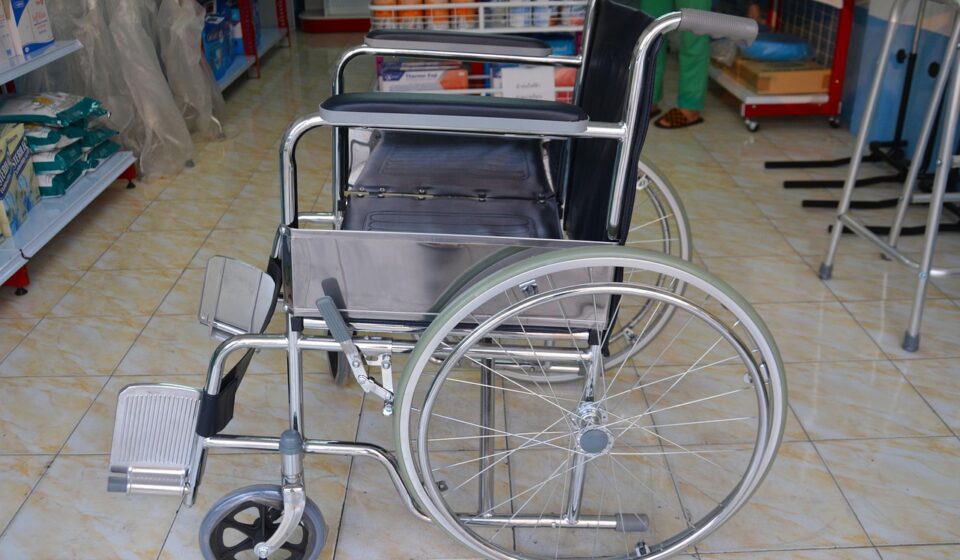
Handicap equipment is a common search term. In professional healthcare writing, however, it is usually clearer to name the specific need: mobility support, transfer assistance, accessible examination, bathing and toileting support, pressure management, or communication access. In practical use, handicap equipment includes devices that help people with disabilities, injuries, chronic conditions, age-related limitations, or temporary mobility loss move safely, receive clinical services, and complete daily activities.
For a healthcare facility, the goal is not simply to buy more devices. The equipment has to match the user, the task, the room, infection-control requirements, staff workflow, and applicable accessibility rules. More articles on related device categories can be found in the clinical equipment section.

Public health and accessibility sources use several overlapping terms. The World Health Organization describes assistive products as external products that maintain or improve functioning and independence. The Centers for Medicare and Medicaid Services uses the more specific term durable medical equipment, or DME, for Medicare coverage purposes. The U.S. Access Board and federal civil rights agencies use accessible medical diagnostic equipment, or MDE, when discussing examination tables, imaging equipment, scales, mammography equipment, and similar clinical diagnostic devices.
Main categories of handicap equipment
The most useful way to group handicap equipment is by the task it supports. A cane, a shower chair, an accessible exam table, and a patient lift can all improve access, but they solve different problems and require different selection criteria.
| Equipment category | Common examples | Primary planning question |
|---|---|---|
| Mobility and ambulation aids | Canes, crutches, walkers, rollators, wheelchairs, scooters | Does the device support safe movement without creating a new fall or fit risk? |
| Transfer and lift equipment | Transfer boards, gait belts, sit-to-stand aids, portable lifts, ceiling lifts | Can the user move between surfaces safely with the available caregiver support? |
| Accessible diagnostic equipment | Adjustable-height exam tables, accessible scales, imaging transfer surfaces | Can the patient receive the same clinical examination without avoidable barriers? |
| Bathing and toileting equipment | Shower chairs, bath benches, commodes, grab bars, raised toilet seats | Does the device reduce slip, transfer, and hygiene risks in a wet environment? |
| Bed and pressure-management equipment | Hospital beds, support surfaces, cushions, positioning aids | Does the equipment support positioning, transfers, skin integrity, and caregiver access? |
| Communication and sensory access | Hearing assistance, visual alerting, communication boards, adaptive controls | Does the person have a reliable way to understand information and express needs? |
This task-based structure helps prevent a common purchasing mistake: treating disability equipment as one broad product category. For example, a clinic that buys a wheelchair but lacks an accessible scale or adjustable examination table may still be unable to weigh or examine some patients. A home that adds a walker but ignores bathroom transfers may leave the highest-risk task unresolved.
Why clinical settings need a different approach than retail home equipment
Equipment used in a clinic has to serve many users, many body sizes, and repeated cleaning cycles. It also has to work within door clearances, turning space, infection-control routines, staff training, emergency procedures, and documentation practices. A product that works for one household may not be suitable for a multi-room outpatient facility.
Clinical equipment decisions should start with the care process. How does the patient enter the room? Where is the wheelchair positioned? Can the patient transfer to the examination surface? Is a portable lift compatible with the base of the table or chair? Can the equipment be cleaned between patients without damaging pads, controls, or electronic components? Can staff reach the patient safely during the procedure?
These questions matter because disability prevalence is substantial. The CDC Disability and Health Data System reported that 28.7% of U.S. adults had a functional disability in 2022. Mobility disability is also a major concern among middle-aged and older adults. For clinics, accessibility is not a rare accommodation; it is part of routine clinical readiness.
Accessibility standards that influence equipment choices
Several U.S. rules and standards affect how healthcare organizations evaluate accessible equipment. The ADA Standards for Accessible Design address built environment features such as accessible routes, clear floor space, doors, toilet rooms, and other physical access requirements. ADA.gov guidance on medical care for individuals with mobility disabilities explains that accessible examination rooms typically combine accessible routes and doors with clear floor space and adjustable-height examination equipment.
Medical diagnostic equipment has its own technical framework. The U.S. Access Board issued standards for accessible medical diagnostic equipment in 2017, and later rulemaking refined transfer-height requirements. In 2024, federal activity increased the practical importance of these standards. The Department of Health and Human Services finalized Section 504 regulations affecting recipients of HHS financial assistance, with requirements for accessible MDE in covered programs. The Department of Justice also adopted minimum standards for accessible MDE for state and local government entities under Title II of the ADA.
One important technical issue is transfer height. Access Board materials discuss low transfer surfaces for certain diagnostic equipment used by patients in supine, prone, side-lying, or seated positions. The 2024 Access Board final rule set a 17-inch low transfer height for certain accessible MDE. HHS materials also describe requirements for transfer surfaces adjustable from 17 inches to 25 inches and compatibility with portable patient lifts for covered recipients. The practical takeaway is direct: adjustable height and lift compatibility are not premium conveniences in many clinical contexts. They are central accessibility features.
Facilities should still avoid overgeneralizing. The exact obligation depends on the type of entity, funding, acquisition date, service setting, and applicable federal, state, and local requirements. Equipment planning should therefore involve facilities staff, compliance personnel, clinicians, and procurement teams rather than relying only on a catalog description.
How to evaluate handicap equipment before purchase
A useful evaluation process starts with the user and the task, then moves to specifications. The same device can be appropriate, inadequate, or unsafe depending on the person and environment.
- Functional fit: Identify whether the equipment supports walking, standing, sitting, transfer, bathing, toileting, positioning, communication, or examination.
- Size and weight capacity: Confirm seat width, surface dimensions, working load limits, turning radius, and whether bariatric options are required.
- Transfer compatibility: Check surface height, side access, removable arms, lift clearance, and whether a wheelchair can be positioned correctly.
- Stability and fall prevention: Review brakes, anti-tip design, non-slip surfaces, handholds, floor conditions, and wet-area performance.
- Cleaning and infection control: Confirm that upholstery, seams, controls, straps, and cushions can tolerate the facility’s cleaning products and schedule.
- Maintenance and inspection: Plan for batteries, casters, brakes, slings, fasteners, calibration, and preventive maintenance documentation.
- Training needs: Determine whether staff, caregivers, or users need hands-on instruction before the equipment is safe to use.
- Storage and access: Make sure the equipment can be stored near the point of care without blocking accessible routes or emergency exits.
Procurement teams should be cautious with vague claims such as universal, ergonomic, or easy transfer. Those terms may be useful in marketing, but they do not replace measurable specifications. A stronger product review asks for dimensions, adjustment range, load rating, cleaning instructions, warranty limits, replacement parts, and compatibility with other equipment already in use. See also: Buying Guides.
Home care and DME considerations
Home care equipment introduces a different set of constraints. The home may have narrow doors, carpet, thresholds, small bathrooms, limited caregiver availability, pets, stairs, and uneven outdoor surfaces. A device that performs well in a clinic may be too large or difficult to maneuver at home.
For U.S. Medicare purposes, CMS defines durable medical equipment through several conditions. Equipment must withstand repeated use, serve a medical purpose, generally not be useful to a person without illness or injury, be appropriate for use in the home, and meet additional durability expectations. CMS lists examples such as hospital beds and wheelchairs when they are used in the home. These coverage definitions are not the same as a clinical safety assessment, but they matter when families, discharge planners, and suppliers discuss payment and documentation.
A practical home plan should separate three questions. First, what does the person need to do every day? Second, what does the home physically allow? Third, what will insurance, Medicare, Medicaid, or private payment actually cover? The safest solution is not always the same as the reimbursable solution, so clinicians and families often need to consider alternatives such as home modifications, caregiver training, rental equipment, or staged purchases.
Common gaps in accessible equipment planning
Many accessibility problems are not caused by a complete lack of equipment. They come from partial solutions. A facility may own an accessible examination table but store it in the wrong department. A clinic may have a portable lift but lack compatible slings or staff training. A home may have a shower chair but no safe path from the bedroom to the bathroom. These gaps are easy to miss when equipment is purchased item by item instead of being mapped to real tasks.
Another common gap is maintenance. Brakes wear, batteries fail, cushions compress, upholstery cracks, and calibration drifts. For clinical equipment, maintenance records are part of operational reliability. For home equipment, families should know which parts need inspection and whom to contact for repair. A low-cost device can become expensive if it fails quickly, cannot be cleaned properly, or lacks replacement parts.
Language is also part of planning. Because handicap equipment is a familiar search phrase but not always the most respectful term, many healthcare organizations prefer disability equipment, accessible equipment, assistive technology, mobility aids, or durable medical equipment, depending on context. Clear terminology helps staff, patients, suppliers, and payers talk about the same need.
Frequently asked questions
Is handicap equipment the same as durable medical equipment?
No. Handicap equipment is a broad, informal phrase. Durable medical equipment is a specific coverage and policy term used by CMS and other payers. Some handicap equipment, such as certain wheelchairs or hospital beds used at home, may qualify as DME when it meets the applicable criteria. Other items may be assistive products, home modifications, accessibility features, or clinical equipment without being DME.
What equipment is most important for an accessible exam room?
An accessible exam room usually needs more than one item. Key elements often include an accessible route and door, clear floor space for wheelchair positioning, an adjustable-height examination table or chair, transfer supports, and compatibility with a patient lift when needed. The room layout matters as much as the equipment list.
Why does transfer height matter?
Transfer height affects whether a person can move safely between a wheelchair and an examination surface, imaging table, chair, bed, or commode. If the surface is too high or too low, the transfer may require more assistance, create fall risk, or prevent the person from receiving the service. This is why federal accessibility standards pay close attention to adjustable transfer surfaces for medical diagnostic equipment.
Can one device meet every accessibility need?
Usually not. A wheelchair supports mobility, but it does not solve bathing, toileting, examination, weighing, communication, or pressure-management needs. Good planning looks at the full sequence of care or daily living tasks, then chooses equipment that works together.
What should buyers verify before ordering equipment?
Buyers should verify dimensions, weight capacity, adjustment range, transfer access, lift compatibility, cleaning instructions, maintenance requirements, replacement parts, warranty terms, and staff training needs. In clinical settings, they should also check whether the equipment supports applicable accessibility and safety requirements for the organization.