Supplemental oxygen devices explained for home and portable care
What supplemental oxygen devices are designed to do
Supplemental oxygen devices deliver oxygen above the concentration normally available in room air when a qualified clinician determines that oxygen therapy is needed. The device decision is not simply about size, noise level or convenience. The system has to deliver the prescribed oxygen flow, match the patient’s breathing pattern, support activity or sleep, and remain safe in the home or travel setting.
For the medical device industry, oxygen delivery is increasingly assessed as a complete system: the oxygen source, delivery interface, monitoring device, user training, maintenance process and emergency plan all matter.

This article covers common home and portable oxygen systems, including stationary concentrators, portable oxygen concentrators, cylinders, liquid oxygen systems, delivery interfaces and pulse oximetry. It is intended for industry readers and general education, not as medical advice or a substitute for a prescription.
Oxygen therapy sits at the intersection of respiratory care and monitoring technology. For related coverage of device trends and monitoring tools, visit the 51jobdoc Diagnostic Devices section.
Main types of supplemental oxygen devices
Most supplemental oxygen setups combine an oxygen source with tubing, a delivery interface and, in some cases, a humidifier, conserving device or monitoring tool. The main categories differ in how oxygen is produced, stored and delivered.
Stationary oxygen concentrators
A stationary oxygen concentrator draws in room air and uses internal filtration and molecular sieve technology to concentrate oxygen while removing much of the nitrogen. These devices are common in home care because they do not require routine cylinder refills.
Their practical limitations include dependence on electricity, size, heat output, noise, maintenance needs and the need for a backup plan during power outages. Stationary concentrators are often associated with continuous-flow delivery, meaning oxygen flows whether the patient is inhaling or exhaling.
Continuous flow can be important for patients who require oxygen during sleep or who cannot reliably trigger demand-based systems. The correct flow rate, however, is a prescription matter, not a comfort setting.
Portable oxygen concentrators
Portable oxygen concentrators are designed for mobility. They concentrate oxygen from ambient air and operate on rechargeable batteries or external power. Their main advantage is reduced dependence on filled tanks, especially for patients who leave home regularly.
The key limitation is that many portable models deliver pulse-dose oxygen rather than continuous flow. Pulse-dose systems release oxygen when they detect inhalation. This can conserve battery life and oxygen output, but it may not suit every patient, particularly during sleep, shallow breathing, mouth breathing, high exertion or when higher continuous-flow support is required.
Device settings should not be assumed to equal liters per minute across brands. Pulse-dose settings are often manufacturer-specific and need to be matched to the prescription and patient response.
Compressed oxygen cylinders
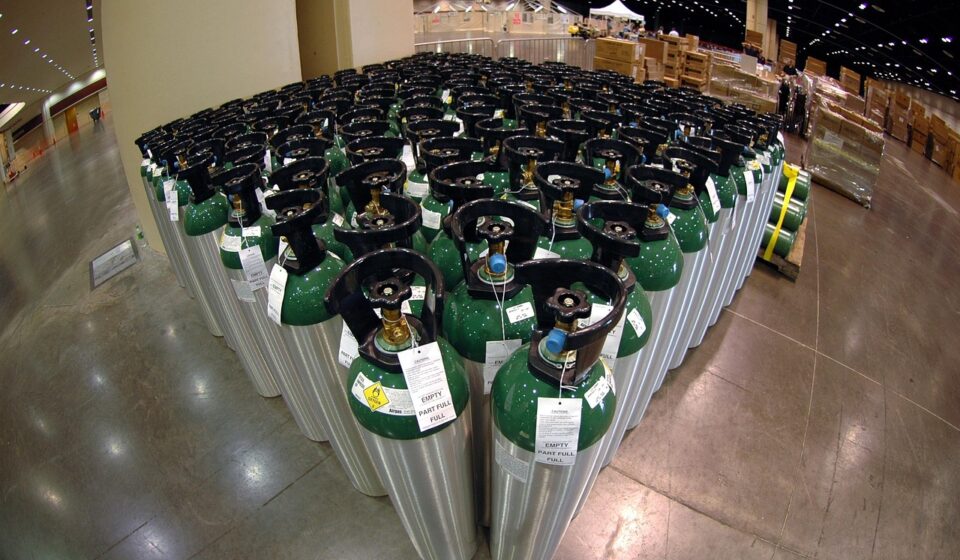
Compressed oxygen cylinders store oxygen under pressure. They remain important for backup systems, short trips, emergency planning and situations where a concentrator is unavailable or unsuitable. Depending on the regulator and conserving device, cylinders may deliver continuous or pulse-dose oxygen.
The tradeoff is finite supply. Duration depends on cylinder size, pressure, flow rate and whether oxygen is conserved between breaths. Cylinders also require careful handling, storage and transport because they are pressurized medical gas containers.
Liquid oxygen systems
Liquid oxygen systems store oxygen in a very cold liquid state and can provide a large amount of oxygen relative to container size. Portable liquid oxygen units may be useful for mobile patients who require higher continuous flows.
The American Thoracic Society’s home oxygen guideline discusses portable liquid oxygen for adults with chronic lung disease who are mobile outside the home and need more than 3 L/min continuous flow during exertion, while also noting that evidence quality is limited.
In practice, liquid oxygen availability varies by market and supplier network. It may offer strong clinical utility for selected users, but it is not always easy to obtain, service or reimburse.
Delivery interfaces
Nasal cannulas are the most familiar interface for low-flow oxygen. Masks, reservoir masks and specialty interfaces are used in different clinical contexts. Tubing length, fit, skin comfort, condensation, trip hazards and compatibility with humidification can all affect day-to-day use.
The interface is not a minor accessory. It helps determine whether the prescribed oxygen reaches the patient as intended.
How clinicians match devices to oxygen needs
Oxygen delivery is usually guided by objective assessment, symptoms, diagnosis, activity pattern and safety considerations. In the United States, Medicare coverage criteria for home oxygen are described in the CMS National Coverage Determination for Home Use of Oxygen. Commonly cited thresholds include arterial oxygen pressure at or below 55 mm Hg or oxygen saturation at or below 88 percent for one coverage group, with other criteria applying in narrower circumstances. These numbers are coverage and clinical reference points, not a self-diagnosis tool.
The American Thoracic Society’s 2020 clinical practice guideline recommends long-term oxygen therapy for adults with COPD who have severe chronic resting room-air hypoxemia, generally for at least 15 hours per day. It also recommends long-term oxygen therapy for adults with interstitial lung disease who have severe chronic resting hypoxemia, although the evidence quality differs by condition. For moderate chronic resting hypoxemia in COPD, the guideline suggests not routinely prescribing long-term oxygen therapy.
From a device-selection perspective, the key questions are practical: See also: clinical equipment.
- Is oxygen needed at rest, during exertion, during sleep or across all daily activities?
- Does the patient require continuous flow, pulse-dose delivery or both?
- Can the patient trigger a pulse-dose device consistently?
- Can the device meet the prescribed flow under real conditions, not only on a specification sheet?
- What backup system is available during power loss, travel delays or equipment failure?
- Can the patient or caregiver manage alarms, cleaning, batteries, tubing and replacement parts?
These questions are why supplemental oxygen devices should be evaluated as part of a care pathway. A lightweight device that cannot meet a patient’s exertional oxygen need is not a successful mobility solution. A powerful stationary device without backup planning can also become a risk during outages or disasters.
Monitoring matters because oxygen delivery is not the same as oxygenation
Pulse oximeters do not deliver oxygen, but they are closely tied to oxygen therapy decisions because they estimate peripheral oxygen saturation. In hospitals, clinics and homes, pulse oximetry can help clinicians observe trends and responses to exertion or therapy. However, oxygen saturation readings are estimates, not direct arterial blood gas measurements.
The FDA has warned that pulse oximeters have limitations and can be inaccurate under certain circumstances. Factors such as poor circulation, skin temperature, motion, nail polish, sensor placement and skin pigmentation may affect readings. On January 7, 2025, the FDA issued draft guidance for medical-purpose pulse oximeters that proposes updated recommendations for non-clinical testing, clinical performance testing, labeling and premarket submissions, with attention to performance across skin pigmentation. Because the document is draft guidance, it should be treated as a regulatory signal rather than a finalized requirement.
For device makers and suppliers, the implication is clear: oxygen therapy ecosystems are increasingly judged not only by flow delivery, but also by the reliability of associated monitoring and labeling. A pulse oximeter reading should be interpreted in clinical context, especially when symptoms and the displayed value do not match.
Practical comparison of common device categories
| Device category | Typical role | Strengths | Key limitations |
|---|---|---|---|
| Stationary oxygen concentrator | Home oxygen source | No routine tank refills, often supports continuous flow | Requires electricity, less portable, needs backup planning |
| Portable oxygen concentrator | Mobility and travel support | Battery powered, no filled tank, useful outside the home | Many models are pulse dose only; battery and flow limits matter |
| Compressed oxygen cylinder | Backup, short trips, portable supply | Works without electricity, familiar emergency option | Finite duration, pressurized storage, refill logistics |
| Liquid oxygen | Higher-capacity portable oxygen for selected users | Can support higher continuous-flow mobility needs | Supplier availability, handling and reimbursement vary |
| Nasal cannula or mask | Delivery interface | Simple, widely used, low cost | Fit, comfort, leaks and tubing hazards can affect use |
| Pulse oximeter | Monitoring adjunct | Quick, noninvasive oxygen saturation estimate | Not a therapy device; accuracy can be affected by multiple factors |
The main comparison is not device versus device in the abstract. It is device capability versus the prescribed use case. Home care, ambulatory activity, overnight oxygen, air travel and emergency backup may require different equipment combinations.
Safety and maintenance are core device features
Oxygen is not flammable, but it supports combustion. In an oxygen-enriched environment, materials can ignite more easily and burn faster. The National Fire Protection Association identifies smoking materials as a leading heat source in medical oxygen-related fires, injuries and deaths. For home oxygen, no-smoking rules, distance from open flames, careful cylinder storage, avoidance of oil or grease near oxygen equipment and clear caregiver training are essential.
Maintenance is also part of safety. Concentrators require filter care, adequate ventilation and attention to alarms. Tubing should be checked for kinks, cracks, water accumulation and trip hazards. Cannulas and masks require replacement schedules based on supplier or manufacturer instructions. Batteries should be charged, rotated and stored according to device instructions.
For households that rely on electrically powered oxygen equipment, emergency planning should include backup oxygen, supplier contact information, a power-outage plan and communication with local emergency services when appropriate. In disaster planning, the FDA advises patients and caregivers to follow device instructions and use battery-powered lighting rather than flame-based lighting when oxygen is present.
Travel and mobility considerations
Travel introduces a different set of requirements. The Federal Aviation Administration allows passengers to carry portable oxygen concentrators that meet applicable acceptance criteria, but passengers may not bring personal compressed or liquid oxygen in carry-on baggage, checked baggage or on their person on U.S. flights. Compressed oxygen used in an aircraft cabin must be arranged through the airline when available.
For portable oxygen concentrators, travelers typically need enough batteries for the trip and must protect spare batteries from damage and short circuit. Airlines may also require advance notice, device labeling that shows the concentrator meets FAA acceptance criteria, or documentation related to the passenger’s ability to use the device during travel. Requirements can vary by carrier, so planning should start well before the flight date.
Mobility outside the home also requires practical thinking. A portable system should be evaluated for battery duration at the prescribed setting, recharge time, carry weight, noise, alarm audibility, ease of reading controls, and whether the patient can manage stairs, vehicles and public spaces safely.
What industry readers should watch next
Several trends are shaping the market and clinical conversation around supplemental oxygen devices. First, portability is no longer enough. Patients and clinicians increasingly expect portable systems to document performance, support clearer labeling and integrate with monitoring workflows. Second, pulse oximetry scrutiny is likely to influence purchasing and regulatory expectations for connected respiratory care ecosystems. Third, the distinction between consumer wellness devices and medical-purpose devices is becoming more important when oxygen decisions are involved.
There is also a usability challenge. Many patients receive oxygen equipment at a stressful point after hospitalization, disease progression or a new diagnosis. Device design must account for real homes, older users, caregivers, limited dexterity, visual impairment, language barriers, power interruptions and fire risk. In that sense, better supplemental oxygen devices are not only smaller or quieter. They are systems that make correct use easier and unsafe use harder.
Frequently asked questions
Are supplemental oxygen devices the same as ventilators?
No. Oxygen devices increase the oxygen available to breathe, while ventilators support or control ventilation. Some patients may use both types of technology, but they solve different clinical problems and require different prescriptions, alarms and training.
Can a pulse oximeter determine whether someone needs oxygen?
A pulse oximeter can provide useful oxygen saturation estimates, but it does not replace clinical evaluation. Readings can be affected by device limitations and patient factors. Oxygen therapy decisions should be made by qualified clinicians using the appropriate diagnostic and clinical information.
Is a portable oxygen concentrator always better than a cylinder?
Not always. A portable concentrator can be convenient for mobility, but its flow mode, battery life and triggering performance must match the prescription. Cylinders may still be useful for backup, short-duration use or situations where electricity and battery charging are uncertain.
Can oxygen settings be changed for comfort?
Oxygen flow or device settings should follow the prescription and clinician instructions. Increasing or decreasing oxygen without guidance can be unsafe, especially for patients with chronic respiratory disease or changing symptoms.
What is the main safety risk with home oxygen?
Fire risk is the most visible safety concern because oxygen-enriched environments can make materials ignite and burn faster. No smoking, no open flames, proper equipment spacing, tubing management and caregiver training are essential parts of safe use.