Infusion pump buying guide for clinical and procurement teams

What an infusion pump purchase should solve
An infusion pump is a medical device that delivers fluids, medications, nutrition, blood products, or other therapies into a patient’s body in controlled amounts. For buyers, the main question is not which pump has the longest feature list. It is whether the pump fits the therapy, care setting, user workflow, risk profile, cybersecurity requirements, and maintenance capacity of the organization.
A sound infusion pump purchase should help reduce medication delivery risk, support consistent clinical practice, simplify training, and remain serviceable throughout the device life cycle. FDA materials on infusion pumps repeatedly note that reported pump problems have included software issues, user interface problems, damaged components, battery failures, alarm failures, over-infusion, and under-infusion. For that reason, procurement is a clinical safety decision as well as a capital equipment decision.
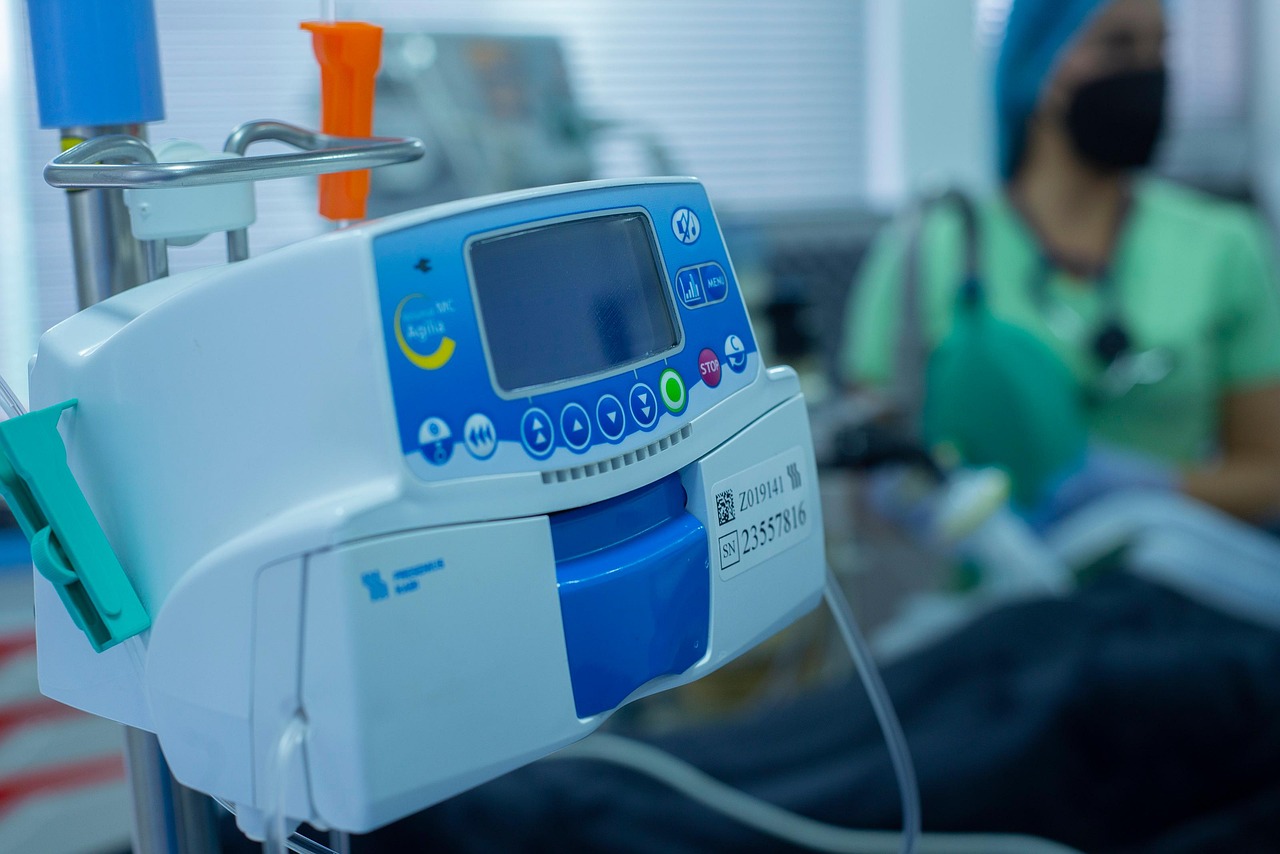
This guide is intended for hospital, clinic, nursing facility, home care, and biomedical engineering teams comparing infusion pump options. For more equipment selection articles, visit our Buying Guides.
Start with the clinical use case
The safest infusion pump choice starts with the therapy environment. A pump that works well in an adult medical-surgical ward may not be suitable for neonatal infusion, chemotherapy, patient-controlled analgesia, enteral feeding, or ambulatory home infusion. Buyers should define the clinical use case before reviewing brands, models, or price quotations.
Important planning questions include:
- Will the pump be used for continuous, intermittent, or patient-controlled delivery?
- Will it deliver high-alert medications, nutrition, insulin, chemotherapy, analgesia, or enteral feeding?
- Will the pump be used at the bedside, during transport, in outpatient infusion, or at home?
- Does the care setting require adult, pediatric, and neonatal dose support?
- How often will the pump be moved, cleaned, stored, and shared between departments?
- Will the device connect to electronic health records, dose error reduction systems, or wireless networks?
FDA descriptions commonly group infusion pumps into types such as large-volume pumps, syringe pumps, patient-controlled analgesia pumps, elastomeric pumps, enteral pumps, insulin pumps, and ambulatory pumps. These categories are not interchangeable. Syringe pumps are often considered when very small volume delivery is needed, while large-volume pumps are typically used for broader IV fluid and medication administration. Ambulatory pumps prioritize portability, and PCA pumps require controls that allow patient-initiated dosing within prescribed limits.
Compare pump types by practical fit
Procurement teams often start with specification sheets, but the practical differences between infusion pumps usually show up in workflow, disposables, alarm behavior, and maintenance. The table below summarizes common selection points.
| Infusion pump type | Common use case | Buying focus | Key limitation to check |
|---|---|---|---|
| Large-volume infusion pump | IV fluids, antibiotics, many hospital medication infusions | Drug library support, alarm performance, channel configuration, interoperability | Complexity, cleaning burden, battery condition, and damaged doors or latches |
| Syringe pump | Small-volume or precise medication delivery, including critical care settings | Low-flow accuracy, syringe compatibility, occlusion detection, neonatal suitability | Flow variation at very low rates and risk of syringe setup errors |
| PCA pump | Patient-controlled analgesia within clinician-defined limits | Lockout settings, bolus limits, history logs, security controls | Programming complexity and need for clear patient and staff education |
| Ambulatory pump | Portable or wearable infusion in outpatient or home care | Battery life, weight, screen clarity, caregiver usability, ruggedness | Home environment variability and troubleshooting support |
| Enteral pump | Nutrition delivery through enteral routes | Route-specific safety, tubing compatibility, cleaning and feeding schedule support | Risk of route confusion if workflows and connectors are not clearly managed |
The purchase decision should also separate the pump itself from administration sets, drug library software, service tools, batteries, docking stations, network components, and licensing. A low upfront device price may be misleading if consumables, software configuration, service contracts, or replacement batteries increase long-term cost.
Safety features that deserve close evaluation
Modern infusion pumps often include alarms, operator alerts, programmed limits, and dose error reduction functions. These features only add value when staff can understand them, maintain them, and respond to them reliably during routine care.
Drug library and dose error reduction
For smart infusion pumps, the drug library is a central safety tool. Buyers should ask how drug limits are created, reviewed, approved, distributed, and monitored. A pump may support soft limits, hard limits, clinical care areas, drug concentration profiles, and event logs. The governance process is as important as the feature itself.
Before purchase, confirm who will own drug library maintenance. Pharmacy, nursing, anesthesia, critical care, oncology, and informatics teams may all need input. If the library is difficult to update, outdated limits can become a hidden risk. If limits are too broad, the system may provide little practical protection. If limits are too narrow or poorly aligned with practice, staff may face unnecessary alerts and develop workarounds.
Alarms and alert usability
FDA examples of reported infusion pump problems include alarm failures, nuisance occlusion alarms, unclear messages, and situations where the pump does not provide enough information for the user to take the right action. During evaluation, buyers should observe how the pump communicates air-in-line, occlusion, door open, infusion complete, low battery, near empty, and system error conditions.
Good alarm performance is not only about loudness. It also depends on clear prioritization, readable messages, meaningful troubleshooting steps, and fit with clinical workflow. In a noisy ward or ICU, ambiguous alarms can delay response. In home care, unclear alarms may lead to caregiver confusion or unnecessary therapy interruption.
Free-flow protection and mechanical integrity
Mechanical design still matters. ECRI’s 2024 health technology hazard materials identified damaged infusion pumps as a medication safety concern, noting that damage can contribute to inaccurate medication delivery or therapy delays. Buyers should inspect how the pump prevents unintended flow, how tubing is loaded, how doors and latches withstand repeated use, and how visible damage is detected during routine checks.
Procurement teams should also ask vendors about cleaning compatibility. Repeated exposure to incompatible disinfectants may degrade plastics, labels, screens, seals, or keypads. In high-turnover areas, cleanability and chemical compatibility can affect both infection prevention and long-term device reliability.
Usability and training should be tested before purchase
Infusion pumps are often used under time pressure by clinicians with different levels of experience. A safe interface has to support real clinical conditions, not just a controlled sales demonstration. FDA materials have repeatedly associated pump performance failures with human factors issues, including user interface design, instructions, training, and default settings.
A practical evaluation should include nurses, pharmacists, anesthesia staff, biomedical engineers, educators, transport teams, and, where relevant, home care clinicians. Ask them to perform realistic tasks:
- Program a primary infusion and a secondary infusion.
- Change a rate during an active infusion.
- Respond to an occlusion or air-in-line alarm.
- Replace tubing or a syringe.
- Find dose history or event logs.
- Check battery status and power source.
- Identify whether the pump is running, paused, completed, or awaiting confirmation.
Observe errors, hesitation, repeated button presses, unclear screen prompts, and steps that differ from current policy. A pump that looks advanced on paper may require more training time than the organization can realistically provide. Conversely, a simpler interface may reduce onboarding burden if it still meets safety and therapy requirements.
Training requirements should be documented before purchase. This includes initial education, annual competency, super-user programs, traveler or agency staff orientation, biomedical service training, and patient or caregiver education for home use. If the vendor provides training materials, confirm whether they are editable, multilingual, accessible, and specific to the software version being purchased. See also: clinical equipment.
Connectivity, cybersecurity, and data requirements
Connected infusion pumps can support drug library updates, device status monitoring, event data review, and integration with medication administration workflows. They can also introduce cybersecurity and network management responsibilities. FDA cybersecurity guidance issued in 2026 emphasizes secure design, vulnerability management, labeling, documentation, and life-cycle processes for medical devices with cybersecurity risk. For buyers, the practical takeaway is straightforward: network-connected pumps should be reviewed by clinical engineering and information security before purchase.
Key questions for connected infusion pump procurement include:
- Does the pump connect through Wi-Fi, Ethernet, docking stations, or a gateway?
- Can drug libraries be updated centrally, and how are failed updates detected?
- Does the system provide audit logs and role-based access?
- How are default passwords, user accounts, and authentication handled?
- Does the vendor provide a software bill of materials or equivalent component transparency for cybersecurity review?
- What is the patching process, and how are urgent security updates communicated?
- Can the pump continue safe operation during network downtime?
- What data are transmitted, stored, retained, and exported?
Interoperability needs careful review. Bidirectional electronic health record integration may reduce manual programming steps, but it also requires validation, interface governance, downtime procedures, and version control. Buyers should not assume that a pump is integrated simply because it is technically network-capable. Ask for site references, interface specifications, implementation timelines, and a clear division of responsibility between the vendor, IT department, EHR vendor, and clinical teams.
Total cost of ownership and service planning
The acquisition price is only one part of infusion pump cost. A complete budget should include pump modules, channels, poles, charging or docking equipment, batteries, tubing sets, proprietary disposables, software licenses, drug library services, wireless infrastructure, preventive maintenance, repair parts, technical training, and end-of-life replacement.
Biomedical engineering teams should review service documentation before procurement approval. Important details include:
- Preventive maintenance interval and required test equipment.
- Battery expected life, replacement process, and storage requirements.
- Availability of parts, accessories, and software support.
- Calibration or performance verification procedure.
- Cleaning and disinfection instructions.
- Loaner pump arrangements during repair.
- Expected support period for hardware and software versions.
- Recall and field correction communication process.
For high-use areas, durability is a procurement factor. Pumps are moved between rooms, attached to poles, transported with patients, exposed to cleaning chemicals, and handled by many users. Damage that is difficult to detect can be especially problematic. Facilities should define when a pump must be removed from service, how it is tagged, who inspects it, and how suspected malfunctions are reported internally and externally.
Standardization can reduce training and parts complexity, but it should not override clinical suitability. A health system may benefit from one primary platform for general use while keeping specialized pumps for neonatal, anesthesia, oncology, enteral, or ambulatory applications. The goal is not one pump for every scenario. It is a controlled fleet strategy that reduces unnecessary variation.
A practical evaluation checklist
Before signing a purchase agreement, clinical and procurement teams can use the following checklist to compare shortlisted infusion pump systems.
- Clinical fit: Confirm the pump supports intended therapies, patient populations, delivery routes, and care settings.
- Safety controls: Review drug library functions, hard and soft limits, alarm logic, free-flow protection, and event logs.
- Usability: Conduct hands-on testing with real users and realistic scenarios rather than relying only on demonstrations.
- Consumables: Verify tubing, syringe, cassette, battery, and accessory compatibility and availability.
- Connectivity: Assess network requirements, cybersecurity documentation, patching, downtime behavior, and data export.
- Maintenance: Review preventive maintenance, repair workflow, service training, spare parts, and vendor support timelines.
- Cleaning: Confirm disinfectant compatibility and inspect areas prone to residue, cracks, or fluid ingress.
- Training: Estimate time and resources for initial training, annual competency, and new staff onboarding.
- Implementation: Plan drug library build, pilot testing, go-live support, incident reporting, and post-implementation review.
- Total cost: Compare full life-cycle cost, not only unit price.
A pilot period is valuable when feasible. It can reveal issues that do not appear in specifications, such as alarm burden, battery performance during transport, screen readability, pump stacking problems, tubing management, or staff confusion during secondary infusions. Pilot feedback should be structured, documented, and tied to measurable criteria.
Frequently asked questions
What is the most important factor when choosing an infusion pump?
The most important factor is clinical fit combined with safety performance. Flow rate range and accuracy matter, but they should be evaluated alongside drug library governance, alarm usability, training burden, maintenance, cleaning, and the environment where the pump will be used.
Are smart infusion pumps always the better choice?
Smart pumps can add important safety controls, especially when drug libraries and dose limits are well managed. However, they require governance, software maintenance, staff training, and data review. A smart pump with poor configuration or weak adoption may not deliver its intended safety benefit.
What should buyers ask about infusion pump alarms?
Buyers should ask which conditions trigger alarms, how alarms are prioritized, whether messages are easy to understand, how nuisance alarms are minimized, and what event data are available for review. Hands-on alarm testing should be part of the evaluation.
How should cybersecurity affect infusion pump purchasing?
If the pump is network-connected, cybersecurity should be part of procurement review. Buyers should request information about authentication, patching, vulnerability management, software components, network requirements, audit logs, and safe operation during downtime.
Why is total cost of ownership important?
Infusion pump costs continue after purchase. Disposables, batteries, service contracts, software licenses, preventive maintenance, staff training, repairs, accessories, and future upgrades can materially affect the real cost of the fleet.
Bottom line
The best infusion pump purchase is the one that matches the therapy, protects patients, supports users, and can be maintained reliably over time. Procurement teams should look beyond device price and compare clinical fit, safety controls, usability, connectivity, cybersecurity, serviceability, consumables, and implementation effort. A careful multidisciplinary evaluation reduces the risk of buying a pump that meets a specification but fails in daily care.