Abbott medical devices in 2026 and the growing role of diagnostics
What Abbott medical devices means in 2026
Searches for abbott medical devices usually point to two related questions: which products Abbott makes, and how those products fit into diagnostic and clinical workflows. In 2026, Abbott reports Diagnostic Products and Medical Devices as separate business segments. In practice, however, the clinical line between testing, monitoring and intervention is becoming less fixed.
Laboratory systems, rapid and molecular tests, continuous glucose monitors, electrophysiology systems, heart valve devices and neuromodulation platforms all depend on reliable patient data. For readers tracking diagnostic equipment trends, the main issue is not only Abbott’s product breadth. It is how diagnostic information supports device selection, procedure planning, monitoring and follow-up. For more related coverage, see the Diagnostic Devices section.
The 2026 portfolio map is broader than one product category
Abbott is not a pure-play diagnostics company, and it is not only a cardiovascular device company. Its public reporting and product materials describe a diversified healthcare technology business covering diagnostics, cardiovascular devices, diabetes care, nutrition and established pharmaceuticals. For the device market, the two most relevant reporting areas are Diagnostic Products and Medical Devices.
Abbott’s July 16, 2026 second-quarter results reported total company sales of $12.593 billion. In that quarter, Diagnostic Products generated $3.092 billion and Medical Devices generated $5.853 billion. Together, those two areas represented about 71% of reported second-quarter sales, based on the company’s published segment figures. This does not mean all of that revenue came from diagnostic devices. It does explain why device and diagnostic readers often need to assess Abbott through both lenses.
| Area | Examples in Abbott’s public portfolio | Why it matters to diagnostic device readers |
|---|---|---|
| Diagnostic Products | Core laboratory systems, rapid and molecular diagnostics, point-of-care testing, transfusion medicine and cancer diagnostics reporting | This is the most direct connection to laboratory instruments, assays, testing workflows and diagnostic data infrastructure. |
| Diabetes Care | FreeStyle Libre continuous glucose monitoring systems and related digital tools | CGM is monitoring rather than a conventional lab test, but it produces continuous patient data that supports therapy decisions. |
| Cardiovascular devices | Rhythm management, electrophysiology, heart failure, vascular and structural heart technologies | These devices rely heavily on imaging, electrophysiology mapping, biomarkers, patient selection and follow-up diagnostics. |
| Neuromodulation | Device-based therapies for pain and movement disorders | Diagnostic evaluation, patient selection and longitudinal outcome tracking are central to appropriate use. |
Diagnostics is moving from stand-alone testing to connected workflows
Abbott’s diagnostic footprint includes core laboratory, molecular, point-of-care, rapid testing and transfusion-related systems. That places Abbott products in hospital laboratories, reference labs, clinics, emergency settings and blood-screening environments. Abbott’s diagnostics materials emphasize accuracy, operational efficiency and timely information across the patient journey, reflecting a wider market trend: diagnostic devices are increasingly judged not only by analytical performance, but also by their effect on clinical workflow.
Beginning in 2026, Abbott’s quarterly reporting grouped the previously reported Rapid Diagnostics, Molecular Diagnostics and Point of Care businesses into a Rapid and Molecular Diagnostics category. The same 2026 reporting also presented sales from the Exact Sciences acquisition as Cancer Diagnostics after Abbott completed that acquisition on March 23, 2026. For analysts and procurement teams, this reporting structure matters because year-over-year comparisons can be misleading if the category changes are not taken into account.
The difference between reported segments and real-world product use is important. A molecular infectious disease platform, a core lab immunoassay system and a cancer screening test may sit in different business lines or reporting categories, but they can still compete for attention in the same hospital capital or operating budget. Decision-makers generally compare them by throughput, test menu, sample type, connectivity, maintenance burden, staff training requirements and total workflow impact.
Respiratory testing demand has also normalized after the COVID-19 emergency period. Abbott’s 2026 second-quarter materials described lower sales of respiratory virus tests in Rapid and Molecular Diagnostics compared with the prior year, while Core Laboratory Diagnostics was described as growing in the United States and Latin America. That mix points to a more mature post-pandemic diagnostics market, where routine lab automation and durable testing menus may carry more strategic weight than temporary spikes in respiratory testing volume.
Diabetes care shows how monitoring devices are becoming diagnostic infrastructure
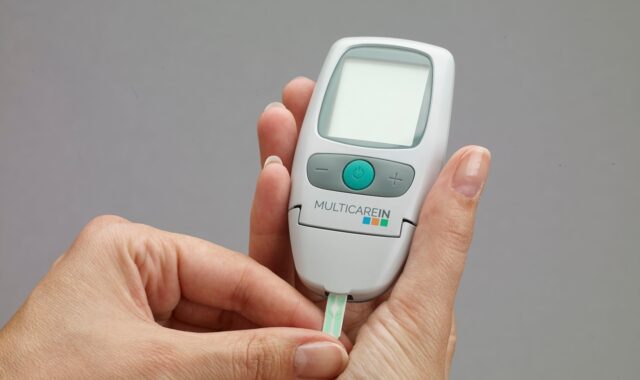
Abbott’s FreeStyle Libre portfolio is one of the company’s most visible medical device families. Continuous glucose monitoring is not the same as a central laboratory diagnostic test, but it has become part of the data infrastructure for diabetes care. Instead of providing a single blood glucose value at one moment, CGM systems generate trend information that can support day-to-day therapy decisions, clinician review and patient behavior changes.
Abbott’s July 2026 second-quarter release reported Diabetes Care sales of $2.188 billion for the quarter and stated that continuous glucose monitor sales grew 11.0% on a reported basis and 9.5% on a comparable basis. For diagnostic device readers, the significance is that monitoring platforms are being evaluated more like diagnostic infrastructure. Accuracy, alarms, interoperability, user adherence, replacement logistics and post-market surveillance all affect clinical confidence.
The FreeStyle Libre safety history also shows why post-market data matters. The FDA classified a recall of certain FreeStyle Libre 3 and FreeStyle Libre 3 Plus sensors as Class I on February 4, 2026, after earlier communications about sensors that could provide incorrect low glucose readings. The FDA communication stated that, as of January 7, 2026, Abbott had reported 860 serious injuries and seven deaths associated with the issue. This should not be read as a judgment on all CGM technology. It is a reminder that diagnostic and monitoring devices require ongoing quality systems, clear user instructions and rapid correction mechanisms when problems are identified.
Cardiovascular devices depend on diagnostic evidence before and after treatment
Abbott’s Medical Devices segment includes several cardiovascular areas, including rhythm management, electrophysiology, heart failure, vascular and structural heart. These are therapeutic device categories, but their use is closely tied to diagnostics. A valve repair device requires imaging-based patient selection. An ablation system depends on electrophysiology mapping and procedural confirmation. A heart failure platform depends on monitoring and follow-up data. Device innovation often increases the need for stronger diagnostic pathways, rather than reducing it.
| Public regulatory signal | Date | Diagnostic relevance |
|---|---|---|
| FDA approval of TriClip G4 System | April 1, 2024 | Use of the device depends on assessment of tricuspid regurgitation severity, patient symptoms, surgical risk and imaging review by a heart team. |
| FDA approval of Tendyne Transcatheter Mitral Valve System | May 23, 2025 | The indicated population involves severe mitral valve dysfunction associated with severe mitral annular calcification, making imaging and multidisciplinary evaluation central. |
| FDA approval of Volt PFA System | December 19, 2025 | The system is used for certain atrial fibrillation patients, linking electrophysiology diagnosis, mapping, procedural planning and follow-up. |
| Abbott reporting transfer of Amplatzer Amulet-related sales from Structural Heart to Electrophysiology | January 1, 2026 | Reporting changes affect business analysis and show how device categories may shift even when clinical use remains related. |
These examples show why diagnostic device readers should not treat therapeutic devices as a separate market. The success of many implanted or catheter-based technologies depends on earlier diagnosis, appropriate risk stratification, procedural imaging and evidence-based follow-up. As procedures become less invasive and more data-driven, the diagnostic ecosystem around the device can be as important as the device itself. See also: clinical equipment.
What hospitals, labs and distributors should evaluate
For clinical teams and purchasing groups, Abbott’s scale can be useful, but the brand name alone should not drive device selection. A more reliable approach is to evaluate the specific product, its indication, the workflow it supports and the evidence behind it. This is especially important when the term Abbott medical devices is used broadly across diagnostics, monitoring and therapy.
- Clarify the product category. A core lab analyzer, a rapid molecular test, a CGM sensor and a structural heart implant have different regulatory pathways, buyers and performance metrics.
- Check geography and indication. FDA approval, CE marking and other regulatory statuses may differ by market, version and intended use.
- Review workflow impact. For diagnostic systems, ask about throughput, sample handling, connectivity, maintenance, uptime expectations and staff training.
- Assess data integration. Devices that generate patient data should be evaluated for compatibility with laboratory information systems, electronic health records and clinical review workflows.
- Examine post-market signals. Recalls, field corrections, warning letters and adverse-event trends do not automatically disqualify a device, but they should be part of risk review.
- Compare total cost and capacity. Reagent agreements, consumables, service plans, software fees and replacement logistics can matter as much as the instrument price.
- Match the device to the care pathway. A technology is strongest when the facility has the patient population, staff expertise and diagnostic support needed to use it appropriately.
The main takeaway for diagnostic device readers
The most useful way to understand Abbott medical devices in 2026 is to view them as part of a data-driven care continuum. Abbott’s Diagnostic Products segment remains central to laboratory and testing workflows. Its Diabetes Care business shows how continuous monitoring can act as a real-world data layer for chronic disease management. Its cardiovascular portfolio shows how therapeutic devices depend on imaging, physiologic measurement, patient selection and follow-up evidence.
This creates both opportunity and complexity. The opportunity is that diagnostic devices can become more valuable when they connect to treatment decisions, remote monitoring and longitudinal care. The complexity is that readers must separate corporate reporting categories from clinical function. A product may sit in a Medical Devices segment while still depending on diagnostic information for safe and effective use. Conversely, a diagnostic platform may influence therapy without being a therapeutic device itself.
For industry readers, the useful insight is in the connections: how lab systems, molecular testing, cancer diagnostics, CGM, electrophysiology and structural heart technologies shape one another. Abbott’s 2026 public materials show a company where diagnostics are not an isolated category, but a foundation for much of the device portfolio’s clinical value.
Frequently asked questions
Is Abbott Medical Devices the same as Abbott Diagnostics?
No. Abbott reports Medical Devices and Diagnostic Products as separate business segments. However, many Abbott medical devices rely on diagnostic information, and many Abbott diagnostic platforms influence treatment decisions. The overlap is clinical rather than purely corporate.
Which Abbott products are most relevant to diagnostic device readers?
The most direct examples are core laboratory systems, molecular diagnostics, point-of-care testing, rapid diagnostics, transfusion-related testing and cancer diagnostics. Continuous glucose monitoring is also highly relevant because it generates real-time physiologic data used in diabetes management.
Why did Abbott’s 2026 diagnostic reporting change?
Abbott’s 2026 Form 10-Q stated that previously reported Rapid Diagnostics, Molecular Diagnostics and Point of Care businesses were aggregated into Rapid and Molecular Diagnostics beginning in 2026. It also reported Cancer Diagnostics after the March 23, 2026 Exact Sciences acquisition. Readers comparing historical data should account for those changes.
What FDA safety issue should readers know about?
The FDA classified a recall of certain FreeStyle Libre 3 and FreeStyle Libre 3 Plus sensors as Class I on February 4, 2026. The issue involved certain sensors that could provide incorrect low glucose readings. This highlights the importance of post-market surveillance for connected diagnostic and monitoring devices.
How should a hospital compare Abbott devices with alternatives?
Hospitals should compare the specific intended use, regulatory status, evidence, workflow fit, interoperability, service model, consumables, training requirements and post-market record. For diagnostic devices, test menu, throughput and data integration are often just as important as instrument specifications.