Clinical equipment list for clinics and healthcare facilities
Clinical equipment list by functional area
A useful clinical equipment list is not a universal shopping sheet. It is a structured inventory of the equipment a healthcare facility needs to assess patients, monitor vital signs, respond to emergencies, perform procedures, prevent infection, document care, and keep daily operations safe. The starting point should be the services offered, patient volume, staff competency, regulatory status, maintenance needs, and infection-control risk.
The World Health Organization describes medical equipment as medical devices that require calibration, maintenance, repair, user training, and eventual decommissioning. In practice, that means a responsible equipment list should include more than item names and quantities. It should identify who uses each device, where it is located, how it is cleaned, how it is serviced, and when it should be replaced.
For more related industry articles, visit the clinical equipment category.
Why there is no one-size-fits-all equipment list
Searches for a clinical equipment list often imply that every clinic needs the same set of devices. Real procurement is more specific. Equipment requirements depend on facility type, scope of care, staffing model, local disease burden, emergency preparedness level, and available infrastructure. A primary care clinic, dermatology office, dental clinic, dialysis center, ambulatory surgery center, emergency department, and inpatient ward all use clinical equipment, but their risk profiles and technical support needs are different.
WHO guidance on core medical equipment notes that equipment selection must consider the type of facility, available workforce, local needs, and resources. This is a key limitation for procurement teams: copying another facility’s list can result in underused devices, missing accessories, unsafe installation, or equipment that cannot be maintained locally. A stronger approach is to build the list by care pathway, then check it against infection-control requirements, manufacturer instructions, service availability, and regulatory obligations.
The framework below is intended for clinics and general healthcare facilities. It is not a substitute for local codes, licensing rules, manufacturer requirements, clinical governance, or biomedical engineering review. It does, however, provide a practical base for planning, budgeting, audits, and replacement discussions.
Core clinical equipment list for common care areas
The table groups equipment by function rather than by department. This makes it easier to see whether the facility can support each clinical task safely, from patient arrival through assessment, treatment, cleaning, documentation, and follow-up.
| Clinical function | Common equipment examples | Planning notes |
|---|---|---|
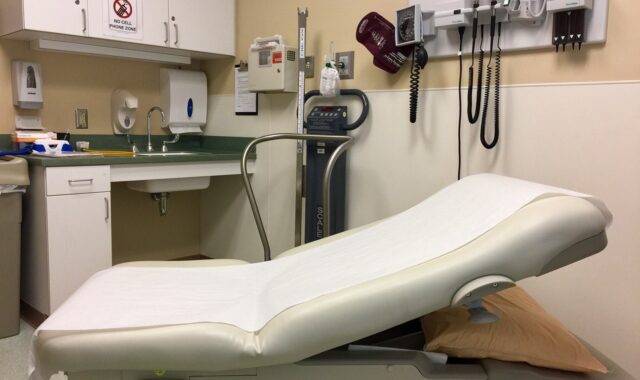
| Patient assessment | Examination table, diagnostic light, stethoscope, thermometer, blood pressure monitor, pulse oximeter, otoscope, ophthalmoscope, weighing scale, measuring tape | Match sizes and accessories to patient groups, including pediatric, bariatric, geriatric, and mobility-limited patients where relevant. |
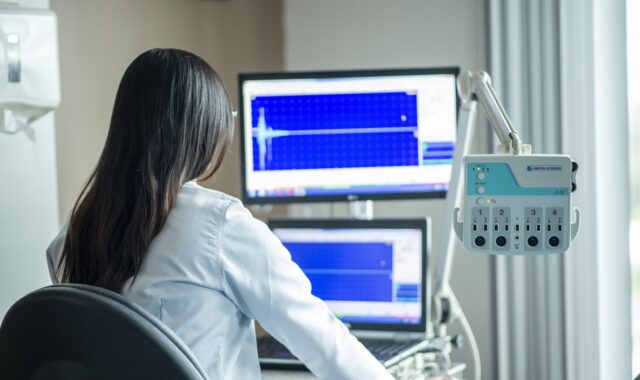
| Vital signs and monitoring | Multi-parameter patient monitor, ECG machine, capnography where clinically required, glucose meter, electronic thermometer, automated blood pressure device | Check calibration, alarm settings, battery condition, compatible sensors, and staff training before routine use. |
| Emergency response | Defibrillator or AED, emergency cart, suction device, oxygen delivery equipment, bag-valve-mask resuscitator, airway adjuncts, emergency lighting | Emergency equipment should be checked on a defined schedule and stored where trained staff can access it quickly. |
| Minor procedures | Procedure table, surgical lights, instrument sets, electrosurgical unit where applicable, dressing trolley, local procedure trays, sharps containers | Separate reusable instruments, single-use items, sterile storage, and reprocessing workflow to avoid unsafe shortcuts. |
| Diagnostic support | Specimen refrigerator, centrifuge, microscope where applicable, point-of-care testing devices, urine analyzer, pregnancy test reader, ECG printer or digital output | Plan for quality control, reagent storage, temperature monitoring, operator competency, and result documentation. |
| Respiratory care | Nebulizer, oxygen concentrator or cylinders, flowmeter, humidification accessories where indicated, spirometer, suction pump | Address oxygen safety, cleaning instructions, tubing compatibility, filter replacement, and backup supply during power failure. |
| Infection prevention | Autoclave or sterilizer where reusable instruments are processed, washer-disinfector where applicable, disinfectant containers, PPE storage, hand hygiene stations, spill kits | Use the equipment according to the Spaulding risk approach and manufacturer instructions for cleaning, disinfection, or sterilization. |
| Mobility and patient support | Wheelchairs, stretchers, transfer boards, patient lifts, step stools, privacy screens, commodes, clinical chairs | Inspect brakes, wheels, weight limits, upholstery integrity, cleaning compatibility, and safe transfer practices. |
| Medication and cold chain support | Medication refrigerator, temperature data logger, lockable medication cabinet, infusion pump where within scope, syringe pump where within scope | Medication-related equipment needs temperature control, access control, alarm response, and documented checks. |
| Documentation and connectivity | Workstations, label printers, barcode scanners, networked monitoring connections, device integration accessories | Assess cybersecurity, data privacy, network reliability, downtime procedures, and compatibility with clinical records. |
How to adapt the list to different facility types
Primary care and outpatient clinics
Primary care settings usually focus on assessment, screening, vaccination support, minor procedures, emergency readiness, and reliable documentation. The equipment list should cover vital signs, examination tools, basic diagnostics, cold-chain monitoring for vaccines where relevant, and emergency response. Because many outpatient facilities have limited biomedical engineering support on site, devices should be straightforward to maintain, supported by local service providers, and supplied with clear user instructions.
Urgent care and emergency-facing services
Urgent care facilities need stronger monitoring, airway, oxygen, suction, immobilization, and resuscitation capability than a routine office clinic. The list should include emergency carts, defibrillation, ECG, splints, wound-care equipment, point-of-care testing, and a process for checking time-sensitive supplies. Location matters as much as ownership: a defibrillator stored far from the treatment room is not equivalent to one positioned for rapid use.
Specialty clinics
Specialty clinics should build their lists around the procedures they actually perform. An ophthalmology clinic, cardiology clinic, rehabilitation center, endoscopy suite, and women’s health clinic may all need general examination equipment, but their specialized equipment, maintenance schedules, cleaning risks, and operator training requirements will differ. Specialty devices should be reviewed by the responsible clinical lead and, where possible, by biomedical engineering or health technology management staff before purchase.
Hospital departments
Hospital departments usually require closer integration with facility systems, medical gases, electrical safety programs, alarm management, sterile processing, IT networks, and accreditation requirements. A departmental list should identify not only equipment type and quantity, but also location, risk category, ownership, service contract, accessories, consumables, software version, and downtime plan.
Safety and compliance checks before buying equipment
Procurement should not begin with price alone. The U.S. Food and Drug Administration classifies medical devices into Class I, II, and III according to risk and the level of regulatory control needed to provide reasonable assurance of safety and effectiveness. For facilities in the United States, the regulatory status and intended use of a device should be checked before purchase. In other countries, teams should follow the applicable national regulatory pathway and import requirements.
For infection prevention, CDC guidance uses the Spaulding approach, which groups patient-care items by risk: critical items generally require sterilization, semicritical items require high-level disinfection, and noncritical items require lower-level disinfection depending on use and contamination. This matters because the same equipment name can carry different cleaning implications depending on how the item contacts the patient.
Before adding an item to the clinical equipment list, review these points: See also: Buying Guides.
- Intended use: confirm that the device is suitable for the service, patient population, and clinical setting.
- Regulatory status: verify classification, clearance, approval, registration, or other local authorization as applicable.
- Installation needs: check electrical load, medical gas, ventilation, water quality, drainage, shielding, space, and mounting requirements.
- Cleaning and reprocessing: confirm that staff can follow manufacturer instructions using available disinfectants, sterilizers, and workflows.
- Training: identify who can operate the device, who can troubleshoot alarms, and who signs off competency.
- Maintenance support: confirm calibration tools, spare parts, software support, warranty terms, local service capability, and downtime response.
- Consumables: check probes, cuffs, electrodes, filters, tubing, cartridges, reagents, batteries, printer paper, and single-use accessories.
- Data and connectivity: assess network compatibility, cybersecurity, patient data handling, and export formats.
Inventory and maintenance fields to include
A clinical equipment list becomes operationally useful when it is treated as an inventory, not just a purchase plan. WHO health technology management guidance describes a life cycle that includes needs assessment, procurement, incoming inspection, inventory, training, maintenance, and decommissioning. AAMI’s EQ56 standard also points to the importance of a structured medical equipment management program.
At minimum, each inventory record should include the equipment name, asset number, manufacturer, model, serial number, department, room, owner, acquisition date, warranty status, risk level, maintenance interval, calibration requirement, cleaning category, key accessories, software version where applicable, and service history. For networked or software-driven equipment, include cybersecurity and update responsibilities.
Maintenance planning should distinguish between performance inspection, safety inspection, preventive maintenance, calibration, and corrective repair. A thermometer that is inaccurate, a suction pump with weak performance, a defibrillator with an expired battery, or a sterilizer without documented cycle monitoring can create risk even when the equipment is physically present. The list should therefore record readiness, not only ownership.
Replacement priorities and common gaps
Replacement planning is often delayed until a device fails. A more reliable method is to assign replacement priority based on clinical risk, failure history, manufacturer support, parts availability, infection-control compatibility, software obsolescence, and total cost of ownership. High-use and high-risk equipment should be reviewed more often than low-risk support items.
Common gaps in clinical equipment lists include missing cuffs and sensors, unverified batteries, unavailable printer paper, undocumented calibration, unclear cleaning instructions, lack of staff competency records, and devices that are technically present but out of service. These gaps are especially common when equipment is donated, transferred between departments, purchased online, or added during urgent expansion.
Facilities should also plan for decommissioning. A device may need to be removed if it becomes unsafe, cannot be calibrated, lacks manufacturer support, has repeated failures, no longer meets clinical needs, or cannot be cleaned according to current practice. Keeping obsolete equipment in storage can create confusion during emergencies and distort inventory accuracy.
A practical checklist for building your list
- Define the clinical services the facility will provide and the patient groups it will serve.
- Map each care pathway from arrival, assessment, diagnosis, treatment, monitoring, discharge, and follow-up.
- List the equipment required for each step and separate reusable devices, single-use supplies, furniture, IT equipment, and facility infrastructure.
- Review regulatory status, infection-control requirements, installation needs, and maintenance obligations.
- Confirm accessories, consumables, spare parts, calibration tools, and service support before purchase.
- Assign ownership for training, daily checks, cleaning, preventive maintenance, and downtime response.
- Enter each device into an inventory system after incoming inspection and update records after service or relocation.
- Review the list at least annually, or when services, guidelines, patient volume, or technology changes.
Frequently asked questions
What is included in a clinical equipment list?
A clinical equipment list typically includes examination tools, vital signs equipment, patient monitors, emergency response devices, diagnostic equipment, procedure equipment, infection-prevention equipment, patient mobility items, medication storage equipment, and documentation or connectivity tools. The exact list should reflect the facility’s scope of care.
How is clinical equipment different from medical supplies?
Clinical equipment usually refers to durable devices that require inspection, maintenance, calibration, training, repair, or decommissioning. Medical supplies are often consumable or single-use items such as dressings, gloves, syringes, tubing, or test cartridges. In practice, an equipment plan should track both, because many devices cannot function safely without the correct consumables.
Who should approve a clinical equipment list?
Approval should involve clinical leaders, nursing or operations managers, infection-prevention staff, procurement, facilities, IT, finance, and biomedical engineering or health technology management personnel where available. High-risk equipment may also require review under local regulatory, accreditation, or licensing procedures.
How often should the list be reviewed?
Review frequency depends on facility risk and activity, but an annual review is a reasonable baseline for many organizations. Additional reviews should occur when services expand, patient volume changes, devices fail repeatedly, manufacturer support ends, infection-control requirements change, or new regulatory obligations apply.
What is the biggest mistake in equipment planning?
The biggest mistake is treating equipment planning as a purchase exercise instead of a life-cycle responsibility. A device is not truly available for clinical use unless staff can operate it, clean it, maintain it, document its use, obtain accessories, and remove it safely when it reaches the end of service.