Clinical laboratory equipment selection guide for quality, safety and compliance

What clinical laboratory equipment has to accomplish
Clinical laboratory equipment should be selected for the work a laboratory must perform reliably, not from a catalog list alone. Whether the setting is a hospital laboratory, reference lab, physician office lab or specialty testing site, the core question is the same: will the equipment support the test menu, specimen volume, quality control, staff competency, safety requirements and reporting workflow without creating avoidable compliance risk?
A suitable system is one that can be verified before patient testing, maintained under documented procedures, connected to result review where needed and supported when it fails. This guide reviews the main equipment categories, purchase criteria and quality checkpoints laboratories should consider against CLIA, ISO 15189:2022, OSHA laboratory safety requirements, CDC biosafety guidance and applicable accreditation checklists.

For broader coverage of related devices and workflow topics, see the clinical equipment section.
Core categories and where they fit in the testing workflow
A useful way to evaluate laboratory equipment is to map it to the testing process. Clinical laboratories do not simply buy analyzers; they build a chain that includes specimen collection, accessioning, preparation, measurement, review, storage and disposal. Weak equipment at any point in that chain can affect turnaround time, result quality or staff safety.
| Workflow area | Common equipment examples | Selection focus |
|---|---|---|
| Pre-analytical processing | Centrifuges, specimen refrigerators, barcode scanners, aliquoting tools, biosafety cabinets | Specimen integrity, identification, aerosol control, temperature control and traceability |
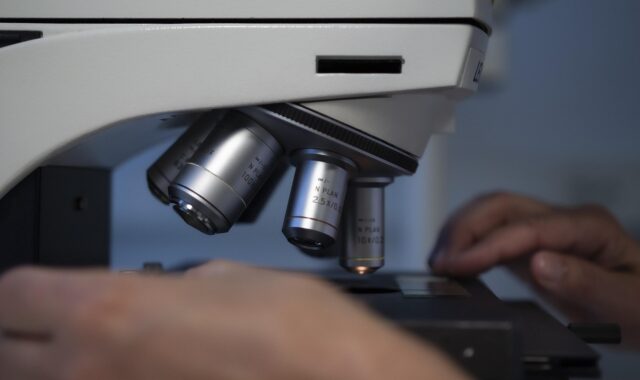
| Analytical testing | Chemistry analyzers, hematology analyzers, immunoassay systems, coagulation systems, molecular platforms, microscopes, blood gas analyzers | Test menu, complexity, precision, calibration, QC design, throughput and service support |
| Support equipment | Pipettes, balances, water systems, incubators, refrigerators, freezers, timers, temperature monitors | Calibration records, environmental monitoring, preventive maintenance and backup plans |
| Safety and containment | Biological safety cabinets, splash shields, sealed centrifuge rotors, chemical storage cabinets, eyewash stations | Risk assessment, chemical hygiene, biosafety level, maintenance and staff training |
| Data and connectivity | Laboratory information system interfaces, middleware, autoverification tools, printers, workstations | Positive patient identification, audit trails, result review, cybersecurity and downtime procedures |
This workflow view also helps avoid a common procurement mistake: assessing an analyzer in isolation. A high-throughput chemistry analyzer, for example, can still create bottlenecks if centrifuge capacity, sample loading, reagent storage, QC review or LIS connectivity cannot keep pace with its output.
Selection criteria that matter before price
Test menu and complexity
The starting point is the laboratory’s approved test menu. In the United States, CLIA recognizes waived, moderate complexity and high complexity testing categories. CDC and FDA materials describe how complexity categories are tied to factors such as operator knowledge, reagent preparation, calibration, quality control, troubleshooting, maintenance and interpretation. Before purchase, a laboratory should confirm that its CLIA certificate, personnel qualifications and procedures match the equipment and assays it plans to use.
For waived testing, the equipment may appear simple, but simplicity does not remove the need to follow manufacturer instructions. If a site modifies instructions, uses unapproved specimen types or performs testing outside the cleared conditions, the risk profile changes. For moderate and high complexity testing, method verification, competency assessment, QC rules, calibration practices and maintenance records become even more central.
Throughput, downtime and service coverage
Published throughput is not the same as usable throughput. Laboratories should ask how many reportable results the system can produce during the actual workday after start-up, calibration, QC, reagent loading, repeat testing, maintenance and operator breaks are included. Batch systems may suit predictable volumes, while random-access systems can reduce delays in mixed menus or stat testing.
Downtime planning deserves the same attention as instrument speed. Before purchase, clarify preventive maintenance intervals, remote diagnostic capability, average service response time, loaner availability, reagent back-order history and whether another instrument can cover critical tests. A lower acquisition price can become expensive if downtime leads to send-out testing, delayed clinical decisions or repeated QC failures.
Space, utilities and sample flow
Laboratory equipment must fit the room, not just the budget. Buyers should check bench load limits, floor space, electrical requirements, heat output, water quality, drainage, compressed air, ventilation, noise, access for service panels and safe pathways for specimens and waste. A biosafety cabinet or large analyzer also needs clearance for airflow and maintenance, not merely enough space to stand against a wall.
Sample flow is often where small layout problems become daily inefficiencies. Ideally, specimens move from receipt to processing to analysis to storage with minimal crossing of clean and contaminated areas. Refrigerators, centrifuges, aliquoting stations and analyzers should be positioned to reduce relabeling, handoffs and unnecessary walking.
Interoperability and data integrity
For modern laboratories, equipment selection is also an informatics decision. Interfaces to a laboratory information system can reduce transcription errors, support autoverification rules and improve auditability, but only if mapping, flags, reference intervals, units and critical result pathways are validated. Procurement review should include interface costs, middleware licensing, cybersecurity expectations, user access controls, backup procedures and how results are handled during network outages.
Quality and compliance checkpoints in the United States
U.S. laboratories should treat equipment procurement as part of the quality system. CLIA applies to facilities that test human specimens for health assessment or for diagnosing, preventing or treating disease. CLIA requirements are administered through a federal framework involving CMS, CDC and FDA roles, while accrediting organizations such as CAP may add detailed checklist expectations for accredited laboratories.
Key documentation usually includes installation records, method verification or validation, calibration and calibration verification where applicable, QC records, maintenance logs, operator training, competency assessment, reagent and lot records, temperature logs and corrective actions. The exact requirement depends on the test system, complexity category, manufacturer’s instructions, accrediting body and local policy.
Internationally, ISO 15189:2022 is a major reference for medical laboratory quality and competence. It is not a purchasing checklist by itself, but it reinforces the need for equipment processes that are controlled, documented and connected to patient-result reliability. Laboratories working across borders or preparing for accreditation should compare vendor documentation with ISO 15189:2022 expectations before signing a contract.
One current regulatory point needs careful handling. FDA issued a final rule on laboratory developed tests on May 6, 2024. A federal district court vacated that rule on March 31, 2025, and FDA issued a final rule on September 19, 2025 reverting the in vitro diagnostic product definition to its prior text. As of August 31, 2026, laboratories should not rely on the vacated 2024 LDT phase-in schedule as a current compliance obligation. They should still review CLIA obligations, state requirements, accreditation standards and FDA status for commercial IVD systems, including whether an assay is cleared, approved, authorized, research-use-only or investigational-use-only. See also: Buying Guides.
Safety, biosafety and facility fit
Equipment selection must include worker safety. OSHA’s laboratory standard, 29 CFR 1910.1450, requires a written Chemical Hygiene Plan where hazardous chemicals are used in the workplace. Purchasing decisions should therefore account for chemical storage, spill response, ventilation, waste handling, PPE, labeling and whether the equipment introduces new exposure hazards.
For biological materials, CDC and NIH biosafety guidance remains a key best-practice reference. Diagnostic laboratories should evaluate aerosol-generating steps such as vortexing, pipetting, uncapping tubes and centrifugation. Centrifuges may need sealed rotors or safety cups for certain materials, while procedures likely to generate infectious aerosols may require appropriate containment such as a biological safety cabinet. The correct control depends on the specimen type, organism risk, procedure and institutional biosafety assessment.
Safety also includes ergonomics and routine operation. Heavy reagent packs, awkward sample loading, frequent bending, poor screen height and noisy equipment can contribute to staff fatigue. A procurement team should include end users in demonstrations and ask them to simulate common tasks, not simply watch a vendor presentation.
Total cost of ownership and lifecycle risk
The purchase price is only one part of the cost. Clinical laboratory equipment often creates recurring expenses through reagents, calibrators, controls, consumables, service contracts, software licenses, interface maintenance, proficiency testing materials, waste disposal and staff training. A meaningful comparison should calculate cost per reportable result, not just the price of a test kit or instrument.
Risk should be priced as well. Single-vendor reagent dependency, limited service coverage, proprietary consumables, short reagent stability, high repeat rates or lack of backup instruments can all increase operational exposure. Laboratories should request documentation on analytical measuring range, carryover, interference limitations, calibration stability, reagent onboard stability and maintenance requirements, then verify that those claims fit local workload and staffing.
| Cost area | Question to ask before purchase |
|---|---|
| Reagents and consumables | Are there minimum order quantities, cold-chain needs, short expirations or proprietary supplies? |
| Maintenance | Which tasks are daily, weekly, monthly and annual, and how much hands-on time is required? |
| Service | What response time is written into the contract, and what is excluded? |
| Quality control | How many QC levels and events are expected, and what happens after reagent lot changes? |
| Connectivity | Are LIS interfaces, middleware, validation support and cybersecurity updates included? |
A practical procurement checklist
Before approving a new instrument or support device, laboratories can use the following checklist to keep the review grounded in quality and workflow:
- Define the intended use, specimen types, test menu and expected daily and peak volume.
- Confirm CLIA complexity category, certificate coverage, personnel requirements and any state rules.
- Request current package inserts, operator manuals, maintenance schedules and safety data sheets where applicable.
- Review installation requirements for space, utilities, ventilation, temperature, humidity and network access.
- Plan method verification or validation before patient reporting.
- Estimate total cost per reportable result, including QC, calibration, repeats, service and waste.
- Assess downtime risk and identify backup testing routes for critical assays.
- Verify LIS or middleware interface scope, result flags, audit trails and downtime workflow.
- Check staff training burden and competency documentation needs.
- Compare the instrument’s maintenance and QC expectations with accreditation checklist requirements.
- Document the safety risk assessment, including chemical, biological, sharps, aerosol and ergonomic hazards.
- Keep vendor performance claims separate from laboratory-verified performance data.
The most defensible purchase file tells a clear story: why the equipment was needed, which alternatives were considered, what risks were identified, how quality requirements will be met and how the laboratory will know the system remains fit for use after implementation.
Frequently asked questions
What is the most important factor when choosing clinical laboratory equipment?
The most important factor is fit for the intended test menu and quality system. Price, brand and throughput matter, but they should not override verification requirements, QC design, maintenance burden, safety controls, staff competency and result-reporting workflow.
How often should laboratory equipment be calibrated or maintained?
There is no single schedule for all equipment. Laboratories should follow manufacturer instructions, applicable CLIA requirements, accrediting body expectations and local procedures. Any schedule should be documented, monitored and linked to corrective action when maintenance, calibration or QC does not meet acceptance criteria.
Is waived testing equipment free from compliance risk?
No. Waived tests are generally simpler and have a lower regulatory burden than moderate or high complexity tests, but users still need to follow the manufacturer’s instructions and maintain good testing practices. Incorrect specimen handling, expired reagents, poor storage or untrained operators can still produce unreliable results.
Does automation always improve laboratory performance?
Automation can improve consistency and throughput when volume, staffing and workflow justify it. It may not help if the laboratory has low volume, unstable interfaces, limited service coverage or pre-analytical bottlenecks. Automation should be justified by measurable workflow needs, not by the assumption that larger systems are always better.
Which sources should laboratories verify before purchase?
Useful references include CDC CLIA test-complexity materials, FDA CLIA categorization information, CMS CLIA requirements, OSHA’s laboratory standard, CDC and NIH biosafety guidance, ISO 15189:2022 and the current checklist or standards used by the laboratory’s accrediting organization. Vendor documents should be compared with these requirements before patient testing begins.