Healthcare DME in 2026 and the shift to connected home care
What healthcare DME means in today’s care model
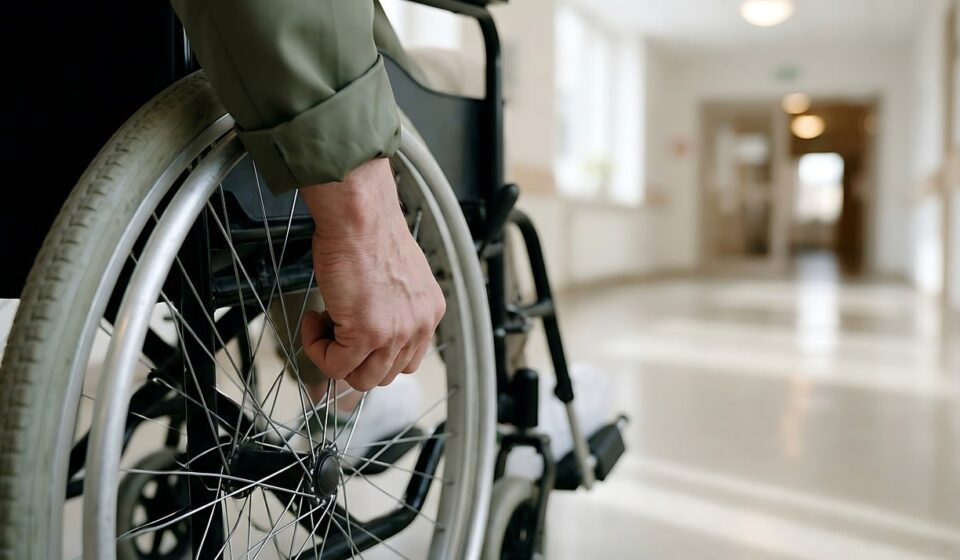
Healthcare DME, or durable medical equipment, refers to equipment used for a medical purpose, able to withstand repeated use, appropriate for use in the home, and typically useful primarily to someone who is sick or injured. In Medicare terminology, the broader category is DMEPOS, which includes durable medical equipment, prosthetics, orthotics, and supplies.
In 2026, the operational meaning of DME is broader than a wheelchair, hospital bed, oxygen system, walker, or CPAP machine delivered to a patient’s home. DME is increasingly part of a connected care pathway that may involve prescriptions, documentation, supplier accreditation, prior authorization, device training, maintenance, billing data, and, in some cases, remote physiologic monitoring.

For healthcare organizations, suppliers, and technology teams, the question is not whether DME matters. It is how to manage DME safely and compliantly as more care moves outside the hospital. The healthcare technology discussion now includes home usability, patient-generated data, interoperability, fraud prevention, and payer policy changes. Readers following Healthcare Technology should treat DME as a workflow category as well as an equipment category.
What counts as DME and where confusion begins
The basic definition of DME is clear, but operational decisions are often less straightforward. Medicare materials describe covered DME as medically necessary equipment ordered by a doctor or other qualified healthcare provider for use in the home. Common examples include oxygen equipment, walkers, hospital beds, wheelchairs, scooters, nebulizers, patient lifts, pressure-reducing support surfaces, and CPAP machines. Many items are rented rather than purchased, and some expensive items can become the patient’s property after a defined rental period.
Confusion usually starts at the boundary between medical equipment, disposable supplies, comfort items, home modifications, consumer wellness devices, and remote monitoring devices. A product may be useful in a home care plan but still not qualify as DME for a particular payer or benefit category. A device may be regulated as a medical device by the FDA but not reimbursed as DME. A connected blood pressure cuff may support remote patient monitoring, while a wheelchair or oxygen concentrator may fall under the DME benefit. These categories can overlap in patient care, but they are not interchangeable for billing, documentation, or compliance.
A practical way to separate the categories is to ask five questions:
- Is the item ordered for a medical condition rather than convenience or general wellness?
- Can it withstand repeated use over time?
- Is it appropriate for use in the home or a setting treated as the patient’s home?
- Is it normally useful mainly to someone who is sick, injured, or functionally limited?
- Does the payer classify it under a DME, DMEPOS, remote monitoring, pharmacy, or other benefit?
The final question is especially important. Technology teams may view devices by function and connectivity, while payers evaluate them through benefit categories, codes, coverage rules, medical necessity, and supplier requirements.
Why DME has become a healthcare technology workflow
Modern DME operations depend on software, data exchange, and process control. An order for a power mobility device, oxygen equipment, or support surface may require clinical documentation, a standard written order, supplier eligibility checks, patient education, delivery confirmation, maintenance records, and claim submission. When prior authorization applies, the supplier or provider must show that coverage, coding, and payment rules are met before delivery or payment.
This creates a multi-party workflow. Clinicians document medical necessity. Suppliers confirm inventory, accreditation, payer enrollment, delivery, and setup. Patients and caregivers learn how to use and maintain equipment safely. Billing teams track HCPCS codes, modifiers, rental periods, replacement schedules, and assignment rules. Compliance teams watch for overbilling, duplicate billing, unnecessary utilization, and supplier risk. When a device is connected, technology teams may also handle data transmission, platform access, cybersecurity review, and integration with the clinical workflow.
The biggest technology mistake is treating DME as a single transaction. In practice, many DME episodes are longitudinal. A patient may need recurring supplies, repair service, replacement parts, ongoing rental claims, periodic clinical reassessment, or monitoring data review. In that sense, DME operates much like chronic care infrastructure: value depends on reliable execution after the device reaches the home.
2026 policy signals healthcare teams should track
Several 2026 policy and oversight signals show why DME operations need closer attention. These dates do not mean every provider or supplier is affected in the same way, but they do show where compliance pressure and operational complexity are increasing.
| Date or period | Policy or oversight signal | Why it matters for healthcare DME |
|---|---|---|
| January, April, July, and October 2026 | CMS listed quarterly 2026 DMEPOS fee schedule files. | Billing and revenue cycle teams need to monitor fee schedule updates instead of assuming January rates remain unchanged all year. |
| January 13, 2026 | CMS described updates to the DMEPOS Master List and Required Prior Authorization List, including added HCPCS codes effective April 13, 2026. | Suppliers and referring providers need to confirm whether affected items require prior authorization before delivery. |
| June 1, 2026 | The first annual prior authorization exemption cycle began for suppliers meeting CMS compliance criteria, including a high provisional affirmation rate. | High-performing suppliers may reduce authorization burden, but exemption status still requires monitoring and can change. |
| July 30, 2026 | CMS announced further list updates, including additions to the Master List and prior authorization requirements beginning October 28, 2026 for selected items. | Orthoses, support surfaces, and wheelchair-related items require closer code-level review. |
| October 15, 2026 | CMS indicated probationary prior authorization for certain DMEPOS items begins for newly enrolled suppliers and some ownership changes. | New suppliers and acquisition teams need to assess authorization timelines before planning growth or transactions. |
| December 1, 2026 and January 5, 2027 | CMS announced Round 2028 competitive bidding registration opens December 1, 2026, with the bid window opening January 5, 2027. | Suppliers in relevant product categories and geographic areas should prepare documentation, pricing strategy, and operational capacity before the bid window. |
| August 17, 2026 | The HHS Office of Inspector General completed a white paper on DME fraud in Medicare and noted that original Medicare DMEPOS payments exceed $7 billion annually. | Program integrity remains a central DME concern, especially for high-volume billing and recurring supply categories. |
The message from this timeline is direct: DME is being managed through more granular code lists, more explicit supplier performance measures, and stronger fraud controls. Technology systems that cannot track code-level requirements, authorization dates, supplier status, and delivery evidence will struggle as oversight becomes more targeted.
Connected home devices are changing expectations
The growth of home-based care is changing what patients and clinicians expect from DME. A hospital bed, wheelchair, or oxygen concentrator may still be largely mechanical or electromechanical. The care environment around that device, however, may include patient portals, electronic orders, remote check-ins, connected scales, pulse oximeters, blood pressure cuffs, glucose devices, and digital documentation. CMS describes remote patient monitoring as the collection and transmission of patient health data through connected medical devices for provider review and treatment management.
This does not mean every DME item is a remote monitoring device. It means the home is becoming a care site where durable equipment, connected devices, caregivers, and clinicians interact. FDA materials on home use devices emphasize that the home creates risks different from professional healthcare facilities. The user may be a patient, family member, or caregiver rather than a trained clinician. The environment may include limited space, unstable power, poor lighting, pets, children, stairs, unreliable internet, or inconsistent cleaning and maintenance.
For manufacturers and healthcare organizations, this creates design and deployment questions that are practical rather than futuristic:
- Can the patient or caregiver understand the device instructions without clinical supervision?
- Does the device require backup power, supplies, calibration, cleaning, or periodic servicing?
- Can the supplier document setup, training, and repair in a way that supports payer and safety requirements?
- If the device transmits data, who reviews the data and how does it enter the care workflow?
- How are alerts, device failures, and patient non-use handled?
The connected care opportunity is real, but it only improves care when data becomes usable clinical information. Adding a device without a review process can create noise, liability, and frustration.
What providers and suppliers should build into the DME workflow
A resilient healthcare DME workflow should be designed around evidence, patient safety, and audit readiness. The following checklist can help organizations evaluate whether their DME process is mature enough for the current environment. See also: Clinical Equipment.
1. Medical necessity and documentation
Clinical documentation should explain why the patient needs the item, why it is appropriate for home use, and how it relates to the diagnosed condition or functional limitation. The order should match payer requirements, and any required face-to-face encounter or written order should be completed before delivery when applicable.
2. Supplier status and accreditation
CMS requires DMEPOS suppliers to be accredited by a CMS-approved accreditation organization to enroll in and bill Medicare. Accreditation is not just an administrative badge; it is part of the framework used to verify that suppliers meet DMEPOS quality standards and program requirements. Providers should not assume that any vendor offering equipment is properly enrolled for a specific payer or item category.
3. Prior authorization and exemption tracking
Prior authorization is not static. CMS updates the Master List and Required Prior Authorization List at least periodically, and 2026 updates show that requirements can change by item and date. Suppliers that qualify for exemption may reduce the burden for selected items, but exemption depends on compliance performance and can be withdrawn with notice. Systems should track authorization status by patient, item, code, supplier, date of service, and payer.
4. Delivery, setup, training, and maintenance
Home delivery is part of the clinical risk pathway. The record should show what was delivered, when it was delivered, who received it, what training occurred, and what the patient or caregiver should do if the item fails. For equipment that requires maintenance, oxygen supplies, accessories, or replacement parts, recurring service should be visible rather than managed informally.
5. Data governance for connected equipment
If a device sends readings, the organization needs clear rules for consent, access, review frequency, escalation, and documentation. Remote monitoring codes and DME codes may involve different requirements. The clinical team should know whether a device is being used for treatment management, adherence support, equipment performance, or general patient engagement.
Risks and limitations that should not be ignored
The shift toward connected home care does not remove the long-standing risks in DME. It adds new ones. Patients can face delays when documentation is incomplete, suppliers are not enrolled, prior authorization is missed, or a payer disputes medical necessity. Providers can face administrative burden when orders are returned for missing details. Suppliers can face payment risk if they bill for equipment that was not properly ordered, delivered, used, or documented.
Fraud and abuse remain major concerns. The HHS Office of Inspector General has repeatedly focused on DME because recurring billing, high-volume supplies, and patient vulnerability create opportunities for improper payment. Strong controls should not be viewed only as payer protection. They also protect patients from unwanted equipment, misleading marketing, unnecessary costs, and confusion about who is responsible for service.
There are also clinical limitations. A device in the home is only useful if it fits the patient’s environment and abilities. A connected monitor is only useful if readings are accurate, transmitted reliably, and reviewed by someone who can act. A wheelchair, bed, or oxygen system is only safe when the patient and caregiver understand setup, movement, cleaning, and emergency steps. Technology can support these tasks, but it cannot replace workflow design.
Frequently asked questions
Is healthcare DME the same as DMEPOS?
Not exactly. DME usually refers to durable medical equipment such as wheelchairs, hospital beds, oxygen equipment, walkers, and CPAP machines. DMEPOS is the broader Medicare term that includes durable medical equipment, prosthetics, orthotics, and supplies. In everyday healthcare operations, people may say DME when they are discussing part of the broader DMEPOS category.
Does Medicare cover all home medical devices?
No. Medicare coverage depends on benefit category, medical necessity, the prescribing provider, the supplier, coding rules, and item-specific requirements. Some home devices may be useful but not covered as DME. Some connected devices may be part of remote patient monitoring rather than the DME benefit.
Why does prior authorization matter for DME?
Prior authorization helps confirm that selected DMEPOS items meet Medicare coverage, coding, and payment rules before delivery or payment. For affected items, missing authorization can delay access or create payment risk. CMS updates the relevant lists, so suppliers and providers need current code-level processes.
Are connected devices replacing traditional DME?
No. Connected devices are expanding the home care ecosystem, not replacing traditional equipment. Many patients still need durable equipment for mobility, breathing support, sleep therapy, positioning, or daily function. The change is that these items increasingly sit inside digital ordering, documentation, monitoring, and compliance workflows.
What is the main takeaway for healthcare teams?
The main takeaway is that DME should be managed as a connected care process, not a one-time equipment order. The strongest programs align clinical need, payer rules, supplier accreditation, home safety, patient training, data governance, and audit-ready documentation.