Electrical compliance and safety for medical equipment and healthcare facilities
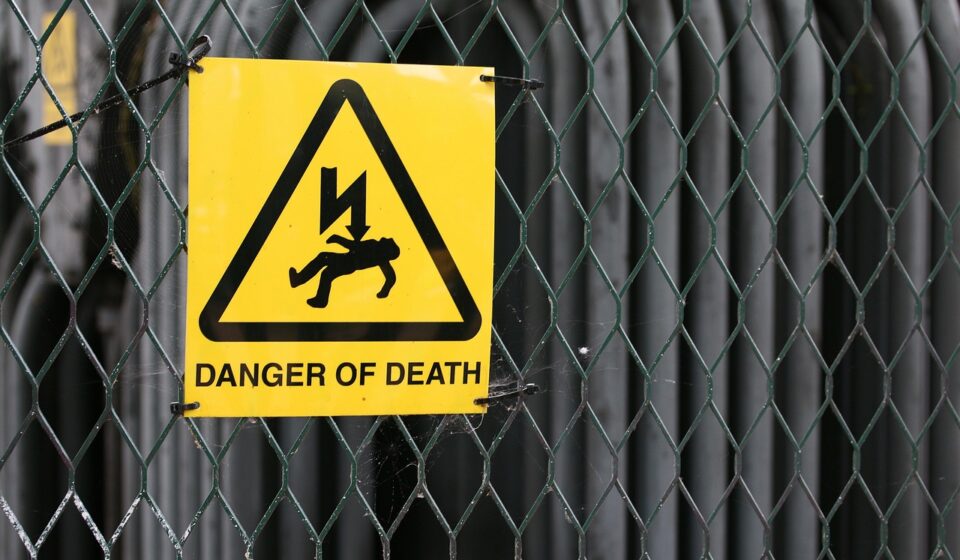
What electrical compliance and safety covers
Electrical compliance and safety for medical equipment is not defined by a single approval mark or a one-time bench test. It is a control system that connects product design, facility wiring, workplace safety, maintenance, documentation and change management. For healthcare teams, the practical question is whether a device can be selected, installed, used, serviced and retired without creating unacceptable shock, fire, burn, electromagnetic or continuity-of-care risk.
That requires more than confirming that equipment powers on. Teams need to verify the intended use environment, the applicable medical electrical standard, the local electrical code, acceptance testing, the maintenance plan and the records that show decisions were made consistently.
The risk profile is different in clinical spaces because equipment often operates close to patients who may be connected to applied parts, unable to move away from a hazard, dependent on alarms or life-support functions, or located in rooms with special electrical requirements. A desktop monitor in an office and a patient monitor at the bedside both use electricity, but they do not carry the same safety context. Medical electrical compliance therefore combines general electrical safety principles with healthcare-specific expectations for basic safety and essential performance.
For more safety topics across healthcare technology, see the safety and compliance section.
Why healthcare electrical risk is different
Electrical risk in healthcare is not limited to electrocution. The main hazards include electric shock, thermal injury, fire, malfunction caused by electromagnetic disturbance, interruption of essential power and unsafe work on energized systems. In hospitals, ambulatory surgery centers, laboratories and home-care settings, a small equipment problem can become more serious because of the patient’s condition or the clinical workflow around the device.
Medical electrical equipment is usually evaluated around two linked ideas: basic safety and essential performance. Basic safety addresses protection from unacceptable physical hazards such as shock, mechanical instability, excessive temperature or fire. Essential performance addresses whether the device continues to perform the clinical function needed to avoid unacceptable risk. A ventilator, infusion pump or defibrillator, for example, must not only avoid exposing the user to dangerous current; it must also continue to perform within defined limits under reasonably foreseeable conditions.
Healthcare environments also place unusual stress on electrical systems. Devices are moved frequently, cords are wrapped and unwrapped, batteries are charged, cleaning fluids are used near equipment, accessories are swapped, and rooms may be reconfigured faster than the electrical infrastructure changes. Visual inspection, accessory control and post-repair verification are therefore frontline safety controls, not administrative details.
The broader workplace risk remains significant as well. The U.S. Bureau of Labor Statistics reported 130 fatal occupational injuries from exposure to electricity in 2024, following 142 in 2023. Those national figures are not healthcare-specific, but they reinforce a key point for facility and clinical engineering leaders: electrical work practices should be managed as a serious safety program, not treated as a routine maintenance shortcut.
The standards and regulatory landscape
Electrical compliance becomes difficult when teams treat product standards, workplace rules and facility codes as interchangeable. They are connected, but they serve different purposes. A medical device may be designed and tested under one family of standards, installed in a facility governed by another code, maintained under an equipment management plan, and serviced under workplace electrical safety procedures.
| Compliance layer | Common reference points | What it controls | Typical owner |
|---|---|---|---|
| Medical electrical product safety | IEC 60601-1, ANSI/AAMI ES60601-1, related collateral and particular standards | Basic safety, essential performance, leakage current, insulation, applied parts and device-specific hazards | Manufacturer, test laboratory, regulatory affairs |
| Electromagnetic compatibility | IEC 60601-1-2 and FDA EMC guidance | Immunity to electromagnetic disturbance and limits on emissions that may affect other equipment | Manufacturer, design engineering, regulatory affairs |
| Facility electrical installation | NFPA 70, also known as the National Electrical Code, and local adoption rules | Wiring methods, grounding, receptacles, branch circuits and installation safety | Facilities, electrical contractor, authority having jurisdiction |
| Healthcare facility systems | NFPA 99 Health Care Facilities Code and payer or accreditation requirements | Patient care spaces, essential electrical systems, receptacle testing and electrical equipment practices | Facilities, clinical engineering, safety officer |
| Electrical work practices | OSHA 29 CFR 1910 Subpart S and NFPA 70E | Qualified persons, energized work controls, lockout/tagout, shock and arc flash risk reduction | Employer, safety department, maintenance leadership |
| Maintenance and post-repair testing | IEC 62353, NFPA 99, manufacturer instructions and equipment management plans | Recurrent testing, tests after repair, documentation and return-to-service decisions | Clinical engineering, biomedical equipment technicians, service providers |
As of September 2026, FDA’s recognized consensus standards database identifies IEC 60601-1 Edition 3.2, published in 2020, as a recognized standard for medical electrical equipment with relevant U.S. national differences. FDA also recognizes EMC standards such as IEC 60601-1-2 Edition 4.1, with recognition details that must be checked for scope and limitations. In practice, a declaration of conformity is most useful when it names the exact edition, test scope, national differences and any exclusions.
For U.S. healthcare facilities, CMS continues to provide compliance information around the 2012 editions of NFPA 101 Life Safety Code and NFPA 99 Health Care Facilities Code for Medicare and Medicaid participating providers. At the same time, NFPA publishes newer editions, including NFPA 99:2024, and local jurisdictions may adopt different code editions. Teams should therefore avoid assuming that a newer NFPA edition automatically controls a specific facility. The enforceable requirement depends on the authority having jurisdiction, payer status, state rules and project approval date.
For manufacturers selling into the U.S., another current issue is FDA’s Quality Management System Regulation. The QMSR became effective on February 2, 2026 and incorporates ISO 13485:2016 by reference into the medical device quality system framework. This does not replace electrical safety testing, but it changes the quality-system context around design controls, supplier control, production records and corrective action for device manufacturers.
A practical workflow for equipment selection and acceptance
Good electrical compliance starts before the purchase order. The first question is not only whether the equipment carries a recognizable safety mark. It is whether the model, configuration, accessories and intended location match the claimed compliance. A device intended for a controlled clinical room may need additional review before use in emergency medical services, home healthcare, wet procedure areas or magnetic resonance environments.
-
Define the intended use and environment. Identify whether the equipment is patient-connected, life-supporting, fixed, portable, transportable, home-use, laboratory-use or part of a larger medical electrical system.
-
Check the applicable standard set. For many medical electrical devices, this starts with IEC 60601-1 or ANSI/AAMI ES60601-1, then moves to collateral standards such as EMC or home healthcare requirements and any particular standard for the device type.
-
Verify listing, labeling or certification status. In U.S. workplaces, OSHA’s Nationally Recognized Testing Laboratory program is relevant for many kinds of electrical equipment. A familiar logo alone is not enough; the certification should apply to the product category and model.
-
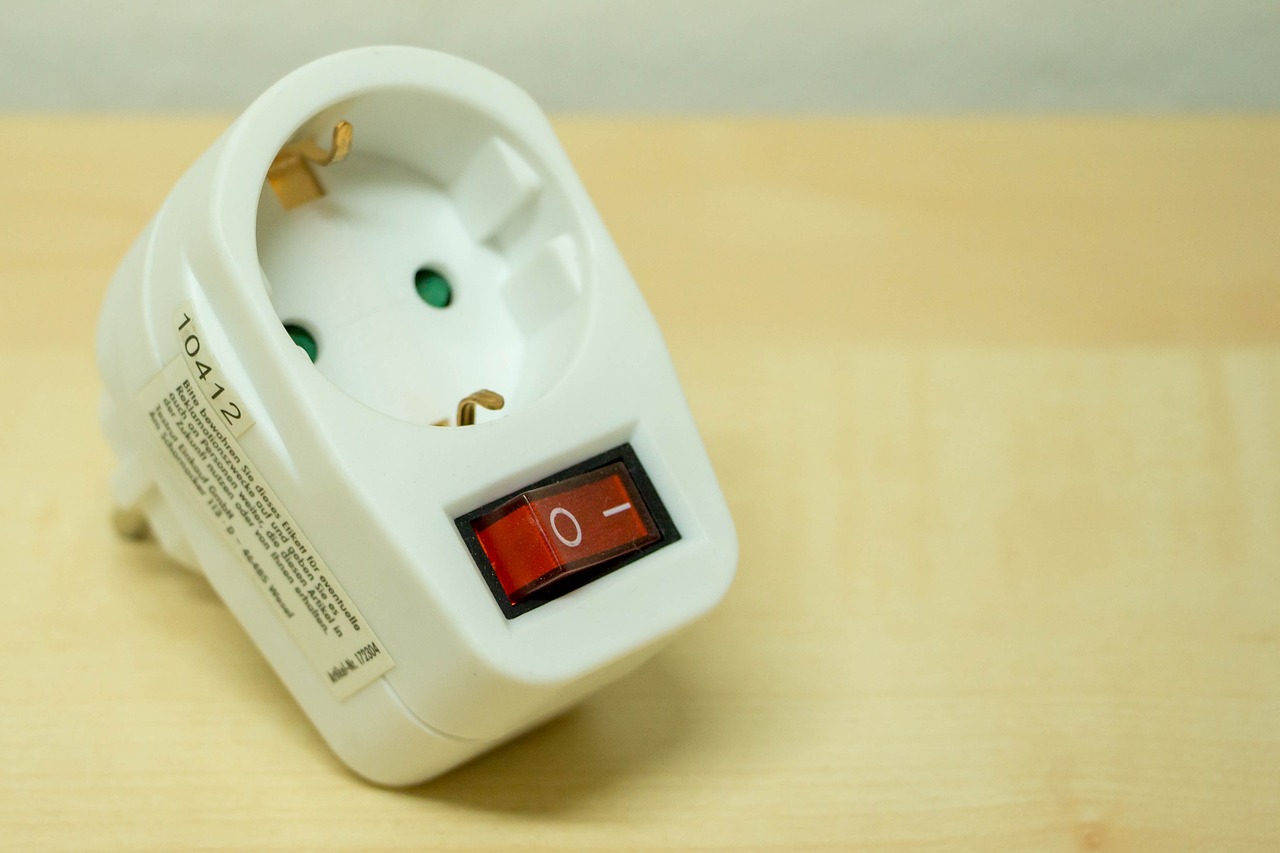
Review power and installation needs. Confirm voltage, frequency, plug type, branch circuit capacity, grounding, receptacle type, emergency power needs, heat load and manufacturer restrictions on adapters, extension cords or multi-outlet assemblies.
-
Plan acceptance testing. Before first clinical use, the receiving process should include visual inspection, accessory verification, electrical safety checks when required, functional checks and documentation of the return-to-service decision.
-
Store the evidence. Keep certificates, declarations, manuals, risk decisions, test records, service reports and corrective actions in a system that can be retrieved during audits, surveys or incident investigations.
This workflow is especially important for imported equipment, refurbished devices, modified carts, custom assemblies and systems that combine multiple devices. A complete system can introduce hazards that are not visible when each component is reviewed alone. Examples include overloaded power strips, unapproved power adapters, poor cable strain relief, missing protective earth continuity, or an accessory that changes leakage current paths.
What testing and documentation should cover
Electrical safety testing should be based on the applicable standard, manufacturer instructions, facility policy and risk classification. It should not be reduced to a generic checklist copied from another facility. IEC 62353:2014 is widely referenced internationally for recurrent testing and testing after repair of medical electrical equipment. NFPA 99 addresses electrical equipment in healthcare facilities, while accreditation bodies and facility policies often require records showing that equipment is inspected, tested and maintained according to an approved plan.
Visual and mechanical inspection
Many electrical failures are visible before they are measurable. The inspection should look for cracked housings, missing screws, damaged insulation, exposed conductors, loose strain relief, contaminated connectors, broken ground pins, evidence of fluid ingress, overheating marks, incorrect fuses and unapproved accessories. For portable equipment, the cord and plug often deserve as much attention as the device housing.
Grounding, leakage and insulation checks
For Class I equipment, protective earth continuity is a core control. Leakage current tests may include touch current, earth leakage, patient leakage or applied part leakage, depending on the device class and test method. Insulation resistance or dielectric testing may be required in specific circumstances, especially after repair or when the manufacturer’s procedure calls for it. The pass or fail decision should use the limit in the applicable standard, manufacturer instructions or facility policy, not an informal rule of thumb. See also: clinical equipment.
Functional and essential performance verification
A device can pass an electrical analyzer test and still be unsafe if alarms, sensors, batteries, displays, software configuration or output controls do not work as intended. Return-to-service checks should therefore include functional verification appropriate to the device. For a patient monitor, that may include alarm behavior and accessory recognition. For an infusion device, it may include occlusion, flow and battery checks. For a surgical energy device, it may include output and dispersive electrode monitoring functions.
Record quality
Documentation should identify the device, serial number, location, test instrument, calibration status, test method, measured values where required, technician, date, result, corrective action and next due activity. If a device is accepted with a limitation, the limitation should be explicit and approved through the facility’s risk process. Incomplete records can create the same survey problem as incomplete testing because the organization cannot prove what it did or why.
Common gaps that create compliance risk
Electrical compliance failures often come from ordinary workarounds rather than dramatic technical defects. A department needs one more outlet. A cart is modified. A consumer-grade charger is substituted. A device is moved from a dry room to a wet procedure area. A repaired unit returns to service before documentation is complete. Each shortcut may seem small, but together they weaken the safety case.
-
Unapproved adapters and extension cords. These can defeat grounding, add trip hazards, increase load or violate facility policy.
-
Power strips used as permanent infrastructure. Multi-outlet assemblies must be evaluated for the clinical environment, mounting, load and code requirements.
-
Unclear ownership between facilities and clinical engineering. Building power issues and device issues meet at the receptacle, so responsibilities should be written before a failure occurs.
-
EMC assumptions. Wireless systems, electrosurgical equipment, imaging systems and mobile transmitters can affect or be affected by nearby devices. FDA’s EMC guidance emphasizes considering the intended electromagnetic environment and including appropriate information in submissions.
-
Post-repair blind spots. Opening a housing, replacing a power supply, repairing a cord or changing an applied part can change the electrical safety profile. Return-to-service testing should match the repair risk.
-
Edition confusion. The current published edition of a standard, the edition recognized by a regulator and the edition adopted by a local code authority may not be the same.
The best control is a compliance matrix that links every equipment class to its standard, test trigger, test method, documentation requirement and escalation path. That matrix should be reviewed when standards change, when a new equipment type is introduced, after an incident, and during policy updates.
How to keep the program current
Electrical compliance is a lifecycle activity. For manufacturers, the lifecycle includes design inputs, risk management, verification, validation, supplier controls, production changes, complaint handling and corrective action. For healthcare providers, the lifecycle includes planning, procurement, acceptance, preventive maintenance, repair, incident review and disposal. The same device can pass through both systems, so gaps often appear at handoff points.
A current program should assign responsibility for monitoring standards and regulatory changes. In 2026, key watch points include FDA’s QMSR implementation for manufacturers, local adoption of the 2026 National Electrical Code, continued use of CMS-adopted 2012 NFPA 99 requirements for covered providers, newer NFPA 99 editions used by some authorities or projects, NFPA 70B’s role in electrical maintenance programs, and NFPA 70E practices for electrical work safety.
Training should be role-specific. Clinicians need to recognize damaged cords, fluid ingress, alarm problems and unsafe power setups. Biomedical technicians need test methods, applied part classifications and documentation discipline. Facilities teams need grounding, emergency power, receptacle testing, arc flash and lockout/tagout controls. Purchasing teams need enough knowledge to identify when a low-cost device lacks the evidence needed for clinical use.
Finally, compliance decisions should be risk-based but not casual. A risk-based program does not mean testing less because the workload is high. It means using accepted standards, manufacturer guidance, failure history and clinical criticality to decide what is tested, how often, by whom and with what evidence. That approach gives healthcare organizations a defensible way to protect patients, staff and operations while avoiding work that does not improve safety.
Frequently asked questions
Is an electrical safety mark enough for medical equipment compliance?
No. A safety mark or certification can be important, but it is only one part of the compliance file. The team still needs to confirm the exact model, accessories, intended use, installation requirements, acceptance checks and maintenance plan. A certified component does not automatically make a complete medical electrical system compliant.
When should medical electrical equipment be tested?
Testing triggers depend on the device, standard, manufacturer instructions and facility policy. Common triggers include initial acceptance, scheduled maintenance, repair that may affect electrical safety, modification, suspected damage, fluid exposure and movement into a different risk environment. The test method and limits should be documented.
Who is responsible for electrical compliance in a healthcare facility?
Responsibility is shared. Facilities teams usually manage building electrical systems, emergency power and code work. Clinical engineering manages medical equipment maintenance and return-to-service decisions. Safety leaders manage policies and work practices. Purchasing and department leaders influence risk through equipment selection and daily use.
Does FDA compliance replace OSHA or NFPA requirements?
No. FDA requirements focus mainly on medical device safety, effectiveness and manufacturer quality systems. OSHA requirements address worker safety. NFPA codes and standards address electrical installation, healthcare facility systems, maintenance and safe work practices depending on adoption and use. A complete program considers all applicable layers.
What is the most useful improvement for a weak program?
Start with a documented equipment compliance matrix. Map each device category to the applicable standards, acceptance checks, preventive maintenance tasks, post-repair tests, responsible owner and record location. This single tool often reveals missing evidence, unclear ownership and inconsistent testing decisions.