Biomedical devices in diagnostic care and what healthcare teams should evaluate

What biomedical devices mean in diagnostic care
Biomedical devices are instruments, systems, software, reagents or connected technologies used to measure, detect, monitor or support decisions about human health. In diagnostic care, they convert biological signals, images, specimens and patient-generated data into information clinicians can use.
The category includes in vitro diagnostic tests, imaging systems, physiologic monitors, point-of-care analyzers, software as a medical device and AI-enabled decision-support tools. For healthcare teams, the practical question is not whether a device is advanced. It is whether the device produces reliable diagnostic information for its intended use, fits the clinical workflow and can be controlled throughout its life cycle. That is why diagnostic devices now sit at the intersection of engineering, clinical evidence, quality management, cybersecurity and regulation.

The term is broad, but diagnostic value usually comes down to a few repeatable questions: What clinical problem does it address? What specimen, signal or image does it evaluate? What decision does it inform? What evidence supports that decision? And what happens if the result is wrong, delayed or misinterpreted?
Main types of diagnostic biomedical devices
Diagnostic biomedical devices can be grouped by the type of information they generate. This helps clinicians, procurement teams and manufacturers compare very different technologies without treating them as interchangeable.
| Device category | Common examples | Diagnostic role | Key evaluation concern |
|---|---|---|---|
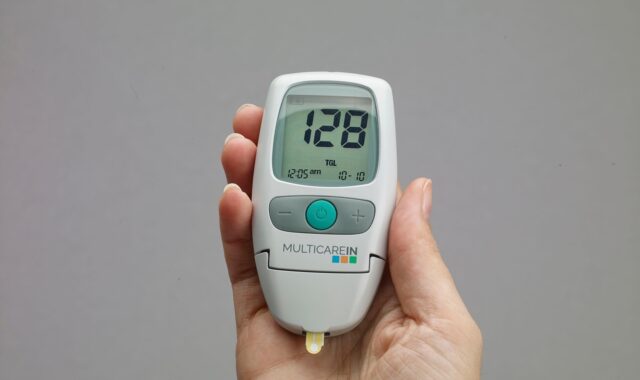
| In vitro diagnostics | Reagents, test kits, immunoassays, molecular assays, blood glucose meters | Analyze specimens such as blood, urine, tissue or swabs | Analytical validity, clinical performance, specimen handling and quality controls |
| Medical imaging devices | X-ray, ultrasound, CT, MRI, endoscopy and image processing systems | Visualize anatomy, function or pathology | Image quality, radiation or energy exposure, operator dependence and interpretation workflow |
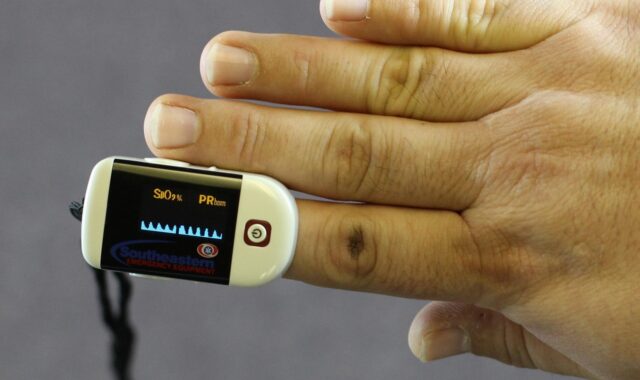
| Physiologic monitoring devices | ECG systems, pulse oximeters, blood pressure monitors, wearable sensors | Measure patient signals over time or during an encounter | Signal accuracy, artifact management, alarm settings and patient population fit |
| Point-of-care devices | Bedside analyzers, handheld ultrasound, rapid infectious disease tests | Move testing closer to the patient | Training, calibration, environmental limits and result integration |
| Software and AI-enabled devices | Computer-aided detection, triage tools, quantitative imaging software, diagnostic algorithms | Analyze data or help prioritize clinical review | Data quality, transparency, bias, model drift and update controls |
| Laboratory automation | Sample processors, digital pathology scanners, integrated analyzers | Increase throughput and standardize repetitive diagnostic steps | Traceability, maintenance, interface reliability and downtime planning |
These categories often overlap. A diagnostic ultrasound system may include AI-based image guidance. A laboratory platform may combine sample preparation, software interpretation and electronic medical record connectivity. A wearable may support screening, monitoring or clinical follow-up depending on the manufacturer’s claims and the context in which the data is used.
Why intended use determines risk and evidence
Regulators generally do not evaluate biomedical devices by appearance alone. Intended use, indications for use and the risk of an incorrect result are central. A device that only stores information is not assessed in the same way as software that recommends clinical action. A sensor used for general wellness tracking may face different expectations from a sensor marketed for diagnosis or treatment monitoring.
In the United States, the Food and Drug Administration classifies medical devices, including many in vitro diagnostic products, into Class I, II or III according to risk and regulatory controls. Class I devices are generally lower risk, while Class III devices carry the highest level of regulatory control. General controls apply across classes. Depending on the device type and predicate landscape, higher-risk devices may also require special controls, premarket notification, De Novo authorization or premarket approval.
In the European Union, the In Vitro Diagnostic Regulation uses risk classes A through D for IVDs, with Class D representing the highest public health and patient risk. This matters because a test for a high-consequence infectious disease is not evaluated like a low-risk laboratory accessory. For manufacturers and users, classification affects evidence requirements, notified body involvement, quality system expectations and post-market obligations.
Intended use also shapes which performance measures matter. Sensitivity and specificity are important for many diagnostic tests, but they are rarely sufficient on their own. Limit of detection, precision, reproducibility, interference testing, usability, population coverage and positive or negative predictive value may be more relevant depending on the technology. Imaging systems may need evidence for image quality, measurement repeatability and reader workflow. AI tools may need evidence that the algorithm performs across the populations and settings where it will actually be used.
Regulatory changes that diagnostic teams should not ignore
Several recent regulatory developments affect how biomedical devices are designed, documented and adopted. The details differ by market, but the direction is consistent: regulators are asking for stronger life-cycle control, clearer evidence and better risk management.
| Date or period | Development | Why it matters for diagnostic devices |
|---|---|---|
| February 2, 2026 | The FDA Quality Management System Regulation became effective and incorporated ISO 13485:2016 as the core quality management framework for medical device manufacturers, with FDA-specific provisions still applying where relevant. | Manufacturers and suppliers of finished devices need quality processes that connect design, production, risk management, complaint handling and records. Healthcare buyers may see stronger emphasis on documented life-cycle controls. |
| March 31, 2025 and September 19, 2025 | A federal district court vacated the FDA final rule on laboratory developed tests, and the FDA later reverted the relevant regulatory text to its earlier wording. | Organizations should avoid relying on outdated descriptions of the 2024 LDT rule as current law. Laboratory test oversight remains an area where legal, clinical and payer expectations can change. |
| June 27, 2025 | The FDA issued updated final guidance on cybersecurity in medical devices, superseding its 2023 final guidance. | Connected diagnostic systems, software platforms and networked instruments need cybersecurity planning from design through deployment, not only after an incident. |
| 2024 to 2029 | Regulation (EU) 2024/1860 extended certain IVDR transition periods under conditions, including staged deadlines for legacy IVDs and notified body applications. | EU market access planning for IVDs should be checked by risk class, certificate status and transition eligibility. Old assumptions about transition dates can create supply and compliance risk. |
| Ongoing | The FDA periodically updates its public list of AI-enabled medical devices and notes that the list is intended to improve transparency, not to serve as a complete catalog of every AI-enabled device. | Hospitals should review the specific authorization, intended use and public decision summary for a device rather than assuming that all AI-enabled tools have the same evidence base. |
For teams comparing products or writing procurement specifications, the regulatory status of a diagnostic device should not be treated as a static badge. It needs to be reviewed alongside the exact model, software version, intended use, market, accessories and clinical workflow.
What makes a diagnostic biomedical device clinically useful
A diagnostic device can be technically strong and still be difficult to use well. Clinical usefulness depends on how the output changes care. A faster result is valuable only if it reaches the right person, in the right format, before the decision point has passed. A highly sensitive test is useful only if the false-positive burden is acceptable in the intended population. A predictive algorithm adds value only if clinicians understand when to trust it, when to override it and how to document its role.
Healthcare teams should separate three layers of evidence:
- Analytical performance: Does the device accurately and repeatably measure the target signal, analyte, image feature or pattern?
- Clinical performance: Does the measured output correlate with the clinical condition or decision it is intended to support?
- Operational performance: Can the device maintain performance under real-world constraints such as staffing, training, specimen quality, connectivity, maintenance and patient variability?
For in vitro diagnostics, relevant evidence may include precision, limit of detection, cross-reactivity, specimen stability and external quality assessment. For imaging devices, it may include spatial resolution, contrast, measurement repeatability, dose management and reader agreement. For wearables and physiologic monitors, artifact detection and performance across skin tones, age groups, movement conditions and comorbidities may be relevant. For software, teams should examine input data requirements, update policies, audit trails and the consequences of automation bias. See also: clinical equipment.
A sound evaluation also looks at failure modes. What happens if a cartridge lot changes, a scanner calibration drifts, a network connection fails or a software update changes output behavior? A reliable device plan includes training, escalation paths, backup procedures and post-implementation monitoring.
Quality, cybersecurity and interoperability now shape device value
Quality management is no longer only a manufacturer concern. Hospitals and laboratories depend on supplier quality, documentation and post-market responsiveness. When a device connects to networks or electronic health records, the boundary between clinical engineering, information security and diagnostic operations becomes thinner.
Cybersecurity is especially important for diagnostic biomedical devices because many now exchange data with hospital networks, cloud platforms, laboratory information systems or mobile applications. The clinical risk is not limited to data privacy. A cybersecurity incident can delay testing, reduce availability, interrupt monitoring or undermine confidence in results. Modern device evaluation should therefore include software support periods, vulnerability disclosure processes, patch management, access controls, logging and recovery planning.
Interoperability is equally practical. A point-of-care device that cannot send structured results into the medical record may increase manual transcription risk. An imaging algorithm that works only outside the radiology workflow may slow adoption. A laboratory analyzer that lacks clear interface validation can create downstream reporting problems. Device value should therefore be measured not only by acquisition cost or technical specifications, but also by the cost of safe integration.
How healthcare teams can compare devices before adoption
Before choosing a biomedical device for diagnostic use, teams can use a structured checklist to reduce avoidable risk. The checklist does not replace regulatory review, clinical governance or legal advice, but it helps align clinical, technical and operational stakeholders.
- Define the diagnostic decision: Identify whether the device screens, detects, confirms, monitors, triages or supports interpretation.
- Check the exact intended use: Confirm patient population, specimen type, user setting, software version and limitations.
- Review evidence quality: Look for data that match the planned use environment rather than relying only on general performance claims.
- Assess workflow impact: Map who orders the test, operates the device, receives the result, acts on the result and documents the action.
- Verify quality requirements: Review calibration, maintenance, controls, training, complaint handling and change management.
- Evaluate cybersecurity: Ask how updates, vulnerabilities, user access, logs and incident response are managed.
- Plan post-adoption monitoring: Track errors, turnaround time, user feedback, alert burden, downtime and unexpected performance changes.
For manufacturers, the same checklist can guide clearer product documentation. Claims should be specific enough to support classification and evidence planning. For healthcare providers, it can help avoid a common mistake: purchasing a device for one attractive feature while underestimating training, integration and life-cycle support.
Frequently asked questions
What is the difference between biomedical devices and medical devices?
Medical device is the formal regulatory term used in many jurisdictions. Biomedical devices is a broader industry phrase that often emphasizes the engineering and biological measurement aspects of healthcare technology. In diagnostic care, the two terms overlap heavily, but regulatory obligations depend on the legal definition and intended use in the target market.
Are in vitro diagnostics considered biomedical devices?
Yes. In vitro diagnostics are commonly treated as medical or biomedical devices because they analyze specimens taken from the human body to provide diagnostic information. Examples include reagents, test kits, molecular assays, immunoassays and blood glucose monitoring systems.
Do AI diagnostic tools count as biomedical devices?
They can. If software is intended for a medical purpose such as diagnosis, triage, detection or treatment-related decision support, it may be regulated as software as a medical device or as part of a device system. The key factors are the intended use, the role of the output and the risk if the software is wrong.
What regulatory update matters most in 2026?
For FDA-regulated device manufacturers, the February 2, 2026 effective date of the Quality Management System Regulation is a major quality-system milestone. For diagnostic test developers and laboratories, it is also important to recognize that the FDA’s 2024 laboratory developed test final rule was vacated in 2025, so outdated summaries of that rule should not be treated as current requirements.
How can hospitals reduce risk when adopting connected diagnostic devices?
Hospitals should evaluate connected devices through both clinical and cybersecurity review. That means checking intended use, performance evidence, network requirements, access controls, patching processes, logging, downtime procedures and the vendor’s post-market support process before deployment.