Patient lifting equipment for safer clinical transfers and mobility
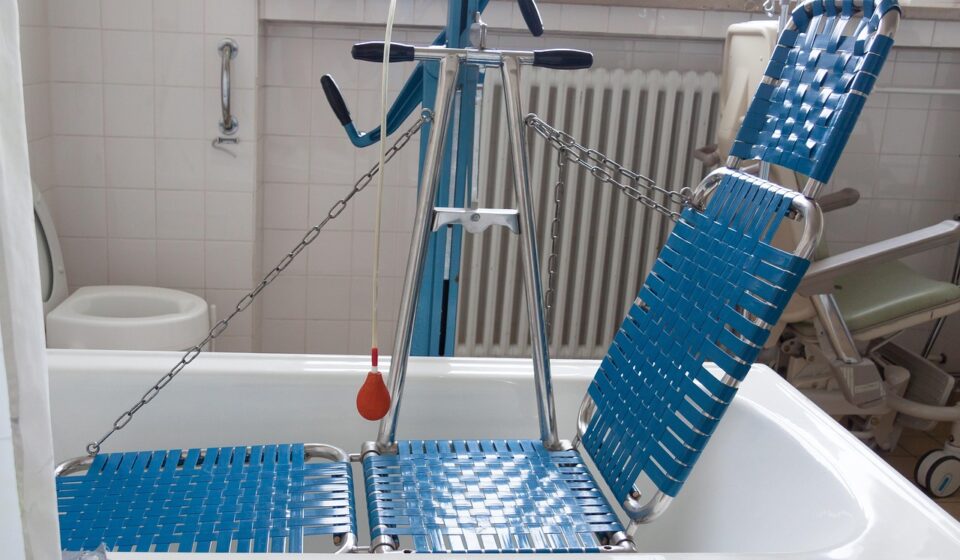
Why patient lifting equipment matters in clinical care
Patient lifting equipment is no longer used only for occasional heavy transfers. In hospitals, rehabilitation units, long-term care facilities, outpatient clinics and home-care programs, it is part of a wider safe patient handling and mobility strategy. The purpose is straightforward: use appropriate mechanical or assistive technology to lift, transfer, reposition or mobilize a patient when manual handling would create unnecessary risk. That risk affects both sides of care. Staff may face overexertion and musculoskeletal injury, while patients may face falls, skin tears, pain, anxiety or loss of dignity when transfers are improvised.
Public health and workplace safety organizations, including the FDA, CDC NIOSH, OSHA and the American Nurses Association, have consistently emphasized that equipment alone is not enough. A safer program combines the right lift, compatible slings or accessories, patient assessment, staff training, storage, maintenance and a clear policy on when manual lifting should be avoided.

The risk is not only staff back injury
The most familiar reason to invest in patient lifting equipment is worker safety, but the clinical case is broader. Patient transfers often happen when a person is weak, sedated, recovering from surgery, cognitively impaired, obese, attached to lines, or unable to follow instructions consistently. In those conditions, even a transfer that appears routine can change quickly.
CDC NIOSH describes safe patient handling and mobility technology as assistive lifting devices used to help healthcare workers perform patient handling tasks without exposing themselves or patients to unnecessary injury risk. OSHA materials on safe patient handling also stress that relying only on body mechanics or team lifting does not remove the underlying force, posture and unpredictability involved in moving a human body.
Recent U.S. Bureau of Labor Statistics employer-reported data for 2023-2024 showed that overexertion remained a leading cause of cases involving days away from work, job transfer or restriction. Healthcare support occupations also had much higher annualized rates of days-away cases than the all-occupation average. These figures do not show that every event came from patient transfers, but they help explain why healthcare employers continue to treat handling and mobility as an equipment, workflow and culture issue rather than only a training topic.
For patients, the FDA notes that patient lifts can reduce injury risk when properly used, but improper use can lead to serious harm, including falls, fractures and head injuries. This distinction matters: a lift is a safety device only when the lift, sling, patient weight, task and operator training match.
Main categories of patient lifting equipment
Most clinical teams do not need every type of device in every room. They need the right mix for their patient population, facility layout and transfer tasks. The following categories are commonly considered in clinical equipment planning.
| Equipment type | Common use | Key advantage | Important limitation |
|---|---|---|---|
| Full-body mobile floor lift | Bed-to-chair, chair-to-bed, floor recovery and non-weight-bearing transfers | Flexible and movable across rooms | Requires storage, charged batteries, maneuvering space and correct sling use |
| Ceiling-mounted or overhead lift | Frequent transfers in patient rooms, ICUs, bariatric rooms or rehabilitation areas | Reduces floor clutter and can improve access when tracks are well designed | Needs structural planning, coverage decisions and installation investment |
| Sit-to-stand lift | Transfers for patients who can bear some weight and participate | Supports early mobility and toileting transfers when clinically appropriate | Not suitable for fully dependent or non-weight-bearing patients |
| Lateral transfer aid | Bed-to-stretcher, imaging table transfers or procedure table movement | Reduces pushing and pulling forces during horizontal transfers | May require air supply, disposable components or additional setup time |
| Repositioning sheet or friction-reducing device | Boosting, turning and repositioning in bed | Targets one of the most frequent handling tasks | Does not replace a powered lift when the patient must be raised or transferred |
| Bariatric lift and accessories | Transfers involving higher body weight or wider body dimensions | Provides capacity, width and support matched to bariatric care | Requires door clearance, room space, compatible slings and staff familiarity |
International Standard ISO 10535:2021 is one recognized reference for hoists and body-support units intended for transferring persons with disabilities. Facilities should not treat any single standard, brochure or checklist as a substitute for regulatory review, manufacturer instructions or biomedical engineering evaluation, but standards can help buyers ask more precise questions about design, testing and compatibility.
How to match equipment to the transfer task
A practical selection process starts with the task, not the product catalog. A bed-to-chair transfer, lateral move to an imaging table, bathroom transfer, ambulation support session and fall recovery event all involve different forces, space constraints and levels of patient participation.
Assess patient mobility before choosing a device
Clinical teams should determine whether the patient is independent, needs supervision, needs partial assistance, can bear weight, can follow commands, has lines or drains, has painful joints, or has conditions that make certain sling positions unsafe. A sit-to-stand lift can be ideal for a patient who can participate, but hazardous for someone who cannot bear weight or maintain trunk control. A full-body lift may take longer to set up, but it can be the safer choice for a fully dependent transfer.
Check compatibility, not just capacity
Rated weight capacity is essential, but it is not the whole decision. The FDA advises users to match the sling to the specific lift and patient weight, and to confirm that the sling is approved for that lift. Sling size, fabric, attachment style, head support, hygiene needs and patient body shape can all affect safety. A sling that is too large, too small, worn or incompatible can create fall risk even when the lift motor is working properly.
Consider the room as part of the device
Floor lifts need turning radius, under-bed clearance and a place to park close to care areas. Ceiling lifts need track coverage that reflects real workflows, not only the center of the room. Bathrooms, imaging suites and procedure areas often create transfer problems because the available space was designed around equipment rather than patient handling. The U.S. Department of Veterans Affairs has treated safe patient handling and mobility as a facility design issue, including planning for equipment in new construction and renovation. That approach is useful beyond the VA system because transfer safety is often limited by the built environment.
Implementation is where many programs succeed or fail
Buying lifts does not automatically create safer handling. OSHA training materials have warned against the idea that equipment alone ensures safe patient handling. If a lift is stored too far away, has a dead battery, lacks the correct sling, or requires staff to search for a key accessory during a busy shift, manual workarounds are likely to return.
A workable implementation plan should include:
- Unit-based assessment: Identify common transfers, patient weight ranges, room constraints and injury patterns by department.
- Equipment placement: Store devices where they are visible, charged and easy to retrieve, not in distant storage rooms.
- Sling management: Define how slings are sized, cleaned, inspected, labeled and replaced.
- Staff competency: Train staff on real scenarios, including emergency transfers, bariatric transfers and line management.
- Patient and family communication: Explain why a lift is being used so patients do not interpret it as a lack of staff strength or attention.
- Maintenance ownership: Assign responsibility for batteries, inspections, repairs and removal of damaged equipment.
The cultural message matters. If leaders treat lifts as optional, staff may reserve them for only the most extreme cases. If leaders treat safe handling as a normal part of care planning, the equipment becomes part of routine mobility support rather than an interruption. See also: Buying Guides.
Safety checks before and during use
Every facility should follow manufacturer instructions and local policy, but several checks apply broadly. The FDA recommends training users, inspecting sling fabric and straps for wear, keeping clips and latches secure, and opening the base legs of a mobile lift to the widest practical position for stability. Staff should also confirm that the patient is positioned correctly in the sling, that the path is clear, and that the patient is monitored throughout the lift.
Before use, teams should ask:
- Is this the correct equipment for the patient’s mobility level and transfer destination?
- Is the sling compatible with the lift, correctly sized and free from visible damage?
- Does the lift have sufficient battery charge and rated capacity?
- Are bed brakes, wheelchair brakes and nearby devices managed appropriately?
- Are tubes, drains, catheters and monitoring cables protected from tension?
- Has the patient been told what will happen and how they can participate safely?
After use, staff should report problems promptly. A frayed sling, missing clip, unstable caster, unusual motor sound or battery issue should remove the device from service until it is checked. Small defects can become serious during a suspended transfer.
What buyers should evaluate before procurement
Procurement teams should look beyond the unit price of a lift. Total value includes the lift, slings, batteries, chargers, service contracts, staff training time, infection control processes, storage space, installation work and replacement parts. For ceiling lifts, planning should include structural support, track layout, bathroom coverage, emergency lowering procedures and whether the system supports the patient population likely to use that room.
For mobile lifts, buyers should test maneuverability in the actual environment. A device that works well in a demo area may be difficult to move through narrow doorways, around bedside cabinets or under low-clearance beds. Facilities should also review whether slings are available in enough sizes and styles to avoid unsafe improvisation.
The strongest procurement decisions usually involve nursing, rehabilitation, occupational safety, infection prevention, biomedical engineering, facilities management and purchasing. Each group sees a different failure point. Nursing may focus on workflow, rehabilitation on mobility goals, biomedical engineering on serviceability, and facilities teams on space and installation constraints.
Frequently asked questions
Is patient lifting equipment required for every transfer?
No. Some patients can move independently or with minimal assistance. The goal is not to mechanize every movement, but to match the method to the patient’s ability, the task and the risk. When a patient cannot safely bear weight, cannot follow instructions, or requires lifting that creates excessive force, mechanical or assistive equipment should be considered.
Are ceiling lifts safer than mobile floor lifts?
Ceiling lifts can improve access and reduce equipment retrieval problems when tracks are installed where transfers actually occur. However, they are not automatically better in every setting. Mobile floor lifts remain useful for flexible coverage, temporary rooms and areas where permanent installation is not possible. The safer option is the one that fits the task, room, patient and staff workflow.
Can good body mechanics replace a lift?
Good body mechanics are important, but they cannot eliminate the forces involved in lifting, turning or catching a dependent patient. OSHA, NIOSH and nursing organizations have emphasized that safe patient handling depends on assistive technology, policy and training rather than strength alone.
What is the most common mistake when using patient lifts?
One common mistake is treating the sling as interchangeable. Sling and lift compatibility, size, condition and attachment method are central to safe use. Another frequent problem is poor access: if the right lift or sling is not near the point of care, staff may revert to manual handling under time pressure.
How often should patient lifting equipment be inspected?
Inspection should follow manufacturer instructions and facility policy. In practice, staff should visually check slings and key lift components before use, while biomedical or maintenance teams should perform scheduled inspections. Any damaged sling or malfunctioning lift should be removed from use until evaluated.