Stethoscope and sphygmomanometer compliance checklist for safer blood pressure measurement

Key compliance takeaway
A stethoscope and sphygmomanometer may look like basic clinical equipment, but safe blood pressure measurement depends on the whole workflow, not just a cuff, gauge, and chestpiece. For healthcare buyers, clinics, training programs, and home-care teams, the compliance question is whether the device type, cuff set, instructions, maintenance process, cleaning method, and user technique fit the intended setting. In the United States, a manual stethoscope and a blood pressure measurement system are treated differently under FDA classification, while automated and cuffless technologies raise additional validation questions. A sound program should identify the correct regulated device category, review accuracy evidence, control cuff sizing and cleaning, and train users to follow a repeatable measurement procedure. For related medical device safety topics, see the safety and compliance section.
Why these two devices belong in one safety workflow
The stethoscope and the sphygmomanometer are often purchased and maintained as separate items. In manual blood pressure measurement, however, they function as one procedure. The cuff occludes the artery, the pressure gauge or manometer displays cuff pressure, and the stethoscope allows the user to listen for Korotkoff sounds as cuff pressure falls. Under standard auscultatory technique, the first clear sound is associated with systolic pressure, while the disappearance or final phase of sounds is used for diastolic pressure.
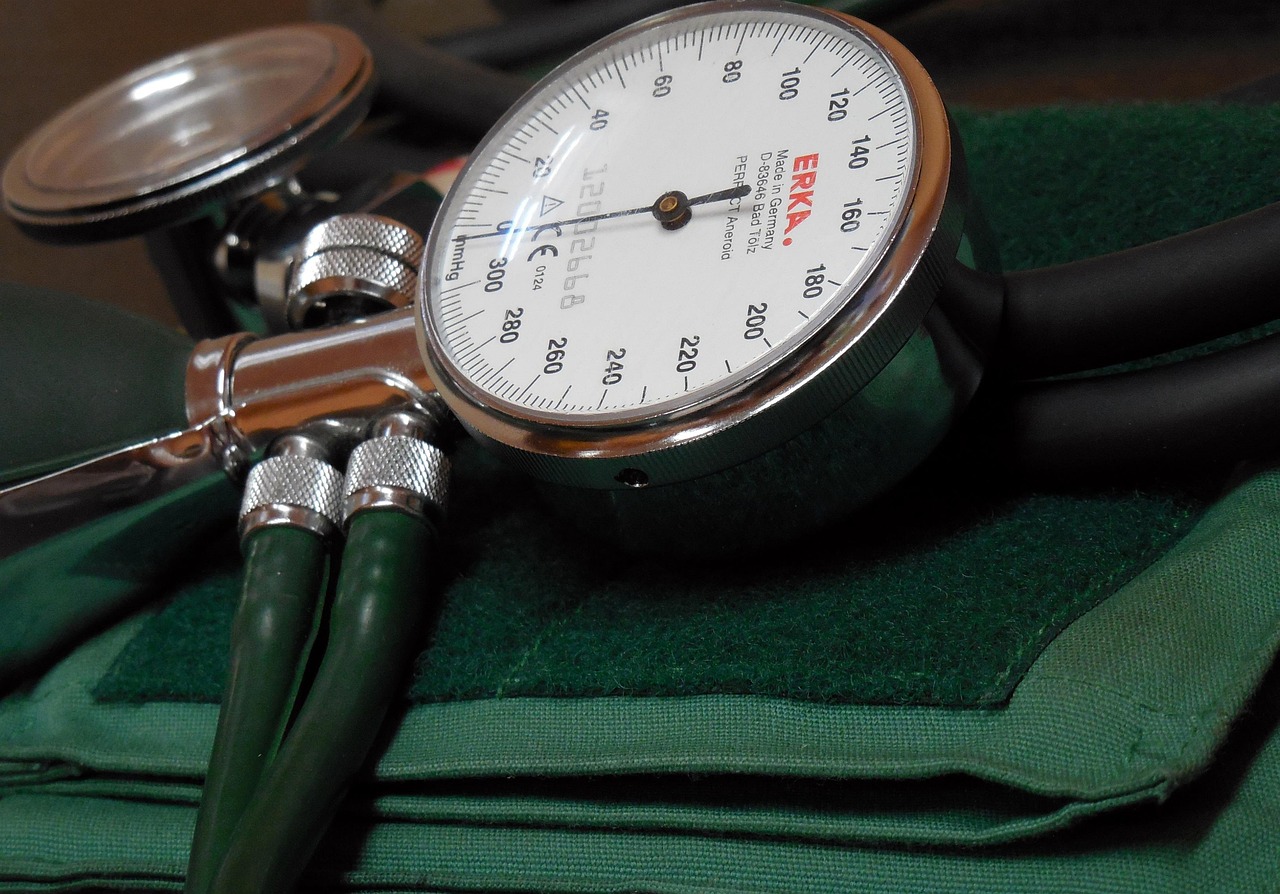
That workflow leaves room for several preventable errors. A precise gauge cannot compensate for poor stethoscope placement. A good stethoscope cannot correct an incorrectly sized cuff. A validated automated monitor can still give misleading readings if it is used over clothing, if the arm is unsupported, or if the patient has just been walking, talking, or exercising. The American Heart Association has repeatedly emphasized that blood pressure measurement error can come from patient preparation, cuff size, device condition, and procedure.
For compliance teams, the unit of control is not only the device on the purchase order. It is the full measurement system: device classification, accessories, instructions for use, cleaning method, calibration or verification plan, user training, and documentation. This is especially relevant in primary care, occupational health, telehealth kits, home monitoring programs, emergency response bags, and teaching laboratories.
Regulatory status is not the same for every component
A familiar device is not always a low-risk compliance item. Public FDA records show a more specific regulatory picture. As of FDA product classification pages updated in September and October 2026, a manual stethoscope under product code LDE is listed as a Class I device and 510(k) exempt under 21 CFR 870.1875. By contrast, noninvasive blood pressure measurement systems under product code DXN are listed as Class II devices under 21 CFR 870.1130 and normally require 510(k) review. Non-automated sphygmomanometer guidance for blood pressure cuffs has historically addressed Class II devices under 21 CFR 870.1120 and product code DXQ.
These categories matter because a device kit may combine components with different regulatory expectations. An aneroid sphygmomanometer sold with a stethoscope is not just a consumer accessory bundle. It is a blood pressure measurement configuration that depends on cuff performance, pressure indication, acoustic detection, labeling, and intended-user claims.
| Device or configuration | Typical compliance focus | Why it matters |
|---|---|---|
| Manual stethoscope | FDA classification, labeling, acoustic performance, cleaning compatibility | The stethoscope is essential for auscultatory measurement but may be regulated separately from the cuff system. |
| Aneroid or mercury-style manual sphygmomanometer | Cuff integrity, manometer accuracy, leak control, user instructions, calibration checks | Manual readings depend on both device condition and trained listening technique. |
| Automated upper-arm cuff monitor | Clinical validation, electrical safety, software behavior, cuff range, labeling | Oscillometric devices reduce observer listening error but must still be validated for the intended population. |
| Wrist or finger cuff monitor | Positioning instructions, validation evidence, patient suitability limitations | Hydrostatic effects and positioning can strongly affect readings. |
| Cuffless wearable or phone-based device | Validation limits, algorithm transparency, calibration, intended-use claims | AHA statements published in 2025 warned that many cuffless devices are not yet proven for diagnosis or treatment decisions. |
Accuracy depends on validation and technique
Validation and technique should be managed as separate controls. Validation asks whether a device has been tested against a recognized method for the intended use. Technique asks whether the user performs the measurement correctly in routine practice. A device can fail on either point.
For automated cuff devices
ISO 81060-2:2018 specifies requirements and methods for clinical investigation of intermittent automated non-invasive blood pressure equipment that uses a cuff. The ISO catalog also lists amendments from 2020 and 2024, and FDA recognition records for noninvasive blood pressure measurement systems include ISO 81060-2, IEC 80601-2-30, and related standards. In procurement language, buyers should ask whether the specific model and cuff set were validated under a recognized protocol, not merely whether the product resembles a validated device.
Population fit is just as important. A monitor validated in a general adult population may not automatically be appropriate for neonates, children, pregnancy, arrhythmias, very large arms, dialysis patients, or high-motion environments unless the labeling and evidence cover those uses. The cuff range must match the patient population, and the instructions should clearly identify which cuffs are compatible with the monitor.
For manual auscultatory measurement
Manual measurement places more responsibility on the observer. The user must apply the cuff in the correct position, select an appropriate cuff size, position the stethoscope over the brachial artery, control the deflation rate, identify sounds consistently, and record the result without rounding bias. Training and competency checks are therefore safety controls, not optional education.
The stethoscope should be inspected for cracked tubing, loose eartips, blocked sound paths, diaphragm damage, and cleaning-agent compatibility. The sphygmomanometer should be checked for visible cuff wear, bladder leaks, valve control, pointer rest position on an aneroid gauge, and legible markings. If local policy requires accuracy verification against a reference device, the interval should follow the manufacturer instructions, clinical risk, and facility policy rather than an arbitrary schedule copied from another site.
Safety controls after purchase
Many device failures become safety issues after procurement. A compliant purchase can become unsafe when cuffs are mixed across brands, disinfectants degrade tubing, batteries are replaced with unsuitable types, or staff use a device outside its labeling. The post-purchase plan should be written before devices are distributed.
Inspection and accuracy verification
Each site should maintain an equipment list that identifies the model, serial or asset number, cuff sizes, location, date placed in service, and the next inspection or verification date if required. Manual aneroid gauges should be removed from use when the needle does not return properly, the gauge housing is damaged, or readings appear inconsistent with a reference check. Automated monitors should be removed when error codes recur, cuffs leak, displays fail, or readings conflict with clinical signs and repeat measurement does not resolve the discrepancy.
Cleaning and infection prevention
Blood pressure cuffs and stethoscopes contact skin repeatedly and may move between patients. Cleaning should follow the device instructions for use because not all cuffs and tubing tolerate the same disinfectants. A reusable cuff in a clinic requires a different workflow from a single-patient cuff in a high-risk environment. The compliance file should identify approved cleaning agents, contact times if specified by the product labeling, drying requirements, and responsibility for cleaning between uses. See also: clinical equipment.
Labeling, storage, and user access
Device labels and quick instructions should remain legible. Cuffs should be stored in a way that prevents kinking, contamination, and loss of size markers. If devices are issued for home use, the kit should include only the approved cuff sizes and accessories for that model. Patients or caregivers should receive clear instructions on positioning, rest period, measurement timing, and when to contact a clinician rather than adjust treatment based on a single reading.
Procurement checklist for clinics, schools, and home programs
A useful purchasing checklist should be short enough to apply consistently and specific enough to prevent unsafe substitutions. The following checkpoints apply to most stethoscope and sphygmomanometer decisions, whether the buyer is replacing manual kits or selecting automated monitors for a remote monitoring program.
- Confirm intended use. Identify whether the device is for professional clinical use, trained home users, emergency bags, pediatric care, neonatal care, pregnancy, occupational screening, or general adult self-measurement.
- Check the regulatory category. Confirm the current classification, product code, clearance or exemption status, and labeling claims for the exact model, not only the brand family.
- Request validation evidence. For automated cuff monitors, ask for the validation protocol, patient population, cuff set tested, and any exclusions.
- Match cuff sizes to users. Stock a complete cuff range for the population served. A device with only one adult cuff is not adequate for a mixed clinic population.
- Review instructions for use. Confirm that measurement position, rest period, cuff placement, cleaning, storage, and maintenance instructions are practical for the actual setting.
- Control accessory substitution. Do not mix cuffs, hoses, bulbs, eartips, or power supplies unless the manufacturer identifies them as compatible.
- Plan maintenance before deployment. Define inspection responsibility, removal-from-service criteria, battery replacement controls, and calibration or verification requirements.
- Train and document users. Maintain evidence that staff or program participants know how to use the device as labeled.
- Monitor complaints and errors. Track recurrent leaks, inconsistent readings, cuff failures, and user confusion as part of quality improvement.
Where cuffless and digital devices fit
Cuffless blood pressure technologies are developing quickly, including watches, rings, patches, phone-connected sensors, and other wearables. The compliance challenge is that convenience can be mistaken for clinical readiness. In December 2025, the American Heart Association described these technologies as promising but not yet proven accurate enough for diagnosing hypertension or guiding treatment decisions unless stronger validation and reliability evidence is available. The same statement highlighted concerns such as motion, body position, skin tone, calibration, algorithm transparency, and real-world performance.
For an organization that already uses conventional cuff devices, the safer approach is to keep the role of cuffless tools clearly defined. A cuffless device might support wellness awareness, research, or trend observation if it is labeled and validated for that purpose, but it should not replace a validated cuff-based monitor for clinical diagnosis or medication decisions unless the product evidence, regulatory status, and professional guidance support that use. The market is moving toward more frequent and less obtrusive measurement; compliance still depends on proof that readings are accurate, interpretable, and safe for the decision being made.
Frequently asked questions
Is a stethoscope required for every sphygmomanometer?
No. A manual auscultatory sphygmomanometer uses a stethoscope or another manual method to detect Korotkoff sounds. Many automated cuff monitors use oscillometric technology and do not require the user to listen with a stethoscope. The correct answer depends on the device type and the intended measurement method.
Can an automated cuff monitor replace manual blood pressure measurement?
Often, yes, when the monitor is validated for the intended population and used according to its labeling. However, manual confirmation may still be useful when readings are unexpected, symptoms do not match the displayed value, the patient has conditions that may affect oscillometric readings, or the clinical protocol requires auscultatory measurement.
How often should a manual sphygmomanometer be calibrated?
There is no single interval that applies to every setting. The schedule should follow the manufacturer instructions, regulatory or accreditation expectations, clinical risk, frequency of use, and local policy. Devices should also be checked whenever they are dropped, damaged, show visible gauge problems, or produce questionable readings.
Are cuffless blood pressure wearables compliant for clinical decisions?
Not automatically. A cuffless device may have regulatory clearance or consumer availability, but that does not by itself prove that it is accurate enough for diagnosis or treatment management. Users should verify the exact intended use, validation evidence, labeling limits, and current professional guidance before relying on cuffless readings for care decisions.
What is the most common preventable problem with a blood pressure kit?
Miscuffing is one of the most preventable problems. A cuff that is too small can overestimate blood pressure, and a cuff that is too large can underestimate it. Stocking the right sizes, teaching staff to select them, and keeping compatible cuffs with the correct monitor are basic but high-value safety controls.
Bottom line for compliance teams
A safe blood pressure program is built around the complete workflow, not a single device label. The stethoscope must transmit sound reliably, the sphygmomanometer or monitor must measure pressure accurately, the cuff must fit the patient, and the user must follow a repeatable procedure. FDA classification, ISO and IEC standards, AHA measurement guidance, and manufacturer instructions all point to the same practical message: device selection and daily use are inseparable. Organizations that document the device category, validation evidence, accessory compatibility, cleaning process, maintenance plan, and user competency are better positioned to reduce measurement error and respond to audits, complaints, and clinical questions.