How technology and health are changing medical devices and patient care
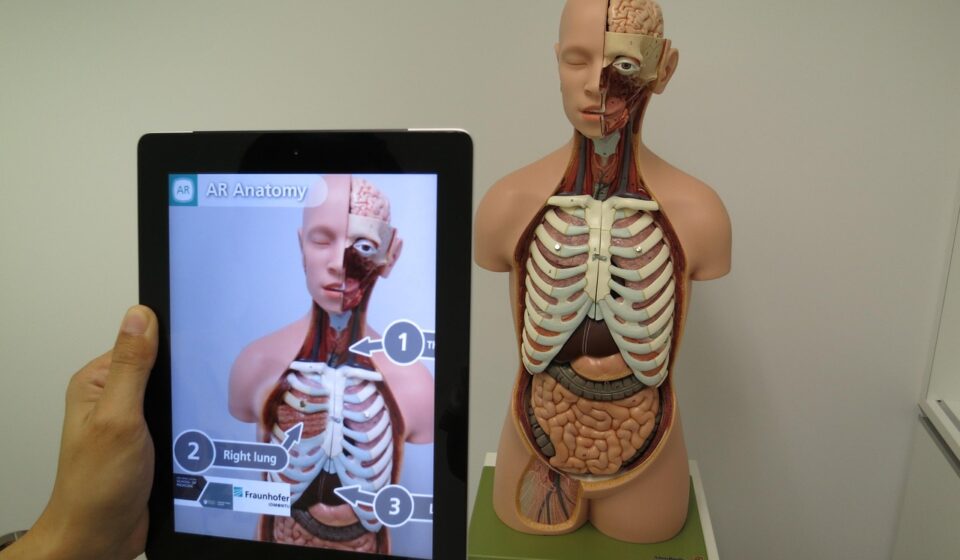
The relationship between technology and health is no longer limited to hospital IT systems or consumer wellness apps. It is now being designed into medical devices themselves: imaging software that supports diagnosis, connected monitors that transmit data from the home, cybersecurity controls that protect clinical operations, and interoperability requirements that influence how device data enters care records. For healthcare leaders, device makers and procurement teams, the question is not simply whether digital health technology is useful. The more practical question is whether a given tool is clinically appropriate, secure, explainable, maintainable and aligned with evolving regulation.
This matters because the device lifecycle has changed. A traditional device might be assessed mainly by hardware performance, usability and manufacturing quality. A modern connected or AI-enabled device also depends on software updates, data quality, network configuration, model monitoring, privacy controls and post-market oversight. Readers following healthcare technology should treat this shift as a long-term operational change, not a short product trend.
Technology and health now meet inside the device lifecycle
Medical technology used to be easier to separate into categories. Hardware belonged to biomedical engineering. Patient records belonged to health IT. Clinical judgment belonged to clinicians. Those boundaries are now less clear. A diagnostic system may include sensors, embedded software, cloud analytics and decision-support outputs. A remote monitoring program may combine a regulated device, a mobile app, a patient-facing workflow and an electronic health record connection.
Public agencies have acknowledged this broader transformation. The World Health Organization’s global digital health strategy, originally adopted by the World Health Assembly in 2020 and later extended through 2027, frames digital health as part of health-system strengthening rather than as a standalone technology market. In the United States, the FDA’s public AI-enabled medical device list is intended to improve transparency around authorized devices that use artificial intelligence. The Office of the National Coordinator for Health Information Technology has also used health IT certification policy to push for more predictable data exchange and greater transparency around decision-support interventions.
For device evaluation, this means looking beyond the advertised function. Buyers and clinical teams need to understand how the product performs over time, how it handles data, how updates are controlled, what evidence supports the intended use, and what happens when the device is connected to real-world clinical networks.
Four shifts defining modern healthcare technology
AI is moving from support feature to regulated device function
Artificial intelligence is one of the clearest examples of how technology and health are converging. In medical devices, AI can support image analysis, signal interpretation, triage, measurement, workflow prioritization and other software-driven functions. The opportunity can be substantial, but so is the burden of proof. A device that produces clinical information must be evaluated for its intended use, target population, data inputs, performance limits and risk controls.
The FDA has emphasized that its AI-enabled medical device list is not a complete catalogue of every AI product in healthcare. It identifies authorized devices based largely on AI-related terms in public marketing authorization materials and device classifications. That limitation matters. A procurement team should not assume that every product marketed with AI language is regulated in the same way, supported by the same evidence, or suitable for the same clinical environment.
AI also changes what maintenance means. If a software model is updated, retrained or adapted, the change may affect performance. This is why regulatory discussions increasingly focus on lifecycle management, predetermined change control plans, documentation, monitoring and transparency. In practice, the strongest AI device claims are not broad promises of speed or automation. They are claims tied to a defined use case, a validated performance profile and a controlled update process.
Connected devices are extending care beyond the hospital
Connected medical devices can move health data from bedside monitors, home-use equipment and wearable sensors into clinical workflows. For selected patients, this can support earlier detection, remote follow-up and more continuous observation. It also creates new dependencies. Device connectivity is useful only when the data are accurate, timely, understandable and acted on through a defined care process.
Remote patient monitoring, for example, is not just a device deployment. It requires patient onboarding, alert thresholds, escalation rules, clinician workload planning, reimbursement review where applicable, and a clear decision about which measurements belong in the medical record. Without that workflow design, connected data can become noise rather than insight.
Healthcare organizations should therefore evaluate connected devices by clinical workflow fit as well as technical specifications. Key questions include: Which patient group benefits? Who reviews the data? How are false alarms handled? What happens when the patient loses connectivity? Can the device operate safely during service interruptions?
Interoperability is turning device data into health-system data
Device data become more valuable when they can move into the broader care record. Interoperability makes this possible, but it is not only a software integration issue. It affects documentation quality, care coordination, analytics, billing, patient access and safety. When data remain trapped in a device console or vendor portal, clinicians may miss context or repeat work.
ONC’s HTI-1 final rule, effective March 11, 2024, highlights the policy direction in the United States: more attention to information sharing, certified health IT reporting metrics and transparency for decision-support interventions. HTI-1 is not a medical device rule, but it affects the environment in which connected devices operate. Devices that feed data into certified systems increasingly need to support standards-based exchange and clear documentation of how information is generated and used.
For medical device stakeholders, interoperability should be a purchasing criterion, not an afterthought. Buyers should ask whether a device can export usable data, whether it supports relevant standards, whether interfaces are documented, and whether the vendor’s integration approach creates avoidable lock-in.
Cybersecurity is now part of safety and effectiveness
Cybersecurity has become a patient-safety issue because connected devices can affect diagnosis, monitoring, therapy delivery and hospital operations. The FDA’s medical device cybersecurity materials state that devices connected to the internet, hospital networks or other devices can improve care but can also increase cybersecurity risk. In June 2025, the FDA issued updated final guidance on cybersecurity in medical devices, superseding the 2023 version and addressing expectations for cyber devices under the Federal Food, Drug, and Cosmetic Act.
For manufacturers, cybersecurity cannot be treated as a late-stage technical patch. Secure design, threat modeling, software bills of materials, vulnerability handling, labeling, update mechanisms and post-market monitoring all belong in the product lifecycle. For hospitals and clinics, cybersecurity review should be included before purchase and during deployment, not only after an incident.
The most useful cybersecurity question is not “Is this device secure?” No connected product is risk-free. A better question is: “How does the manufacturer identify, reduce, communicate and correct cybersecurity risk throughout the device’s life?” See also: clinical equipment.
What this means for device manufacturers, providers and buyers
The convergence of technology and health changes responsibilities across the market. Manufacturers must build evidence, security and update control into product development. Providers must understand how device data enter clinical decisions. Buyers must compare products based on lifecycle reliability, not only acquisition cost or feature lists.
| Change | Operational impact | Verification question |
|---|---|---|
| AI-enabled functions | Performance depends on data, intended use and monitoring | What evidence supports this specific clinical use case? |
| Remote and connected monitoring | Care shifts from episodic measurement to continuous data flow | Who reviews alerts, and what is the escalation pathway? |
| Interoperability | Device data become part of clinical documentation and analytics | Can the device export structured data into existing systems? |
| Cybersecurity | Network exposure can affect safety, availability and trust | How are vulnerabilities disclosed, patched and tracked? |
| Software updates | Device performance may change after deployment | What update controls and validation steps are documented? |
This is why modern device selection is multidisciplinary. Clinical leaders, biomedical engineers, IT security teams, compliance officers and procurement teams should review high-impact technologies together. A connected device that looks attractive to one team may create problems for another if integration, support or security obligations are unclear.
Where regulation is drawing clearer boundaries
Regulation is not moving at the same speed in every region, but several themes are visible. Regulators are asking for clearer evidence around software-driven claims, paying closer attention to updates after a device reaches the market, and connecting safety with cybersecurity, data governance and transparency.
In the European Union, the Artificial Intelligence Act entered into force on August 1, 2024. The European Commission describes high-risk AI systems as systems that may affect safety or fundamental rights, and healthcare AI can fall into that category depending on its function and regulatory context. For medical device companies, the key point is not merely whether a product uses AI. It is whether the AI function is tied to medical purpose, safety, clinical decision-making or conformity assessment requirements.
In the United States, FDA policy development around AI-enabled device software, predetermined change control plans and cybersecurity shows a similar lifecycle direction. The common thread is that regulators increasingly expect manufacturers to explain not only how a device performs at authorization, but how it will remain safe, effective and controlled after deployment.
For readers, this regulatory movement should reduce the temptation to view health technology as a simple feature race. The more software, connectivity and automation a device includes, the more important it becomes to document intended use, limitations, risk controls and post-market responsibilities.
A practical checklist for evaluating technology and health claims
Marketing language around digital health can be broad. Terms such as smart, AI-powered, connected, predictive and automated do not tell a buyer enough on their own. A practical review should convert those claims into evidence-based questions.
- Clinical purpose: What condition, workflow or decision does the device support?
- Intended user: Is it designed for specialists, general clinicians, technicians, caregivers or patients?
- Evidence: What studies, performance data or regulatory materials support the intended use?
- Data quality: What data inputs are required, and what happens when inputs are incomplete or low quality?
- Integration: Can outputs move into the organization’s clinical systems without unsafe workarounds?
- Cybersecurity: How are access control, patching, vulnerability disclosure and incident response handled?
- Updates: How are software and model changes tested, documented and communicated?
- Human oversight: What does the clinician or operator need to understand before acting on the output?
- Equity and usability: Has the product been evaluated across relevant patient groups and real-world settings?
This checklist does not replace regulatory, legal or clinical review. It helps teams avoid a common mistake: evaluating advanced medical technology as if it were ordinary office software. In healthcare, a weak workflow, missing documentation or untested integration can undermine the value of even a technically impressive product.
Frequently asked questions
What does technology and health mean in medical devices?
In medical devices, technology and health refers to the use of software, sensors, connectivity, analytics, automation and data exchange to support medical purposes such as diagnosis, monitoring, treatment guidance or care coordination. The term is broad, so each product should be evaluated by its specific intended use and supporting evidence.
Are AI-enabled medical devices always better than traditional devices?
No. AI can improve speed, consistency or pattern recognition in certain tasks, but it is not automatically better. Performance depends on the clinical use case, training and validation data, workflow fit, user understanding, risk controls and post-market monitoring.
Why is cybersecurity important for connected medical equipment?
Cybersecurity matters because connected devices may affect patient monitoring, clinical decisions, therapy delivery or hospital operations. A cybersecurity weakness can create safety, privacy and availability risks, so security should be reviewed throughout procurement, deployment and maintenance.
How should healthcare organizations compare digital medical devices?
They should compare devices using clinical evidence, interoperability, cybersecurity controls, usability, update management, vendor support and total lifecycle cost. Feature lists are useful, but they are not enough to judge whether a device will work safely in a real care environment.
What is the main trend to watch next?
The most important trend is lifecycle governance. As devices become more software-driven, healthcare organizations and manufacturers will need stronger processes for monitoring performance, managing updates, protecting data and documenting how technology supports clinical decisions over time.