IVD in vitro diagnostic medical devices explained for clinical and regulatory teams
What IVD medical devices are
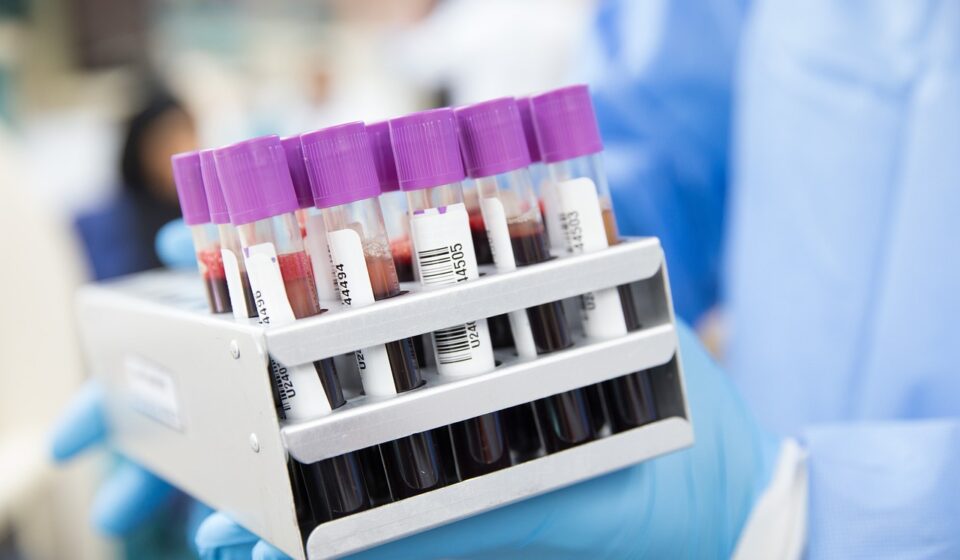
IVD in vitro diagnostic medical devices are tests, reagents, instruments, software or systems used to examine specimens taken from the human body, including blood, tissue, urine, saliva or swabs. They do not treat a patient directly. Instead, they generate diagnostic or monitoring information that may support clinical decisions, public health actions or therapy selection.
In practice, the same technology can fall inside or outside IVD regulation depending on its intended purpose, claims and setting of use. Regulatory teams, laboratories, distributors and healthcare buyers should therefore review the device claim, sample type, user, result interpretation and clinical consequence before treating a product as a general laboratory tool. The FDA and U.S. regulations describe IVDs as products used to collect, prepare and examine human specimens for diagnostic purposes. (fda.gov)

For more coverage of laboratory instruments, test systems and market updates, see the Diagnostic Devices section.
Common types of IVD products and use settings
The IVD category covers both high-volume laboratory systems and simple tests used near the patient. A product may be a standalone reagent, an analyzer, a test kit, a specimen collection device, a calibrator, control material, a software module or a complete testing workflow. What connects these products is that the information comes from a specimen, rather than from direct physical measurement of the patient in the way a pulse oximeter or imaging system does.
| IVD category | Typical examples | Clinical or operational role |
|---|---|---|
| Clinical chemistry and immunoassay | Glucose, thyroid-stimulating hormone, cardiac markers, hormone assays | Supports diagnosis, monitoring and treatment decisions in routine care. |
| Molecular diagnostics | PCR, NAAT, genotyping and next-generation sequencing tests | Detects pathogens, genetic variants, drug resistance or biomarkers for precision medicine. |
| Hematology and coagulation | Blood cell counts, clotting tests and related controls | Assesses blood status, bleeding risk and therapy monitoring needs. |
| Microbiology and infectious disease testing | Antigen tests, antibody tests, culture-related systems and susceptibility testing | Identifies infectious agents or evidence of exposure and may support outbreak response. |
| Point-of-care and self-testing | Blood glucose meters, lateral flow tests and some home collection or home-use tests | Moves testing closer to patients, but increases the importance of instructions, usability and result communication. |
The World Health Organization’s Essential Diagnostics List shows why setting matters. The WHO eEDL includes tests for laboratory, non-laboratory, district hospital, regional hospital and primary care settings. In other words, the same disease area may require different test formats depending on infrastructure, personnel and patient access needs. (who.int)
Why intended purpose drives classification and evidence
IVD classification is not based only on the instrument platform or analytical method. It is mainly driven by intended purpose and risk. A nucleic acid test, for example, may face very different regulatory expectations if it is used to screen donated blood, confirm an individual infection, detect drug resistance or select patients for a targeted therapy. The claim defines the population, specimen, clinical condition, user and decision impact; those factors shape the class and the evidence package.
The IMDRF risk-based approach and the EU IVDR both emphasize that IVD risk depends on the impact of an incorrect result on the individual patient and on public health. The European Commission’s MDCG classification guidance for Regulation (EU) 2017/746 states that IVDR classes A, B, C and D are based on intended purpose and inherent risk, and that classification affects the conformity assessment route, notified body involvement, post-market surveillance and related obligations. (health.ec.europa.eu)
EU IVDR classification in practical terms
Under the IVDR, class A generally covers lower-risk products such as certain laboratory instruments and specimen receptacles. Class D covers the highest-risk IVDs, including tests used to screen blood, cells, tissues or organs for transmissible agents where a false result could have severe consequences. Class B and C cover many products in between, including self-tests, infectious disease assays, companion diagnostics and tests that can influence significant medical decisions. For planning purposes, class B, C and D devices usually involve a notified body, while many class A non-sterile devices follow a different route.
U.S. FDA classification in practical terms
In the United States, FDA classifies medical devices, including IVDs, into Class I, II or III according to the level of control needed to reasonably assure safety and effectiveness. The classification affects whether a product may be exempt from premarket review, require 510(k) clearance, use De Novo classification, or require premarket approval for higher-risk device types. FDA’s IVD regulation overview also points manufacturers to 21 CFR 862, 864 and 866 for many existing IVD classifications. (fda.gov)
Regulatory changes that matter in 2026
Two regulatory developments remain especially important for IVD planning in 2026: the continued EU IVDR transition and the current U.S. position on laboratory-developed tests.
EU IVDR transition dates
Regulation (EU) 2017/746 replaced the earlier IVD Directive and strengthened risk classification, performance evaluation, notified body review, vigilance and market surveillance. Regulation (EU) 2024/1860 then extended certain IVDR transition periods because notified body capacity and certification progress were not sufficient to avoid disruption. For eligible legacy devices, the amended rules allow market placement or putting into service until 31 December 2027 for class D devices, 31 December 2028 for class C devices, and 31 December 2029 for class B devices and class A sterile devices, provided the legal conditions are met. These conditions include continued compliance with the old directive, no significant design or intended purpose change, no unacceptable health or safety risk, a compliant quality management system by 26 May 2025, and timely notified body applications and written agreements. (eur-lex.europa.eu)
| EU IVDR legacy device group | Key transition endpoint | Planning implication |
|---|---|---|
| Class D and devices with certain valid IVDD certificates | 31 December 2027 | Highest urgency for technical documentation, performance evidence and notified body coordination. |
| Class C | 31 December 2028 | Application timing and gap assessment remain critical because notified body review can be lengthy. |
| Class B and class A sterile | 31 December 2029 | Lower relative risk does not remove the need for QMS, documentation and post-market planning. |
U.S. LDT status after the vacated FDA rule
Laboratory-developed tests have been one of the most closely watched U.S. IVD topics. FDA issued a final rule on 6 May 2024 that amended the definition of in vitro diagnostic products to include products when manufactured by a laboratory. However, FDA’s current LDT page states that a federal district court vacated that final rule on 31 March 2025, and that FDA issued a final rule on 19 September 2025 reverting the regulation text to its pre-2024 wording. As of 20 September 2026, articles or presentations that still describe the 2024 LDT phaseout as an active FDA implementation plan should be checked against this later development. (fda.gov) See also: clinical equipment.
Evidence expectations across the IVD lifecycle
For IVD products, evidence is more than a sensitivity and specificity table. A credible file usually connects analytical performance, clinical performance, scientific validity, usability, software behavior, stability, controls, labeling and post-market data. Analytical performance asks whether the test measures the intended analyte accurately and reliably. Clinical performance asks whether the result is associated with the target clinical condition or decision. Scientific validity connects the analyte or marker to the disease, physiological state or therapeutic response being claimed.
The evidence also needs to fit the user and setting. A central laboratory assay operated by trained personnel may rely on different controls and workflows than a self-test used at home. For home-use and near-patient tests, instructions, human factors, sample collection, environmental conditions and result interpretation can be as important as instrument precision. If a result may trigger isolation, therapy initiation, transfusion acceptance, cancer treatment selection or antimicrobial choice, the evidence threshold and risk controls should reflect that consequence.
Software adds another layer. It may drive an analyzer, interpret raw data, flag quality control failures, report a qualitative result, support variant interpretation or connect results to laboratory information systems. Under EU guidance, software that drives or influences use of an IVD can follow the classification of the device, while independent software is assessed according to its own intended purpose. (health.ec.europa.eu)
How buyers and partners can assess an IVD product
Healthcare organizations, laboratories and distributors should avoid evaluating IVD devices only by price or headline accuracy claims. A more useful review starts with the intended-use statement and then follows the result through the workflow: specimen collection, transport, preparation, assay run, quality control, interpretation, reporting, data storage and action by the clinician or patient.
- Confirm the intended purpose. Check the target condition, analyte, population, specimen type, user and setting.
- Check the regulatory route. Ask whether the product is CE marked under IVDR, cleared or authorized by FDA, exempt, investigational, research use only or limited to a specific jurisdiction.
- Review performance evidence. Look for analytical and clinical performance data that match the claimed use and expected patient population.
- Assess workflow fit. Consider sample stability, instrument throughput, calibration, controls, operator training, maintenance and connectivity.
- Review labeling and result communication. Instructions should make limitations, invalid results, confirmatory testing needs and clinical interpretation clear.
- Plan post-market feedback. Complaint handling, adverse event reporting, trend review, lot monitoring and field safety actions are part of lifecycle control.
This checklist is especially useful when comparing products that appear similar. Two tests may target the same disease but differ in specimen type, limit of detection, target population, result time, confirmation requirements or regulatory status. Those differences can change clinical usefulness and operational risk.
Frequently asked questions
Are all laboratory instruments IVD medical devices?
No. A laboratory instrument becomes an IVD medical device when its intended purpose is connected to the collection, preparation or examination of human specimens for diagnostic or health-related use. General laboratory equipment used only for research or non-clinical purposes may fall outside IVD regulation, depending on claims and jurisdiction.
What is the difference between an IVD and a medical device used on the body?
An IVD generates information from a specimen taken from the body. A conventional medical device may act directly on or measure the body, such as an implant, infusion pump or patient monitor. Both can be medical devices, but the evidence, classification rules and performance concepts differ.
Why do IVD classifications differ between the EU and the United States?
The EU IVDR uses classes A, B, C and D, while FDA uses Class I, II and III. Both systems are risk-based, but they are built on different laws, classification rules and conformity routes. A product’s class in one market should not be copied into another market without a jurisdiction-specific assessment.
Do IVDR transition extensions mean manufacturers can delay compliance work?
No. The EU extensions are conditional. Eligible legacy devices must meet requirements such as no significant change, no unacceptable risk, quality management system implementation and timely notified body engagement. The transition dates provide time for orderly certification; they do not remove the need to prepare technical documentation and evidence.